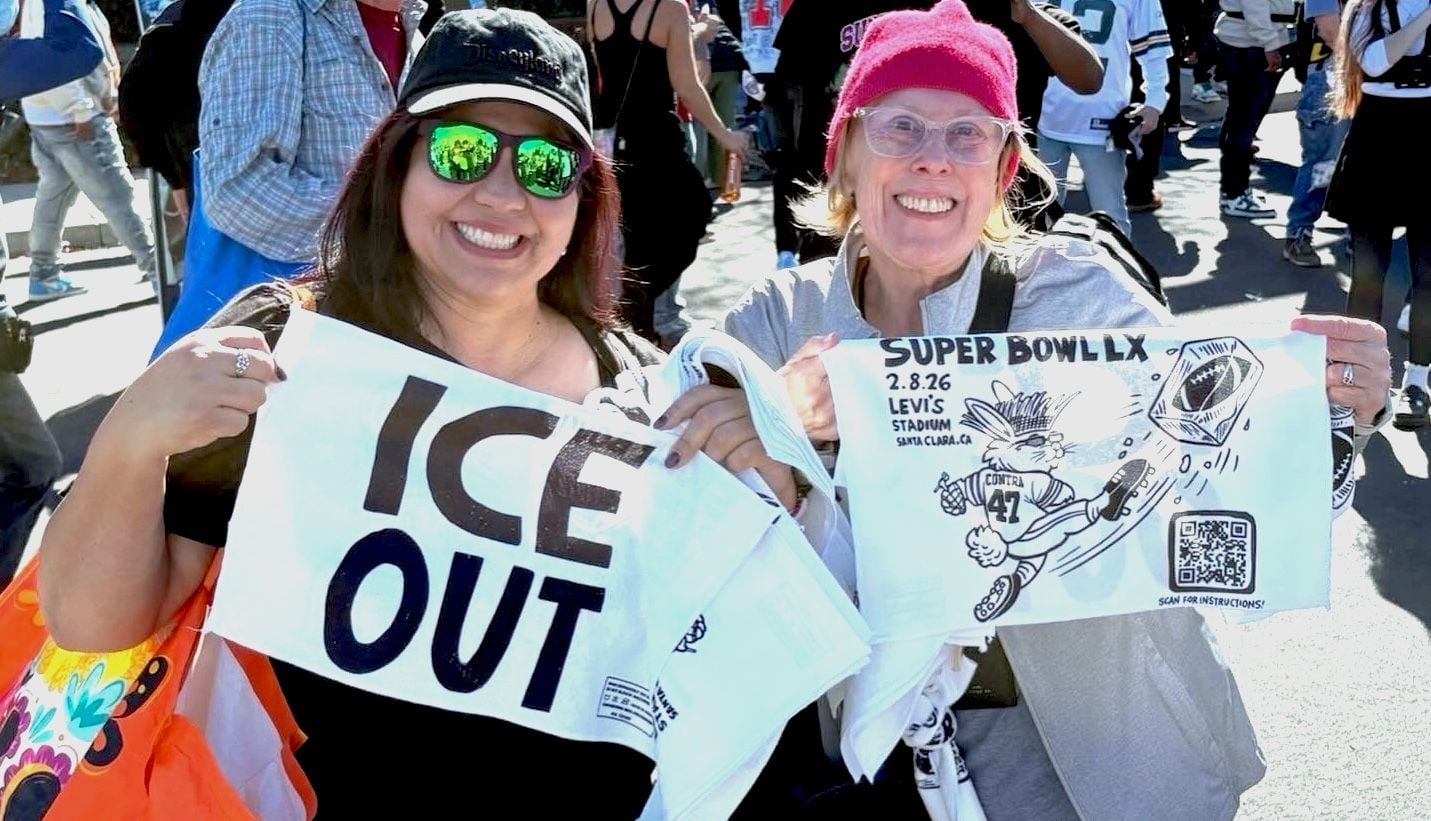
Over 15,000 towels emblazoned with the message “Ice Out” were distributed by volunteers at Levi’s Stadium during the Super Bowl on March 12, 2023. This initiative, organized by the group Contra-ICE, coincided with Bad Bunny’s halftime performance, a show that has drawn attention for the artist’s advocacy for immigrant rights and the Latin American community.
The towels featured a unique illustration by Los Angeles artist Lalo Alcaraz, depicting a bunny wearing Bad Bunny’s signature Puerto Rican jibaro hat while kicking a block of ice that contained a football. According to the San Francisco Chronicle, this imagery was intended to be both playful and pointed, referencing the political climate surrounding immigration issues in the United States. The design also included a QR code, encouraging attendees to wave the towels in solidarity during the game’s penalty flags.
Shasti Conrad, a leader within Contra-ICE and vice chair of the Democratic National Committee, explained the group’s aim. “Today is a celebration of American sports, and there are opportunities to really be heard here,” she told the Los Angeles Times. “It’s about drawing attention to show that there is massive support to challenge Trump and the Department of Homeland Security. Any opportunity to push back is important.”
The effort was supported by approximately 50 volunteers, who strategically positioned themselves at various entrances to the stadium. Their goal was to create a visual and vocal protest against the current immigration policies, echoing sentiments expressed by Bad Bunny during his recent appearance at the Grammys. There, the artist stated, “We’re not savage, we’re not animals, we’re not aliens. We are humans and we are Americans.”
This creative act of resistance was designed to align with the spirit of the Super Bowl while making a statement about the treatment of immigrants in the United States. The towels served as symbols of support and unity, aimed at fostering a dialogue around these critical social issues.
As the halftime show unfolded, the presence of the towels added a layer of meaning to the festivities, illustrating how cultural events can serve as platforms for advocacy. The combination of art and activism highlighted the intersection of sports, music, and social justice, engaging thousands of attendees in a collective expression of solidarity.
The initiative not only brought attention to immigration issues but also demonstrated the power of grassroots movements in harnessing public spaces to advocate for change. With the Super Bowl drawing millions of viewers, the message of the towels resonated beyond Levi’s Stadium, amplifying the voices of those who feel marginalized in society.