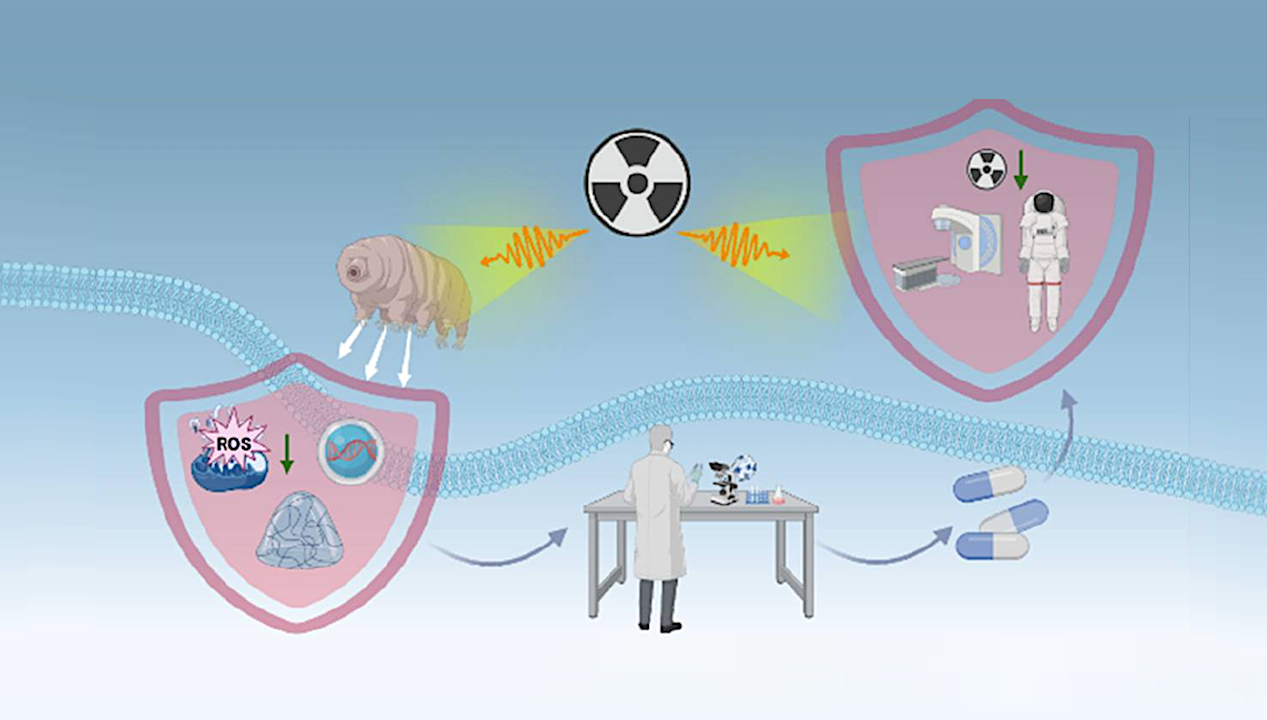
Scientists are exploring innovative strategies for radioprotection by drawing inspiration from the biology of tardigrades, organisms known for their resilience against extreme conditions. This research aims to transform the approach to safeguarding human health from the harmful effects of ionizing radiation in medical and space exploration contexts.
Ionizing radiation can cause severe damage, including lethal double-strand DNA breaks and oxidative stress, leading to acute radiation syndrome and secondary malignancies. Conventional radioprotectants, such as aminothiols and antioxidants, have shown limited effectiveness. These traditional methods often come with significant side effects and fail to adequately protect radiosensitive tissues.
In contrast, tardigrades, members of the phylum Tardigrada, demonstrate remarkable resistance to radiation, enduring exposures exceeding 5 kGy. Their survival mechanisms incorporate a range of sophisticated strategies, including proteins like damage suppressor (Dsup) and Tardigrade DNA-Repair protein 1 (TDR1), which shield the genome from damage. Additionally, tardigrades utilize intrinsically disordered proteins that can vitrify cellular components, thereby reducing radical diffusion and oxidative stress.
Emerging Approaches in Radioprotection
Recent studies highlight the potential of integrating insights from extremophile biology with advanced drug discovery techniques. A variety of emerging modalities, such as recombinant proteins, mRNA therapeutics, and biomimetic nanomaterials, are being investigated for their ability to enhance radioprotection.
These new approaches could provide opportunities to protect healthy tissues during cancer treatments, mitigate casualties in nuclear accidents, and offer safety to astronauts on deep-space missions. Nevertheless, challenges remain in terms of scalable bioprocessing, stability of macromolecules, immunogenicity, and targeted delivery.
The Frontiers in Astrobiology journal details several key adaptations that contribute to the radiation resistance observed in tardigrades. These include:
1. **Anhydrobiosis**: A state of ametabolism induced by dehydration.
2. **Intrinsically disordered proteins**: These proteins help to stabilize cellular components and limit the spread of radicals.
3. **Genome-shielding proteins**: These proteins coat chromatin, significantly reducing DNA damage.
4. **Antioxidant pigments**: Unique pigments that neutralize reactive oxygen species.
5. **Efficient DNA repair systems**: These systems work rapidly to restore genomic integrity after exposure to radiation.
Future Directions for Research
The integration of tardigrade-inspired strategies into clinical and space applications could redefine radioprotection as a field. By transforming these evolutionary adaptations into practical medical countermeasures, researchers aim to enhance resilience against radiation exposure, thus improving outcomes in cancer therapies and increasing safety in high-radiation environments.
As the understanding of tardigrade biology expands, the potential for innovative, effective solutions to combat ionizing radiation becomes increasingly tangible. This ongoing research marks a significant step forward in the quest for advanced radioprotection strategies, promising to safeguard human health in various critical scenarios.