The ongoing U.S. fuel blockade is significantly worsening the humanitarian crisis in Cuba, affecting daily life for millions of citizens. Residents like Marta Jiménez, a hairdresser from the eastern city of Holguín, express the crippling impact of the blockade, particularly as oil shipments dwindle. “You can’t imagine how it touches every part of our lives,” Jiménez stated, highlighting the cascading effects on transportation, cooking, and electricity.
Shortages have led to a situation where public transportation has nearly ground to a halt. With gasoline supplies severely restricted, buses are not operating, leaving many unable to reach work. Residents experience electricity outages lasting from three to six hours daily, and the lack of cooking gas forces families to burn wood and charcoal, reminiscent of conditions from a century ago. Humanitarian aid, including 2,500 pounds of lentils recently delivered by organizations like CODEPINK and Puentes de Amor, is vital yet insufficient to meet the country’s energy needs.
Daily Life Under the Blockade
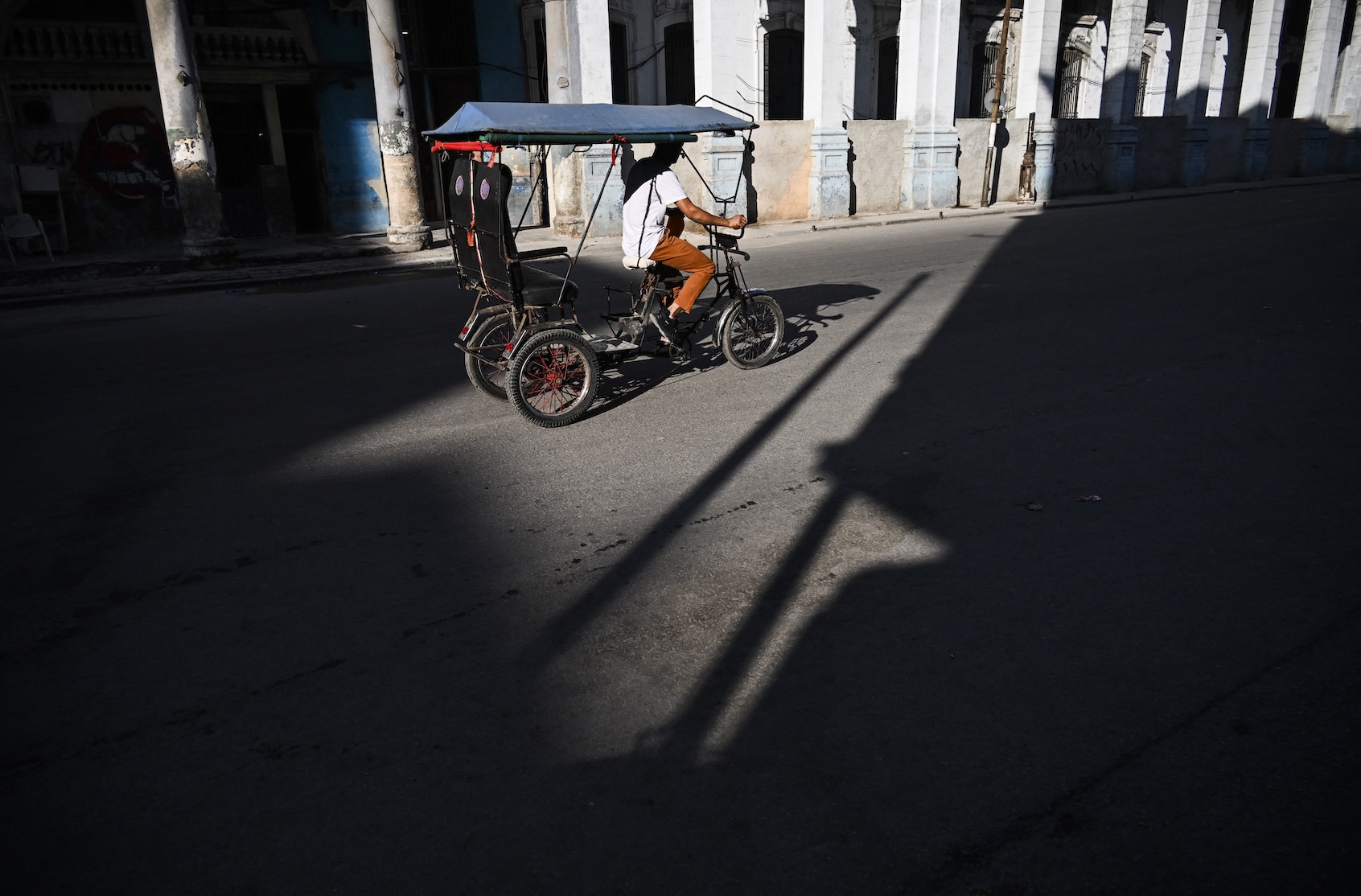
The absence of taxis at the airport starkly illustrates the fuel crisis. Travelers hitch rides on trucks that transport aid, navigating eerily empty roads. In Holguín, the streets are dominated by bicycles and electric vehicles, as fuel-powered cars become increasingly scarce. Many electric motorcycles, often imported from Panama, are unaffordable for the average citizen, with prices around $2,000. Javier Silva, a local expressing frustration, lamented that his monthly salary of 4,000 pesos, roughly $10, makes such purchases unattainable.
While Cubans do not pay rent or mortgages, they face skyrocketing food prices. Despite markets being stocked, essential items like pork, chicken, and even tomatoes are beyond the reach of many families. This crisis has been exacerbated by the devastation caused by Hurricane Melissa, which ravaged agricultural lands earlier this year, complicating recovery efforts without access to fuel for machinery.
The blockade, ostensibly aimed at promoting capitalism, ironically undermines the private sector that has become crucial for survival. Many state enterprises struggle due to a lack of electricity, pushing skilled workers like Jorge, a former engineer, and Verónica, a former teacher, to seek alternative livelihoods.
Public Sentiment and Resilience
Conversations with residents reveal a mix of frustration towards both the Cuban government and U.S. policies. Many express a desire for change but do not support the blockade or military intervention, viewing these measures as detrimental. One man, engaged in illegal currency exchange, described Marco Rubio as “the devil,” criticizing the senator’s stance on Cuba while acknowledging the hardships created by the regime.
Contrast this with the relative ease of life during the thaw in U.S.-Cuban relations from 2014 to 2016, when sanctions were relaxed. Residents recall improvements in their daily lives during that period, emphasizing that a less restrictive U.S. approach could facilitate local solutions to their challenges.
Cubans are adapting to survive the current crisis through community support and resourcefulness. They trade goods and share resources, embodying the spirit of resilience. Government programs provide meals for vulnerable populations, yet these efforts are strained as food supplies dwindle and cooking fuel becomes scarcer.
As the situation remains dire, questions linger about the future. Optimism is tempered by uncertainty. Some speculate on potential diplomatic resolutions while others express skepticism about the prospects for regime change.
Ultimately, the tenacity of the Cuban people shines through. Ernesto, who repairs refrigerators when power is available, encapsulated this spirit: “We’re rebels. We survived much worse before.” He quoted songwriter Silvio Rodríguez, asserting that “time belongs to the small, the exposed, the forgotten.”
With the blockade’s impact deepening, the world watches as Cubans navigate profound adversity, hoping for a resolution that respects their dignity and agency.