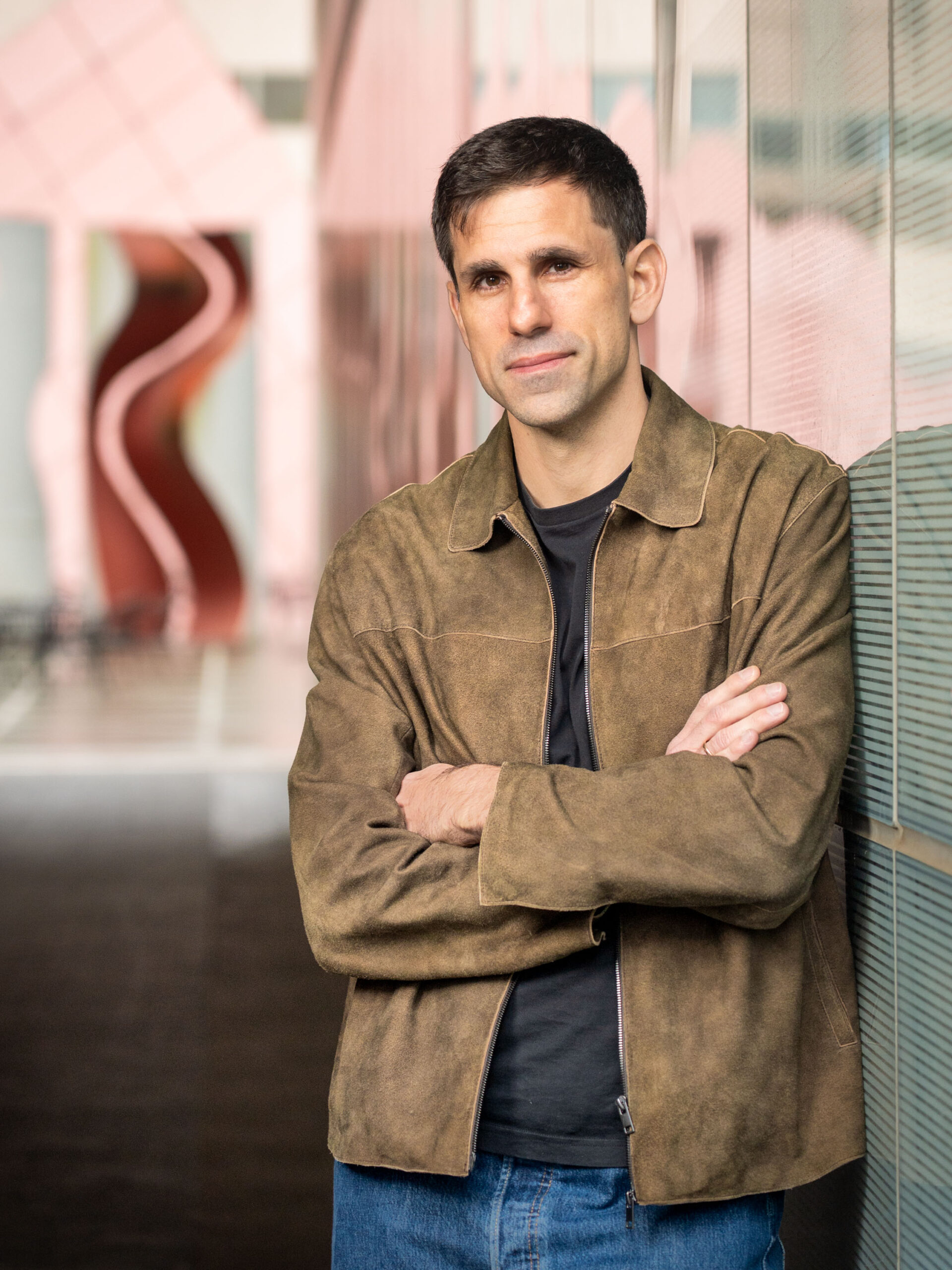
Antimicrobial resistance, a pressing global health challenge, is claiming more lives than ever before. According to estimates, infections caused by resistant bacteria, fungi, and viruses are linked to over 4 million deaths annually, with projections indicating this figure could exceed 8 million by 2050. César de la Fuente, a bioengineer and computational biologist at the University of Pennsylvania, is harnessing artificial intelligence to tackle this critical issue head-on.
In an essay published in Physical Review Letters in July 2025, de la Fuente and fellow researcher James Collins underscored the threat of entering a “post-antibiotic” era. This scenario could see common infections from drug-resistant strains, such as Escherichia coli and Staphylococcus aureus, becoming fatal. “The antibiotic discovery pipeline remains perilously thin,” they wrote, highlighting the significant barriers posed by high development costs and lengthy timelines.
De la Fuente’s innovative approach involves using AI tools to explore vast genetic databases for antimicrobial peptides—small chains of amino acids that can combat resistant microbes. His vision includes assembling these peptides into novel configurations, potentially creating new defenses against bacteria that have outsmarted traditional treatments.
The results thus far have been promising. In August 2025, de la Fuente’s team, part of Penn’s Machine Biology Group, identified peptides in the genetic sequences of ancient single-celled organisms known as archaea. Prior to that, they had discovered candidates from the venoms of snakes, wasps, and spiders. Their work even extends to a project dubbed “molecular de-extinction,” where they analyze genetic sequences of extinct species—including hominids like Neanderthals and megafauna such as woolly mammoths—for potentially useful antimicrobial compounds.
De la Fuente’s research has yielded over one million genetic recipes for peptides, some of which have intriguing names like mammuthusin-2, mylodonin-2, and hydrodamin-1. At just 40 years old, de la Fuente has earned accolades from the American Society for Microbiology and the American Chemical Society, and was named one of 35 Innovators Under 35 by a prominent magazine in 2019.
His contributions have not gone unnoticed. Collins, a prominent figure at MIT, remarked, “He’s really helped pioneer that space,” referring to de la Fuente’s efforts in applying AI to antibiotic discovery. Collins’ own team successfully predicted a broad-spectrum antibiotic called halicin, which is currently in preclinical development.
Antimicrobial resistance is often exacerbated by the misuse and overuse of existing antibiotics. As de la Fuente notes, conventional methods for antibiotic discovery can be prohibitively expensive, often leading to failures. Many pharmaceutical companies have exited antibiotic development, citing inadequate returns on investment.
De la Fuente describes the traditional discovery process as “messy and noisy,” relying heavily on serendipity. Researchers have typically extracted antimicrobial molecules from soil and water samples, but the complexity of organic molecules presents a significant challenge. Estimates suggest there are about 10^60 possible organic combinations, a staggering number compared to the 10^18 grains of sand on Earth.
With the advent of AI, researchers can refine their search for effective candidates. De la Fuente explains that biology can be viewed as a code, with DNA comprising four letters and proteins made up of 20. By training AI models to recognize sequences that encode antimicrobial peptides, researchers can identify promising candidates more efficiently.
Despite the excitement surrounding this work, developing usable drugs from these peptides remains a challenge. Critical factors such as dosage, delivery, and target specificity still require thorough investigation. However, the potential of antimicrobial peptides is noteworthy, as they form a crucial part of the immune system and often employ multiple mechanisms to combat pathogens.
De la Fuente’s team is not alone in this endeavor. Other researchers, including Collins and Jonathan Stokes at McMaster University, are also employing AI in drug discovery. Stokes’ work focuses on small-molecule discovery, predicting promising new molecules for synthesis.
The field has evolved rapidly, transitioning from predictive models to generative approaches that allow for the design of new molecules from scratch. For example, de la Fuente’s team recently utilized generative AI to create a suite of synthetic peptides, which they tested on mice infected with a drug-resistant strain of Acinetobacter baumannii. Both compounds successfully treated the infections, marking a significant advancement.
As de la Fuente continues to push the boundaries of antibiotic discovery, he is developing an ambitious multimodal model called ApexOracle. This tool aims to analyze new pathogens, identify genetic weaknesses, and match them with suitable antimicrobial peptides. While still in its preliminary stages, ApexOracle holds the promise of advancing AI-driven antibiotic development.
De la Fuente remains optimistic about the role of AI in combating antimicrobial resistance. He believes that technology can significantly reduce the time required for research and ultimately save lives. “This is the world that we live in today, and it’s incredible,” he asserts, underscoring the urgency and potential impact of his work in the fight against antibiotic resistance.