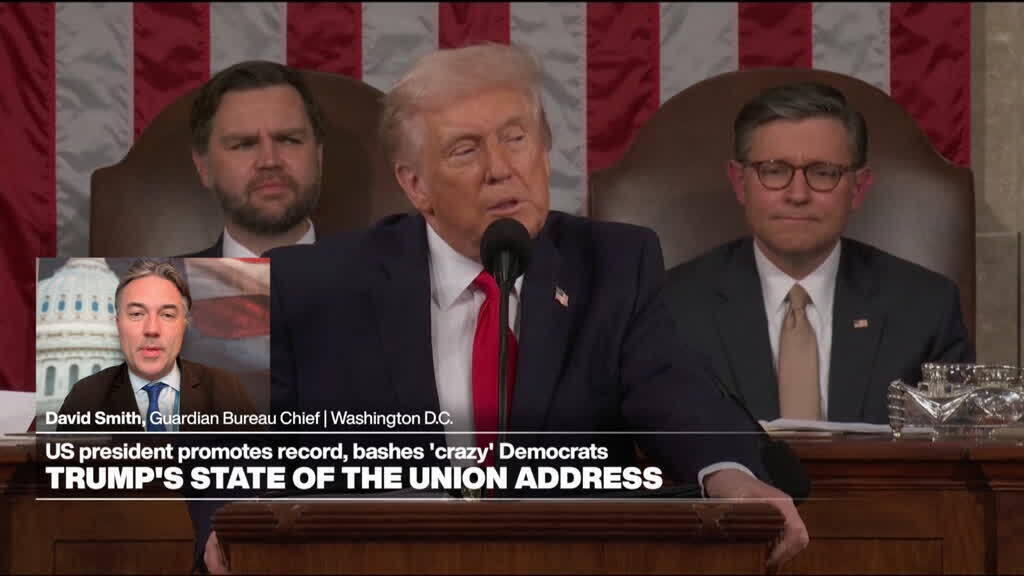
UPDATE: President Donald Trump delivered a contentious State of the Union address on February 7, 2026, that has ignited fierce debate over the state of U.S. politics. The speech, which is now the longest in history, highlighted Trump’s unwavering focus on immigration, drawing sharp reactions from Democrats in attendance.
During his address, Trump made “very little effort to reach across the aisle,” according to David Smith, the Washington D.C. bureau chief for FRANCE 24. His remarks on immigration, a hallmark of his agenda, were met with heckles from Democratic lawmakers, revealing the stark divisions in Congress.
This speech matters NOW because it underscores the deepening polarization in American politics. Despite the challenges facing the nation, Trump’s rhetoric has remained fiercely partisan, which could have significant implications for upcoming elections and governance.
The atmosphere in the House Chamber was electric, with Trump’s supporters cheering and Democratic representatives visibly frustrated. Smith noted that the response from Democrats indicated a growing rift that could hinder bipartisan cooperation in the near future.
As the 2026 elections approach, Trump’s approach may rally his base but also alienate moderate voters. Observers are left to ponder the long-term effects of such divisive politics on the American electorate.
Looking ahead, experts suggest that this State of the Union may set the tone for the electoral landscape, with ramifications for both parties. The focus on immigration could become a rallying cry for Trump’s campaign, while Democrats may need to strategize on how to counteract this narrative.
Stay tuned for further updates as the political fallout from this historic address continues to unfold.