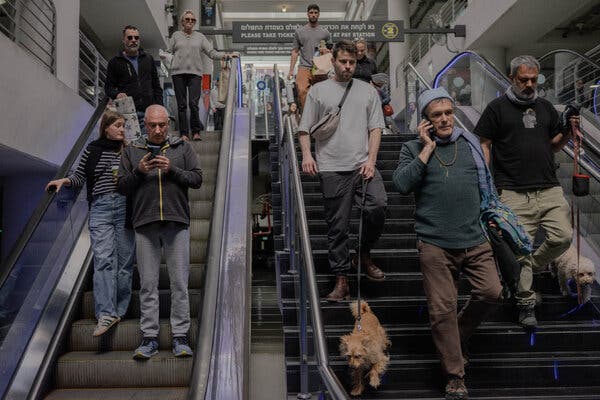
Sirens blaring in Israel have sent residents rushing to public and private bomb shelters as Iranian missile attacks intensify. These incidents have starkly exposed a critical shortage of protected spaces in a country that has long anticipated conflict with Iran. According to a report published by Israel’s state comptroller in January, over three million people live in areas lacking “standard protection,” putting nearly a third of the population at risk should Iranian ballistic missiles strike nearby.
The situation appears particularly dire in Arab communities, where the availability of public shelters is severely limited. The state comptroller’s report noted that only 37 of the 11,775 public shelters are located in Arab municipalities, with eight of those deemed unfit for use. “People are facing real danger,” said Atiya al-Asam, an activist leader in the Bedouin community in southern Israel. “They’re terrified.”
Many Bedouin settlements, especially those not recognized by the Israeli government, have historically lacked adequate shelters and essential services such as running water, sewage systems, electricity, and paved roads. This lack of infrastructure exacerbates the vulnerability of these communities, particularly during times of conflict.
The recent escalation in hostilities, marked by the Israel-Iran war in June 2025, resulted in the deaths of 32 individuals and thousands of injuries, according to data compiled by the Israeli government. Officials noted that shelters and fortified rooms played a crucial role in saving lives during these attacks.
In response to the heightened threat, the Israeli military’s Homefront Command has begun discussions about increasing the number of protected spaces and enhancing existing shelters, as confirmed by two Israeli security officials who spoke on condition of anonymity. Despite these efforts, the state comptroller’s report indicates that more than six million people in Israel currently have access to both public and private shelters.
In major cities such as Tel Aviv, local officials maintain confidence in the sufficiency of available shelters. “We can always have more,” said Eyal Kedar, an official involved in emergency response operations. “But in terms of numbers, there’s enough for more than those living here.”
While the government continues to evaluate the effectiveness of its emergency infrastructure, the ongoing conflict with Iran serves as a stark reminder of the pressing need for comprehensive safety measures across all communities in Israel. The disparity in shelter availability highlights significant gaps in preparedness, particularly affecting vulnerable populations.