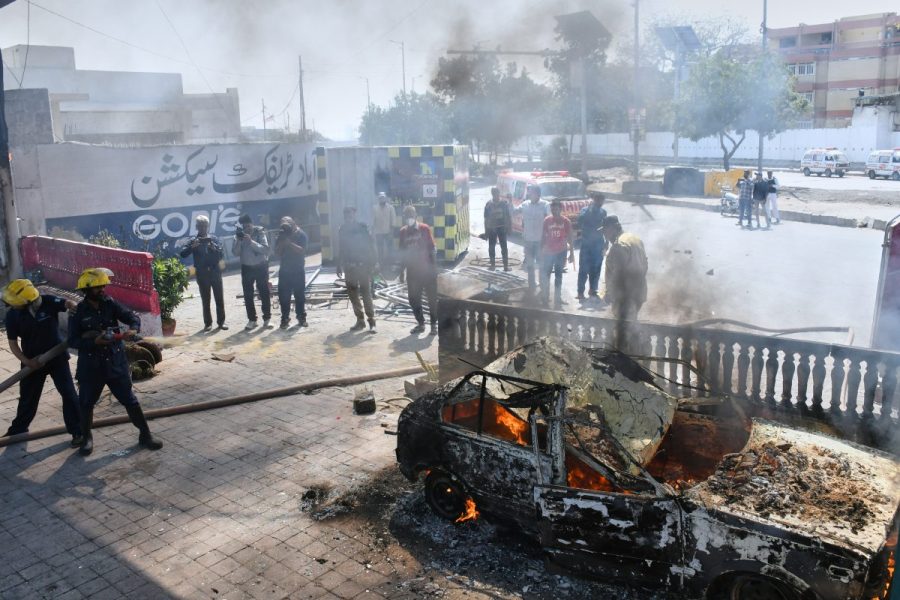
Violence erupted in Pakistan as protesters attempted to storm the US Consulate, resulting in at least 22 fatalities and more than 120 injuries. The unrest began following a military strike by the United States and Israel against Iran, which led to the death of Iranian Supreme Leader Ayatollah Ali Khamenei.
The protests unfolded in the city of Karachi on October 20, 2023. Demonstrators gathered in significant numbers, expressing outrage over the actions taken by the US and Israel. As tensions escalated, confrontations with law enforcement became violent, leading to chaos in the vicinity of the consulate.
Authorities dispatched police to the scene in an attempt to maintain order. Reports indicate that officers used tear gas and water cannons to disperse the crowd. Despite these measures, protesters engaged in clashes, resulting in a tragic loss of life and numerous injuries. Local hospitals reported an influx of individuals seeking treatment for various injuries sustained during the confrontations.
The protests are a reflection of widespread discontent regarding foreign intervention in regional affairs. Following the strike on Iran, many in Pakistan expressed solidarity with their neighboring country, viewing the attack as an affront to national sovereignty.
In response to the violence, the US State Department condemned the attacks on its diplomatic mission. A spokesperson stated, “We are deeply concerned about the safety of our personnel and the security of our facilities.” The statement called on all parties to exercise restraint and avoid violence.
As the situation unfolds, there are growing fears of further unrest in the region. Local authorities have increased security measures around diplomatic missions and government buildings in anticipation of additional protests.
The impact of this incident extends beyond immediate violence, as it highlights the fragile geopolitical landscape in the Middle East and the potential for escalation. Analysts suggest that this unrest could lead to more significant regional tensions, particularly as various factions react to the recent military actions.
International reactions have varied, with some nations calling for calm while others have rallied in support of Iran. The ongoing conflict raises critical questions about the stability of the region and the role of foreign powers in shaping the future of Middle Eastern politics.
As the situation continues to develop, communities across Pakistan are left grappling with the aftermath of the violence and the broader implications of foreign military intervention in Iran. Local leaders are urged to prioritize dialogue and peaceful resolutions to prevent further conflict.