Innovation in engineering is often a product of diverse perspectives and collaborative efforts across various cultures. In robotics and automation, where hardware, software, and human workflows intersect, the influence of cross-cultural experiences becomes even more significant. This article explores how these experiences shape design approaches, problem-solving, and teamwork in a global landscape.
Cross-Cultural Experiences in Engineering
Mechanical engineer at Re:Build Fikst in Wilmington, Massachusetts, and a member of the IEEE, I have witnessed firsthand how my background influences my work. Born and raised in India, I began my engineering education at Amity University in Noida, where I developed a solid foundation in electrical and electronics engineering. The training emphasized problem-framing and adaptability, teaching me to focus on essential system behaviors rather than relying solely on established solutions.
During my undergraduate studies, I learned the importance of balancing efficiency with reliability. Projects required a clear understanding of system needs and how to validate them under defined parameters. This approach, rooted in first-principles thinking, encouraged resourcefulness while recognizing that oversimplification in complex systems could introduce risks, impacting overall reliability.
In 2021, I moved to the United States to pursue a master’s degree in Robotics and Autonomous Systems at Arizona State University in Tempe. This transition exposed me to a different engineering culture, where the rigor of documentation, validation, and safety reviews is paramount. In the U.S. research and development sector, particularly in robotics, systems are expected to perform reliably across various conditions and user interactions.
Navigating Diverse Engineering Cultures
Adjusting to this new environment required me to balance my instinct for efficiency with a more structured approach. In the U.S., design decisions demand thorough justification, and collaboration involves aligning with professionals from diverse disciplines. Each member of the team, whether a scientist, software engineer, or technician, brings unique priorities that shape the project’s success.
Over time, I learned that the real value lies not in choosing one cultural approach over another but in knowing when to apply each. This balance is especially critical in robotics and automation, where resourcefulness without rigor can lead to failures at scale. For instance, a prototype might work perfectly in a controlled laboratory but could encounter issues when subjected to real-world conditions.
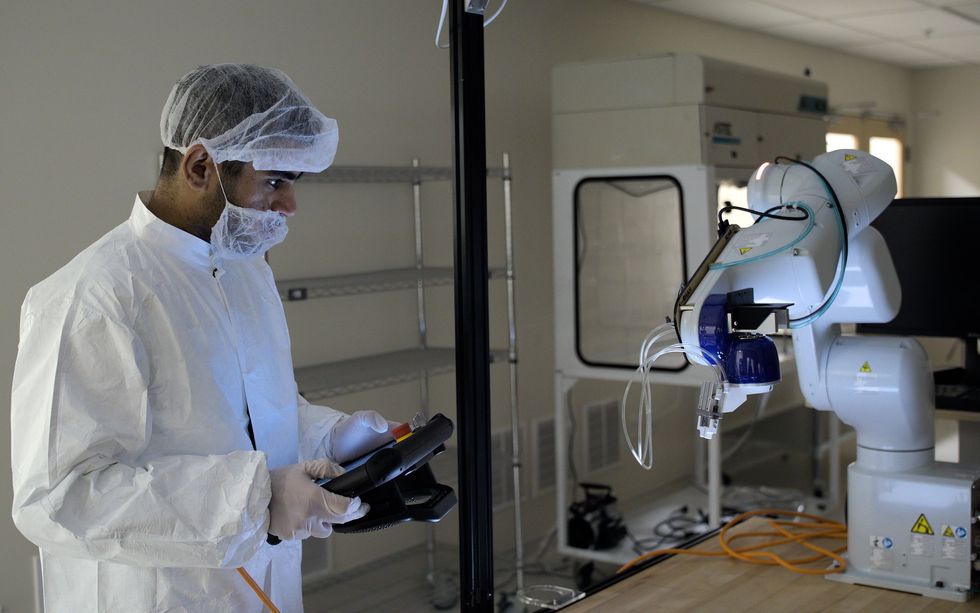
My current work involves integrating automated systems into environments that require technical performance to align with user interactions. A robotic work cell may operate efficiently in isolation but must be redesigned for user accessibility during loading, troubleshooting, or maintenance. Similarly, an automated testing system must account for user responses to errors and unexpected outputs.
Engineers with cross-cultural backgrounds often develop a heightened awareness of these complexities, enhancing their design decisions and fostering more collaborative teams. Those trained in different cultures bring distinct problem-solving approaches, from rapid iteration to rigorous verification, which can lead to innovative solutions.
The presence of diverse teams in engineering, especially in robotics and automation, enhances the design process. When different perspectives converge, teams are prompted to ask better questions early in the project. This collaborative environment challenges default assumptions and encourages the creation of technologies that are more resilient to real-world variability.
As robotics and automation continue to evolve, the challenges of scaling experimentation, improving reproducibility, and integrating intelligent systems into practical settings will require engineers adept at navigating cultural and disciplinary boundaries. My experiences in both India and the United States have shown that a successful engineer must adapt to varying environments rather than adhere to a single mindset.
In an increasingly interconnected world, the future of innovation in engineering belongs to those who can effectively leverage their diverse experiences, transforming them into strengths that drive technological advancement.