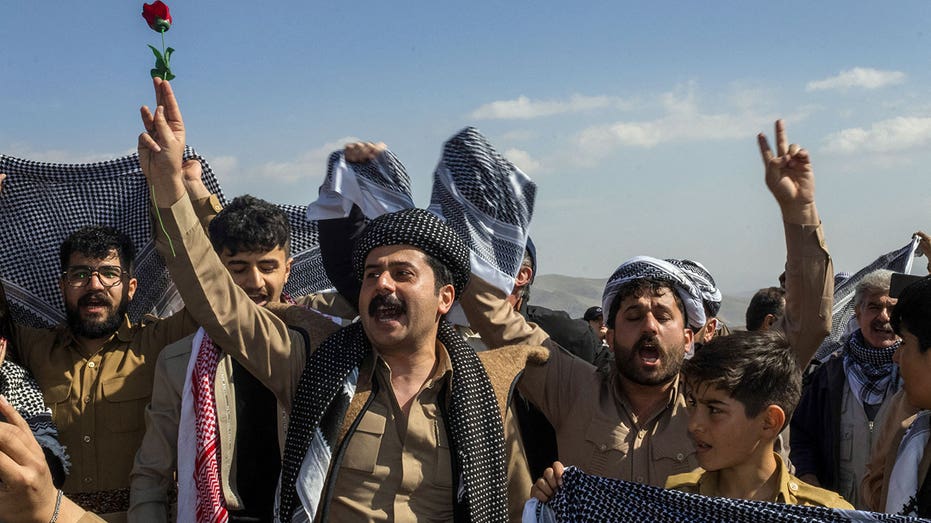
Kurdish opposition groups in Iran are poised to challenge the Tehran regime but are currently refraining from launching a ground offensive. This decision comes as tensions escalate between the United States, Israel, and Iran. In an exclusive interview, Khalid Azizi, spokesperson for the Democratic Party of Iranian Kurdistan (KDPI), stated that Kurdish forces are closely monitoring the developing situation but have no immediate plans for military action.
Azizi’s comments highlight the precarious balance Kurdish groups are attempting to maintain during the ongoing conflict. He noted that recent discussions have taken place between Mustafa Hijri, the leader of the KDPI, and U.S. officials regarding the potential for Kurdish involvement in pressuring the Iranian government. While Azizi did not confirm specific conversations, he emphasized the need for strategic caution.
Historical Context and Current Readiness
Azizi spoke from Washington, D.C., where Kurdish representatives are engaging with policymakers to discuss the implications of the U.S.-Israel conflict on Iran. He recounted his personal experience with Iranian military aggression, recalling a 2018 attack by the Islamic Revolutionary Guard Corps that targeted the KDPI’s headquarters in Koy Sanjaq, resulting in the deaths of at least 18 individuals and many injuries. “The first Iranian missile was sent to my headquarters, and I was personally injured in that attack,” Azizi said.
Despite these dangers, Azizi asserted that the Kurdish resistance remains robust. “The Iranian Kurdish resistance movement is actually very strong because we have been on the ground since the Iranian revolution,” he declared. Kurdish forces are currently organized and prepared but are awaiting a more favorable moment to engage in conflict. “We are ready, and our party is well organized,” he added, indicating a strategic pause rather than a retreat.
Coalition and Political Strategy
The KDPI is one of the oldest Kurdish opposition movements, having opposed the Iranian regime since the 1979 Iranian Revolution. Operating primarily from bases in the Kurdistan Region of Iraq, the group recently formed a coalition with other political factions, known as the Coalition of Political Forces of Iranian Kurdistan. This alliance aims to unify Kurdish political strategies and enhance their collective voice against the Iranian government.
Azizi emphasized the importance of this unity, stating, “We have managed to create a unity among the Kurdish political parties. This has been welcomed by the Iranian Kurdish people and by different Iranian political parties.” He believes that the future of Iran depends on whether its citizens rise up against the current regime.
Notably, Azizi urged Western nations not only to focus on military actions but also to support the political coordination of Iranian opposition movements. He stressed that Iran’s stability hinges on a democratic framework that includes all ethnic groups within the country. “The path and the roadmap for rebuilding Iran must be based on the participation of all ethnic groups,” he stated.
As the situation evolves, Kurdish fighters remain in a state of readiness without immediate plans to enter Iranian Kurdistan. Azizi remarked, “We have the ability and we have the capacity. But it is not easy right now for us to make any decision regarding entering Iranian Kurdistan.”
With the backdrop of escalating tensions in the region, the Kurdish forces are navigating a complex landscape as they prepare for potential challenges ahead. The outcome of the current conflict could significantly influence their strategy and the future of Iranian politics.