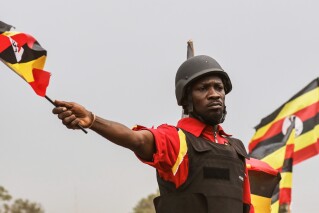
Ugandan opposition leader Bobi Wine announced on Saturday that he has left the country to evade a military search for his whereabouts following a contentious presidential election. Wine, whose real name is Kyagulanyi Ssentamu, had gone into hiding shortly after the January 15 election, which was marred by allegations of fraud.
Yoweri Museveni, the incumbent president, was declared the winner with 71.6% of the votes, a result that Wine and his supporters contest as fraudulent. The situation has intensified following threats directed at Wine by Gen. Muhoozi Kainerugaba, the army chief and son of Museveni, who has publicly called for Wine’s arrest for unspecified crimes.
Wine’s Disappearance and Safety Concerns
For weeks, Wine’s location remained a mystery, raising concerns for his safety. The threat level escalated after Kainerugaba made several inflammatory posts on the social media platform X, referring to Wine with derogatory terms. Despite these threats, Ugandan police have stated that they are not actively searching for the opposition leader.
In a video message shared on X, Wine confirmed his departure from Uganda but did not disclose his current location. He expressed gratitude to those who had protected him during his time in hiding. “Fellow Ugandans and friends of Uganda all over the world, by the time you see this video I will have left the country for some critical engagements outside Uganda,” he stated. “At the right time, I will come back and continue with the cause.”
Political Context and Implications
Wine’s flight follows a raid by Ugandan soldiers at his residence the day after the presidential vote. He had already retreated into hiding, fearing for his life after campaigning in precarious conditions, often seen wearing a helmet and flak jacket at his rallies. The military’s search for him, led by Kainerugaba, has further highlighted the tense political climate in Uganda.
As the most prominent of the seven candidates who challenged Museveni, Wine holds significant influence, particularly among young urban voters disillusioned by high unemployment and government corruption. Many citizens are eager for political change after 41 years under Museveni’s rule. The upcoming inauguration in May will mark Museveni’s seventh term, bringing him closer to five decades in power.
While some supporters credit Museveni with establishing relative peace and stability, allowing Uganda to serve as a refuge for those fleeing violence in the region, critics argue that the country is experiencing a growing trend towards authoritarianism. This sentiment is echoed by opposition figures, including former allies of Museveni.
The political landscape in Uganda remains highly charged, with Wine’s recent actions likely to fuel further tensions as the nation approaches the next phase of its leadership under Museveni.