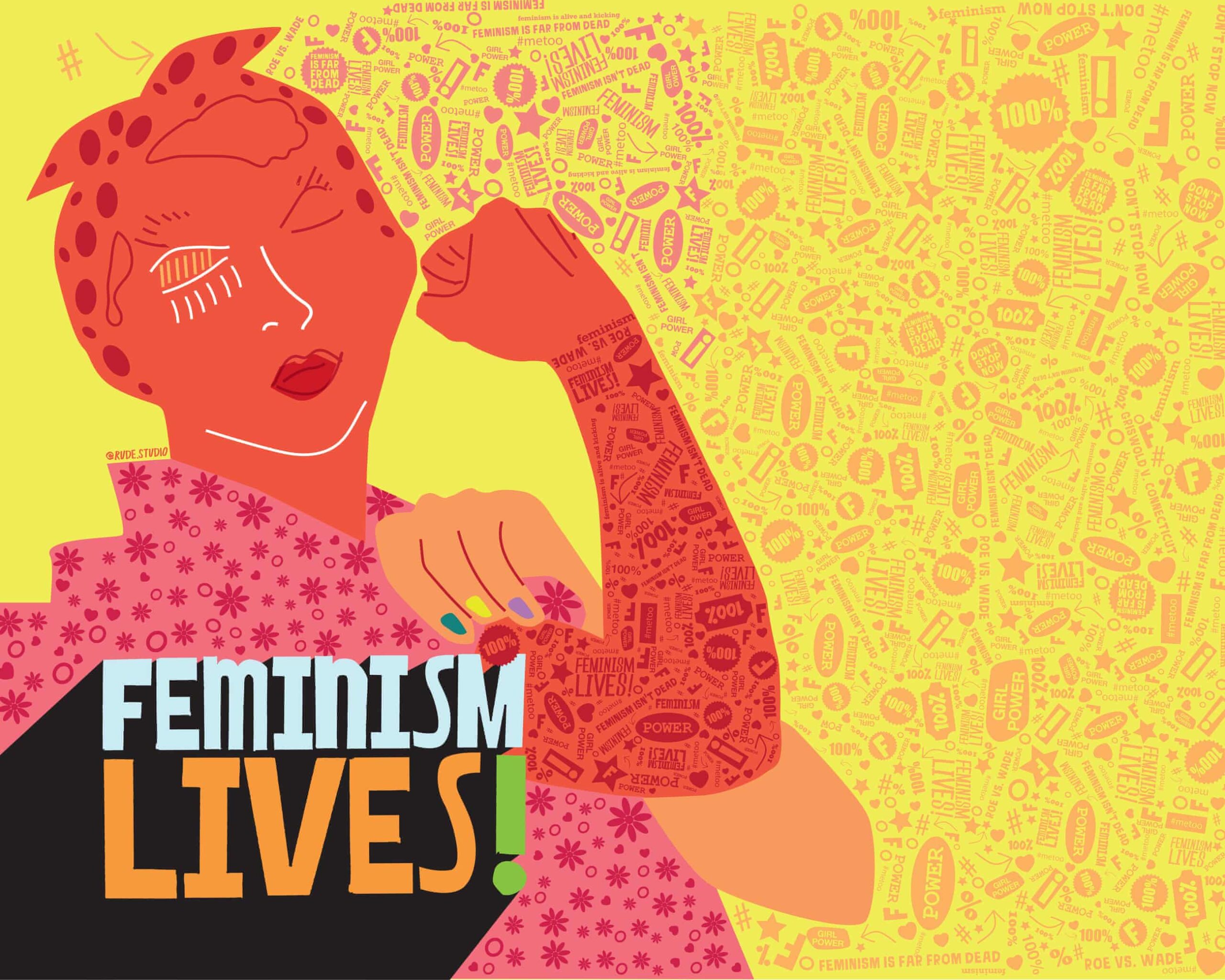
Feminism is far from over, yet many continue to declare its demise. Over the past few years, there has been a resurgence of claims that the movement has failed, primarily rooted in two misleading assumptions. The first assumes that after six decades of activism, feminism should have achieved its goals entirely. The second posits that isolated events can serve as definitive measures of feminism’s effectiveness. Notably, recent discussions around the overturning of Roe v Wade in June 2022, the #MeToo movement, and the revelations from the Epstein files have sparked debate over the state of feminism today.
It is essential to recognize that defining feminism’s success based on singular events is overly simplistic. For instance, critics argue that the #MeToo movement has floundered, pointing to ongoing incidents of sexual abuse as evidence of its failure. Yet, this perspective overlooks the broader context of human rights movements. No one would deem the civil rights movement a failure simply because racism persists. The pursuit of equity is a continuous struggle.
The #MeToo movement, which gained momentum in 2017, was not an isolated phenomenon but rather the culmination of years of feminist discourse that highlighted the prevalence of gender violence. It challenged long-standing stereotypes that often shifted blame onto victims, creating a more informed public willing to confront the issue. This shift in awareness led to significant legislative changes. According to data presented at the Practising Law Institute, prior to #MeToo, only three states had passed anti-harassment reforms. Since then, 70 workplace anti-harassment laws have been enacted across 40 US states, with three thousand legislative proposals influenced by the movement.
In 2021, a nationwide law was established to end forced arbitration in cases of sexual assault and harassment, allowing victims to pursue justice in court. Such changes illustrate the often-overlooked impact of advocacy, which is typically slow and complex. The narrative frequently focuses on high-profile incidents of abuse, with critics declaring the movement unsuccessful whenever such cases arise. Yet, the very reporting of these cases suggests a shift in societal attitudes, as they are now more likely to be acknowledged and prosecuted.
The most profound impact of #MeToo may be its contribution to a cultural shift. Much like environmental victories that prevent pollution or habitat destruction, the success of #MeToo can sometimes appear invisible. The absence of crimes committed due to heightened awareness and accountability is challenging to quantify. Nonetheless, the imprisonment of figures like Harvey Weinstein and R Kelly serves as a cautionary tale for potential abusers, marking a significant change in societal norms regarding accountability.
The revelations from the Epstein files further illustrate the ongoing relevance of feminist activism. Investigative journalism, such as that conducted by Julie K Brown at the Miami Herald, has brought to light the stories of numerous victims. This has not only led to legal repercussions for Epstein but also ignited discussions about accountability within elite circles. The files expose a troubling pattern of prioritizing certain individuals over others, highlighting systemic inequalities that feminism seeks to dismantle.
Interestingly, the contemporary dialogue surrounding these issues has seen increased involvement from men. Figures like congressmen Thomas Massie and Ro Khanna have actively participated in discussions about the Epstein case, challenging the stereotype that feminism is solely a women’s issue. This shift underscores the necessity of collective action for genuine progress.
As discussions continue, it is essential to remember the historical context of feminism. Many may not grasp the struggles faced just decades ago, prior to the advent of second-wave feminism in the 1960s. A personal anecdote illustrates this: individuals often claimed not to know anyone who identified as LGBTQ+ in the past. Today, public figures such as Elton John and Leo Varadkar have contributed to greater visibility and acceptance, demonstrating the gradual societal transformation that has taken place.
The recent overturning of Roe v Wade provides another perspective on the current state of reproductive rights. While some view this as a setback, it is crucial to consider the broader global context. Countries such as Ireland, Spain, Mexico, and Argentina have expanded reproductive rights in recent years. According to the Center for Reproductive Rights, 60 countries have increased access to abortion services over the past three decades, contrasting starkly with the narrowing rights experienced in the United States.
A deeper examination reveals that only 13 out of 50 US states have banned abortion entirely, and less than 30% of women reside in those states. This indicates that the fight for reproductive rights is far from over. While the current political climate poses challenges, public sentiment remains largely supportive of legal abortion. A 2024 poll indicates that nearly two-thirds of Americans back the right to choose, suggesting that legislative measures at odds with public opinion may not endure.
Every effort to strip away women’s rights serves as a reminder of how far society has progressed. Despite the backlash, which is often pronounced in online communities advocating for misogyny, many men have embraced feminist principles, whether they recognize it or not. Understanding the normalization of inequality in various domains, from family roles to workplace dynamics, highlights the significant strides made over the past several decades.
The gender revolution, as described by social scientists, reflects the gradual integration of women into public life and the increasing involvement of men in domestic spaces. This transformation has been substantial yet often unnoticed by those who did not experience the stark divisions of the past. A recent study shows that married women now perform twice the amount of housework compared to their husbands, a notable change from the 1960s when they were responsible for seven times more domestic labor.
This ongoing journey towards gender equality reveals that while progress has been made, there is still much work to be done. The narrative surrounding feminism’s supposed decline often overlooks the complex achievements of the past 60 years. The struggle for rights and equality is not a finished story but rather a continuous effort. By reflecting on the past and recognizing the victories, advocates can draw inspiration to continue the fight for a more equitable future.
As the conversation evolves, it becomes evident that feminism remains a vital force for change, and its continued relevance is essential for shaping a world where equality is not merely an aspiration but a reality.