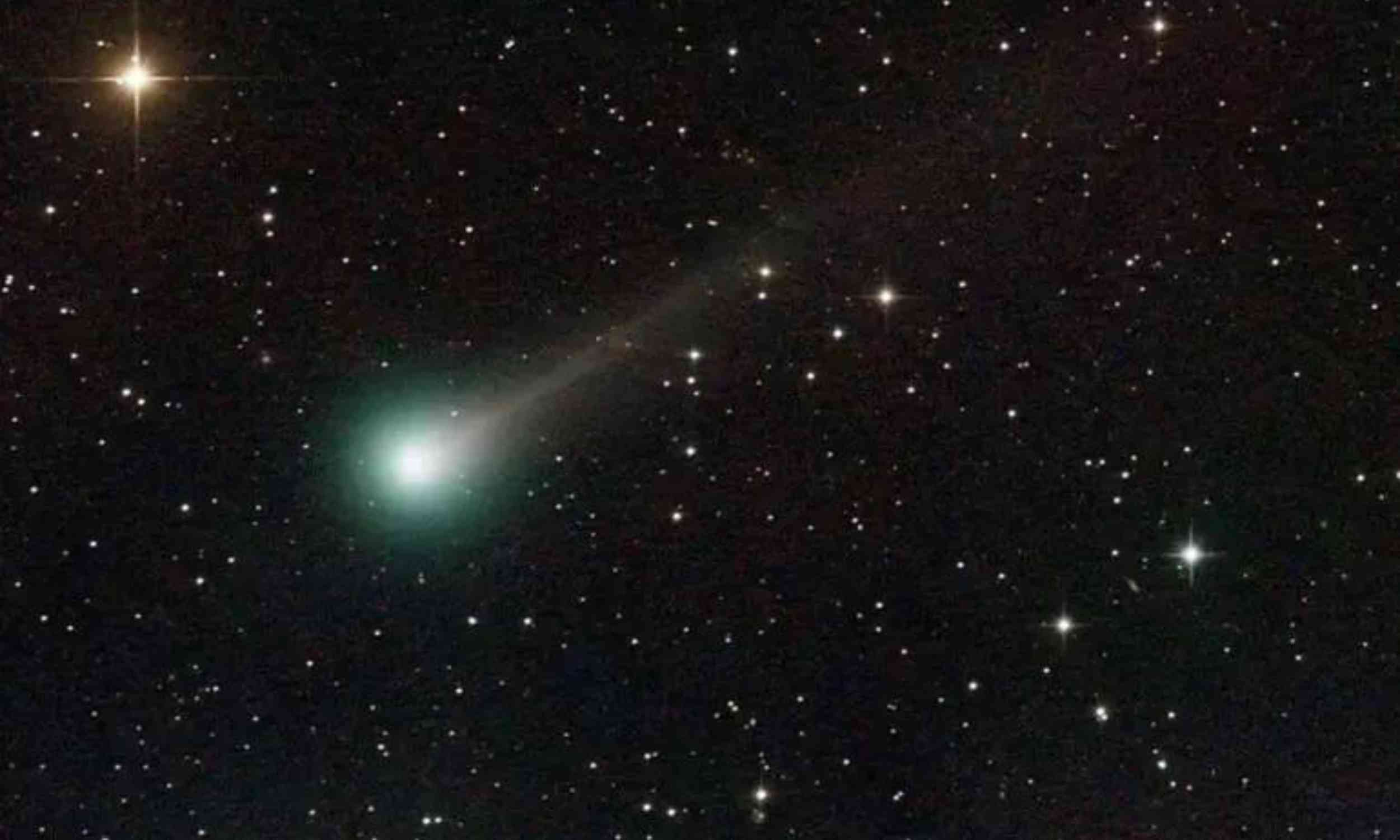
Comet C/2025 R3 Begins Its Last Dazzling Flyby Near the Sun
Comet C/2025 R3 is currently making its final approach close to the Sun before embarking on an irreversible exit from our solar system. Scientists confirmed that after reaching its closest point to the Sun on April 19, 2026, the comet’s orbit has shifted onto an escape trajectory, ensuring this is the only chance for observers on Earth to see it.
The University of Hawaii’s Institute for Astronomy researcher Yudish Ramanjooloo reported remarkable brightening of the comet as it neared the Sun. As frozen ices transformed directly into gas under intense solar heat, dust and gas were pushed away to form the classic glowing coma and long tail stretching millions of miles.
Brief Dawn Visibility Challenges Observers Worldwide
Throughout mid-April, comet C/2025 R3 has been visible in the pre-dawn eastern sky, quickly rising in brightness from magnitude 4 to nearly 3, which is visible with binoculars and some naked-eye attempts from dark locations.
However, its low altitude—just a few degrees above the horizon—and proximity to the Sun’s glare have made spotting it difficult across major cities in the Northern Hemisphere, including the United States. Observers in cities like Tokyo faced similar challenges, where humid air, buildings, and hills often erased the faint glow just before sunrise.
Patience was critical. Those who adjusted their eyes away from bright screens and used binoculars found the best success during a narrow window near April 20, 2026. Photographers capturing long exposures managed to reveal the comet’s tail extending far beyond what the naked eye could discern.
What Makes This Comet’s Appearance Historic
Comet C/2025 R3’s shift onto a hyperbolic orbit means it will not return, unlike typical comets that circle the Sun repeatedly. This final trajectory was altered after its closest solar pass at about 46 million miles (74 million kilometers). Scientists classify this as an open escape route, marking a permanent farewell.
That fact underscores the urgency: once the comet fades into the Sun’s glare, it will never again grace Earth’s skies. The fleeting nature of this event combined with challenging viewing conditions makes catching C/2025 R3 a rare and valuable experience for skywatchers.
Looking Ahead: Southern Hemisphere Offers Evening Views
After its perihelion, the comet’s location will shift, improving viewing conditions in the Southern Hemisphere by early May. Although the comet will begin to dim, it will be higher in the evening sky away from the harsh Sun’s glare, providing better opportunities for observers with clear eastern horizons.
Observers planning to catch the comet should prepare for chilly mornings, bring binoculars, and use steady tripods for photography. Long exposures will enhance faint features of the comet’s tail and coma, often revealing subtle greenish hues caused by sunlight breaking down carbon molecules near its core.
Final Moments for a Celestial Visitor
The rare chance to observe comet C/2025 R3 is a reminder that some cosmic events do not return within a human lifetime. Its sudden brightening, orbit change, and dramatic final flyby offer a unique spectacle shaped by solar heat, gravity, atmospheric conditions, and precise timing.
Sky watchers across the globe, especially in the US and northern latitudes, are encouraged to look low to the east in the predawn hours and act fast—any delay risks missing this once-in-a-lifetime light show.
Official Study: Observations and orbital calculations come from the University of Hawaii Institute for Astronomy and are published in the Central Bureau Electronic Telegrams.
Stay updated on this and other sky events by subscribing to trusted astronomy newsletters and following live skywatching apps like EarthSnap.