NASA’s Massive $20 Billion Lunar Base and Nuclear Spacecraft Plan Revealed
NASA announced groundbreaking plans amid urgent scientific revelations and haunting reminders of past nuclear disasters. The space agency is pushing forward with an ambitious $20 billion lunar base project coupled with the development of a nuclear-powered interplanetary spacecraft set to redefine human space exploration and deepen America’s role in the final frontier.
As the Artemis II mission prepares for liftoff, these investments signal NASA’s commitment to establishing a sustained human presence on the Moon and pushing toward Mars. The nuclear propulsion technology promises faster, longer missions, offering hope for interplanetary travel previously thought impossible.
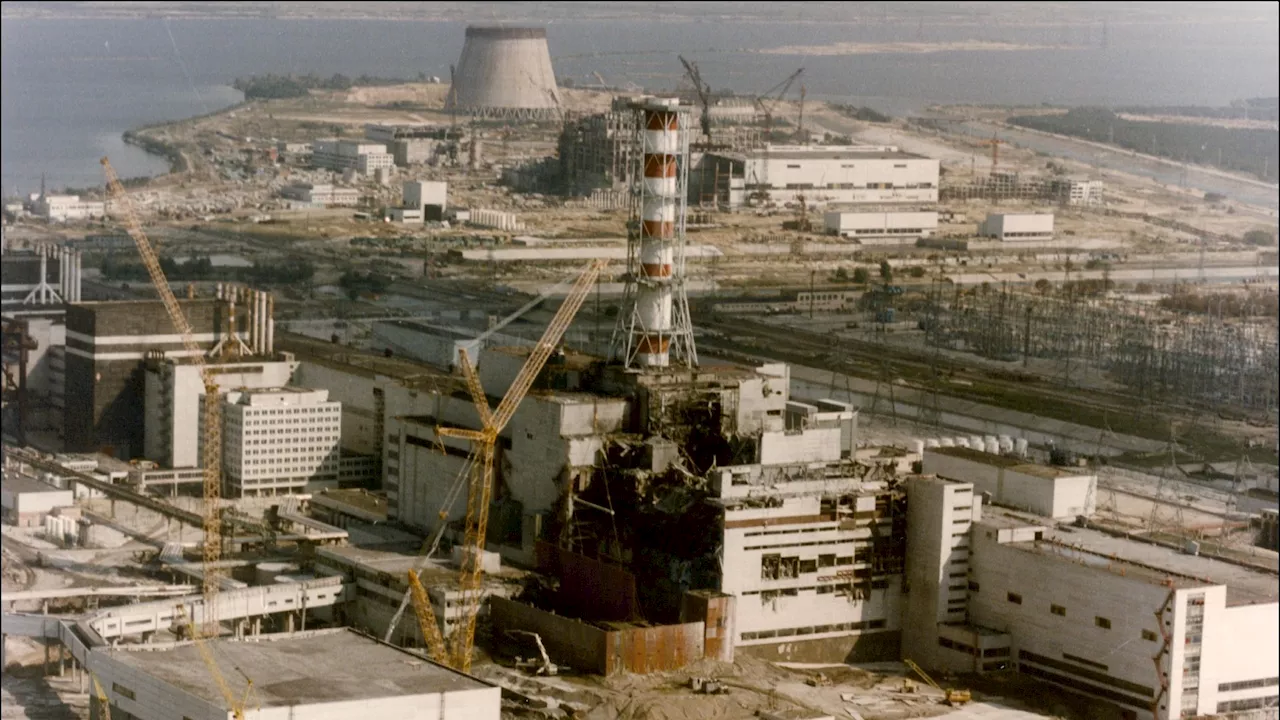
Chernobyl Disaster’s Dark Shadow Persists Over 40 Years Later
While NASA’s gaze turns skyward, Earth’s most radioactive spot still bears the scars of human error and catastrophic failure. The 1986 Chernobyl nuclear meltdown remains a chilling example of how tiny mistakes in complex systems can unleash devastation on a massive scale.
The tragedy unfolded during a flawed safety test when operators at the Chernobyl Nuclear Power Plant in Ukraine attempted to see if the turbines could keep coolant circulating during a power outage. A combination of pressure from the Kyiv electricity grid and mistakes by a less experienced night crew escalated the situation.
Operators removed almost all control rods in desperation, but a final failed attempt to stop the nuclear reaction led to a catastrophic power surge and the plant’s explosion. The disaster forced large-scale evacuations, caused immediate deaths, and triggered long-term health consequences still studied today.
The infamous “Elephant’s Foot,” a mass of molten nuclear fuel and debris, remains highly radioactive within the plant’s exclusion zone, an eerie symbol of the damage wrought and a warning against nuclear complacency.
From Concealment to Global Radiation Alarms
Initially, the Soviet Union tried to cover up the accident, but rising radiation levels detected across Europe exposed the truth. While early reports suggested no immediate spike in cancer rates, health experts acknowledge the potential for delayed effects that could haunt future generations.
Science Advances Amidst Crisis and Discovery
Alongside these historic events, recent scientific milestones like the discovery of Carbon-14 in 1940, pivotal to dating ancient civilizations, underscore the power of science to unlock the past even as humanity grapples with its future.
Other Astonishing Science Stories Making Waves Now
Beyond nuclear legacies and space ambitions, scientists report faster-than-light darkness phenomena adding to cosmic mysteries and surprising evidence that polar bears, though endangered, are gaining weight. Disturbing accounts of tornado survival and dramatic meteorite crashes, including one that smashed through a Texas home amid multiple U.S. fireball sightings, make headlines.
Cannabis’s science-backed link to “the munchies” craving sheds light on human biology, while Iran’s war impacts raise alarms on environmental and health fronts worldwide.
Why This Matters Today
This confluence of science news—from NASA’s $20 billion investment in space infrastructure to Chernobyl’s ongoing radioactive threat—highlights humanity’s sharp contrasts between bold ambitions and fragile realities. These stories remind Americans of the fine line between progress and peril, urging vigilance, innovation, and respect for both Earth’s delicate ecosystems and the vast unknown of space.
As the Artemis II mission gears up, NASA’s nuclear-powered spacecraft could open new doors. Meanwhile, the stark, radioactive wasteland of Chernobyl, now an unintended wildlife refuge, reminds us of the high cost of error and the urgency of safety in all scientific ventures.
Stay tuned for further updates as these developing stories rewrite the limits of human survival, science, and exploration.