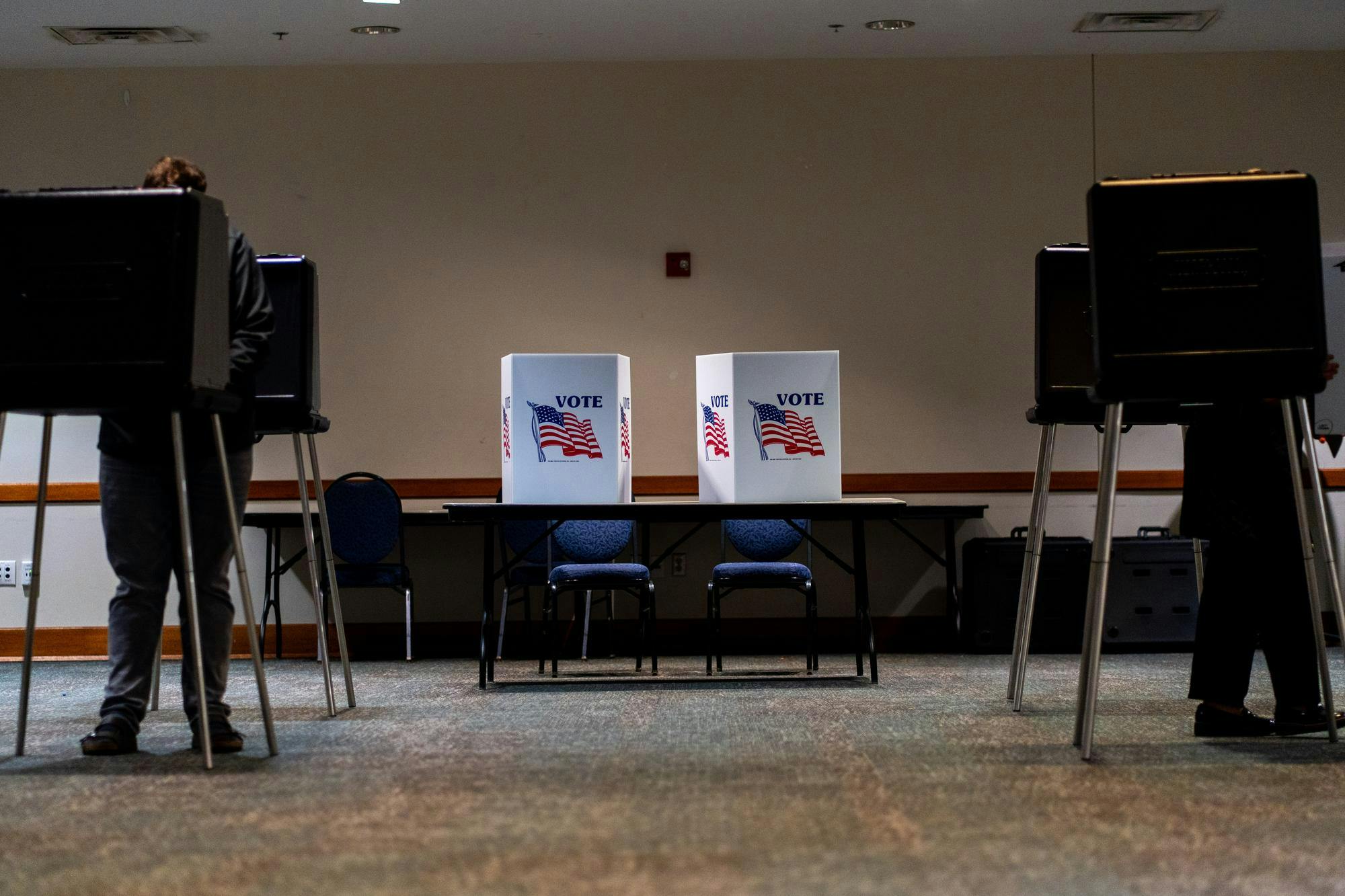
Federal Investigation Silences Student Voting Data at Michigan State Ahead of Crucial Midterms
A federal investigation into a national study of student voting trends has abruptly halted Michigan State University’s access to key data on campus voter engagement just months before the November midterm elections. The U.S. Department of Education launched the probe earlier this year, citing concerns that the ongoing National Study of Learning, Voting and Engagement (NSLVE) may have violated student privacy laws.
Since 2016, MSU has participated in the NSLVE, an extensive project run by Tufts University since 2013, tracking student voter registration and turnout by demographics, academic year, and fields of study. The data has been pivotal for MSUvote, a nonpartisan student group that boosts voter participation through targeted outreach and education.
Lost Insights Jeopardize Tailored Voter Outreach on Campus
MSUvote Co-Director Renee Miller Zientek expressed deep concern over the investigation’s impact. “We’re heading into a midterm, and it would be invaluable to say, ‘Our last midterm turnout was X percentage; this time it’s Y,’ but we won’t be able to do that,” she said. The detailed NSLVE reports, including an 18-page MSU-specific analysis released in 2022, helped identify when and where to engage students most effectively.
Without access to this anonymized, aggregated data—obtained via the National Student Clearinghouse—MSUvote cannot analyze voter patterns among first-time voters, by academic disciplines, or class year. “We lose the ability to tailor education efforts precisely,” Zientek said. For instance, data that captures absentee voters or students voting remotely out-of-state is now inaccessible, limiting meaningful outreach.
Tufts and Clearinghouse Halt Reports Amid Privacy Scrutiny
The Department of Education’s investigation was triggered by multiple reports alleging that student voting data was shared with third parties to potentially influence elections. Despite Tufts University’s defense stating all data is anonymized and only aggregated findings are published, the clearinghouse managing data collection announced its withdrawal from the project in February. Tufts has paused NSLVE report releases while the probe continues.
This sudden stoppage has wider repercussions. MSU’s ability to benchmark its voter turnout improvements against peer institutions nationwide has stalled. The university earned recognition as the “Most Improved Voting Rate” among Big Ten colleges for the 2022 midterms through the ALL IN Campus Democracy Challenge, a program relying heavily on NSLVE data.
Local Election Data Falls Short, Highlights Need for Student Voting Analysis
Precinct-level data offers limited insights. An East Lansing precinct analysis after the 2022 midterms revealed students voting on-campus favored then-Vice President Kamala Harris at lower rates than prior Democratic candidates. Still, this narrow snapshot excludes absentee ballots and those voting elsewhere, a gap NSLVE data previously filled.
“Being blind to who is voting and who isn’t undermines our ability to focus outreach where it’s needed most,” said Zientek. MSUvote is now forced to lean on static strategies informed by historical trends, such as targeting first-time voters and widespread campus education.
Looking Ahead: MSUvote Adapts but Warns of Lasting Impact
With the NSLVE data on pause indefinitely, MSUvote plans to ramp up programs centered on civic skills, voter identity, and non-data-driven educational workshops ahead of the 2026 midterms. “While it would help to have this data to sharpen our efforts, our mission remains the same: provide voter education and make voting accessible for all MSU students,” Zientek emphasized.
The investigation’s outcome will be closely watched nationwide. As universities rely increasingly on precise data to boost student voting—a key indicator of civic engagement—the loss of such resources highlights tensions between privacy concerns and democratic participation efforts just as election season heats up.