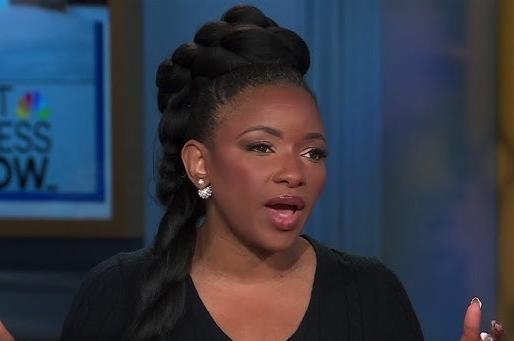
Rep. Jasmine Crockett has come under fire following her recent speech in the House, where she erroneously linked a political donation to a person with a similar name to the convicted sex offender Jeffrey Epstein. During her remarks, she claimed that a series of donations were funneled from “somebody named Jeffrey Epstein” to prominent Republican figures, including Mitt Romney and George W. Bush. The backlash arose when it was revealed that the individual she referenced was actually Dr. Jeffrey Epstein, a physician with no connection to the infamous financier.
The incident, which took place on November 19, 2025, sparked considerable debate about the standards of discourse in political settings. Critics highlighted that Crockett’s accusations lacked verification and relied on a misleading association. In a tweet, former Representative Lee Zeldin pointed out the mix-up, stating, “NO FREAKIN RELATION YOU GENIUS!!!” This incident raises questions about the accountability of public officials in their statements.
Crockett’s behavior is not an isolated incident. The congresswoman has built her public persona around high-energy performances and provocative statements. In a previous town hall, she controversially agreed with a claim that Republicans “want poor people to die as quickly as humanly possible.” This statement not only drew criticism but also showcased a pattern of inflammatory remarks that some argue distract from substantive policy discussions.
In another notable moment, Crockett referred to Texas Governor Greg Abbott as “Governor Hot Wheels” at a Human Rights Campaign event, which many viewed as disrespectful given Abbott’s disability. Following the backlash, Crockett defended her comments, insisting that she was not mocking Abbott’s condition. Critics, however, pointed out her history of sharing posts that ridiculed Abbott for his use of a wheelchair, suggesting a lack of sincerity in her defense.
Reflecting on the current political climate, the response to Crockett’s comments highlights a double standard in media coverage. Observers have noted that had a Republican made similar statements, it would likely have resulted in extensive media scrutiny and calls for resignation. Instead, Crockett’s remarks have often been met with applause from some segments of the Democratic Party, raising concerns about the implications for political decorum and accountability.
Crockett’s approach, characterized by sensationalism rather than fact-based dialogue, has drawn both supporters and detractors. While some view her as a dynamic voice for the future of the Democratic Party, others argue that her style undermines serious political discourse.
As the political landscape continues to evolve, questions about the standards of communication and the importance of factual accuracy remain at the forefront. With public trust in politicians waning, the expectation for responsible and respectful dialogue is more crucial than ever. The incident serves as a reminder of the need for careful consideration in public statements, especially from those in positions of influence.
The evolving narrative surrounding Rep. Crockett underscores the broader challenges facing political leaders today, as they navigate a landscape increasingly marked by misinformation and partisanship. As observers reflect on her comments, the call for a return to integrity and respect in political dialogue grows louder, leaving many to wonder what the future holds for American politics.