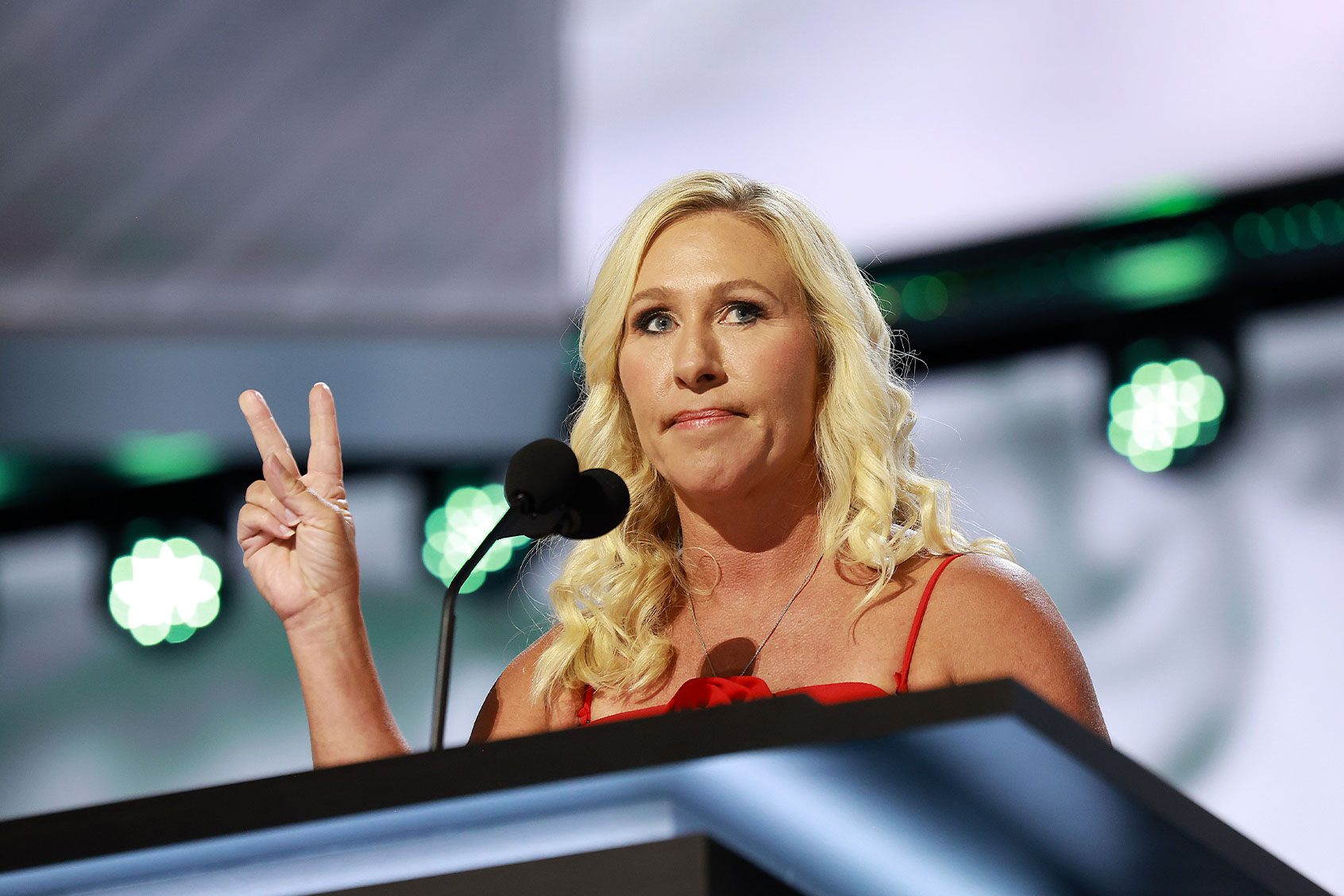
Recent actions by Marjorie Taylor Greene, a Republican Representative from Georgia, indicate a notable shift in her political stance, challenging the traditional dynamics within the party. Greene, known for her close alignment with Donald Trump, has begun to diverge from his positions on several key issues, raising questions about her future and the evolving landscape of the Republican Party.
Historically, Trump has maintained a tight grip on the GOP, with many party members aligning closely with his directives to avoid political repercussions. This loyalty has often resulted in the marginalization of those who dare to oppose him. However, Greene’s recent moves suggest that Trump’s influence may be waning, particularly as his popularity declines and his behavior becomes more unpredictable.
Greene’s departure from Trump’s ideology is marked by her support for the release of Epstein files, which conflicts with Trump’s wishes, and her surprising criticisms of his stances on Israel and Ukraine. Furthermore, she has advocated for extending Obamacare subsidies and Supplemental Nutrition Assistance Program (SNAP) benefits, both traditionally contentious topics within the GOP. These actions indicate a shift towards a more populist approach, focusing on what she perceives as the needs of working families.
Shifting Political Landscape
The Republican Party is currently experiencing significant internal conflict, with factions emerging that challenge Trump’s authority. Tucker Carlson, a former Fox News personality, has been at the forefront of this shift, engaging with extremist ideologies that have drawn criticism from other conservative figures like Dinesh D’Souza and Ben Shapiro. As the party grapples with these divisions, Greene’s actions may reflect a broader trend of discontent among some GOP members.
Greene’s transformation from a staunch Trump supporter to a vocal critic has been particularly striking. She has publicly apologized for her past inflammatory rhetoric, claiming she was misled by conspiracy theories, a move that could be seen as an attempt to reposition herself within the party. Trump’s response, labeling her as “Marjorie Traitor Greene,” suggests that her shift has not gone unnoticed and may have implications for her political future.
The Future of Greene and the GOP
Speculation surrounds Greene’s motivations. Some analysts suggest that her apparent break from Trump could be a strategic move as she considers a presidential run. Greene has a clear vision of an “America First” policy, advocating for isolationism and a reduction in foreign aid. However, her recent departures from Trump’s core tenets of loyalty may pose challenges in garnering support from MAGA followers who view allegiance to Trump as paramount.
At 51 years old, Greene’s political journey has been relatively recent, having only engaged deeply with politics in the past six years. Her ambitions, coupled with a keen political acumen, suggest she is positioning herself for a significant role in the party’s future. As Trump’s influence diminishes, Greene could emerge as a leading figure, but whether she can unify the party under her vision remains uncertain.
As the Republican Party navigates these tumultuous times, Greene’s actions will likely continue to draw attention. Her ability to balance her ambitions with the expectations of the GOP base will be crucial as the 2024 electoral landscape takes shape. The evolving dynamics within the party may ultimately redefine what it means to be a Republican in the coming years.