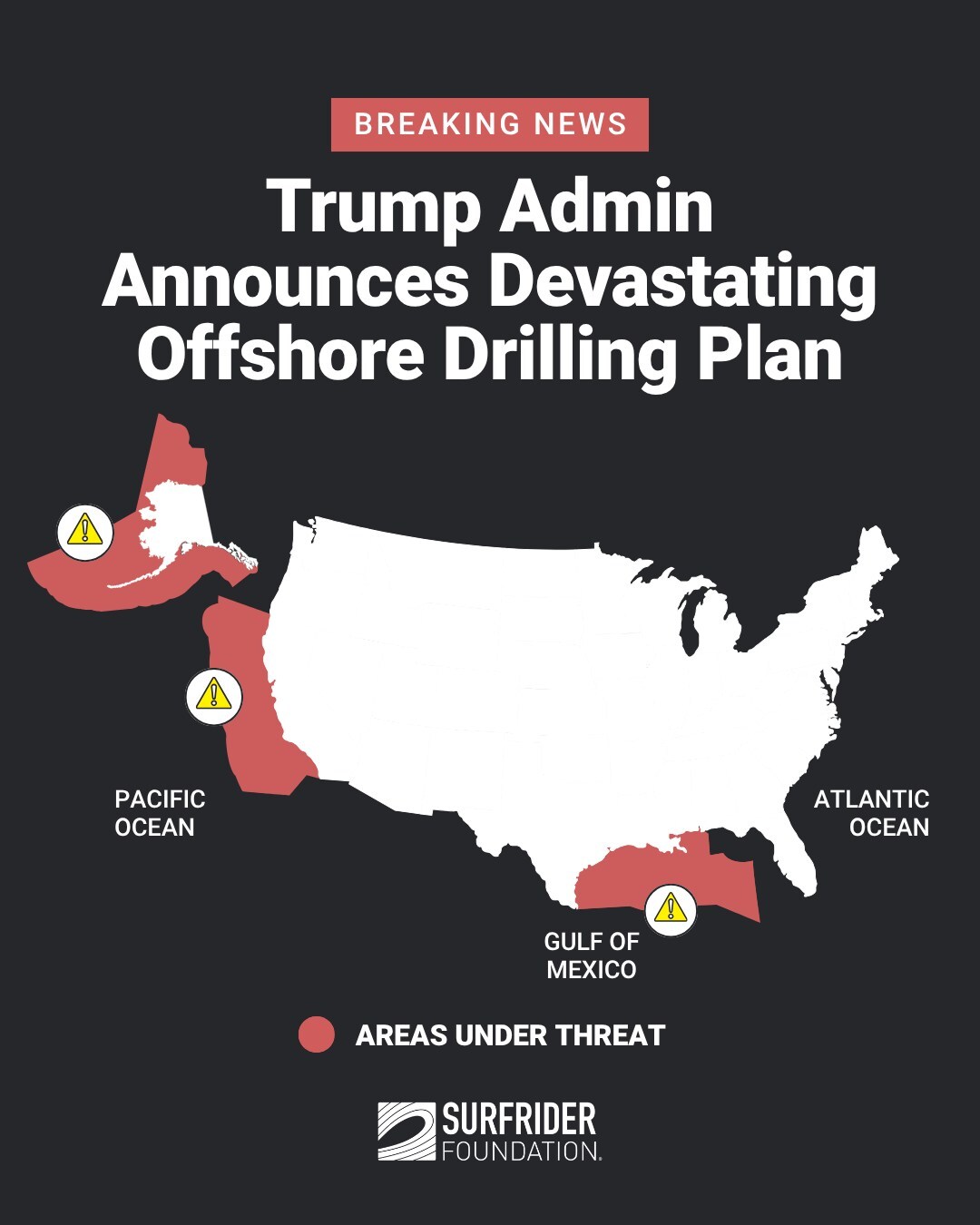
A new offshore drilling proposal from the Trump administration threatens to compromise the coastal economy, which generates approximately $250 billion annually and supports 3.3 million jobs across the United States. The plan aims to open waters off California, Florida, and Alaska to oil and gas drilling, a move that has garnered significant public opposition, particularly from the Surfrider Foundation, a nonprofit organization dedicated to ocean and coastal protection.
The proposed 5-Year Outer Continental Shelf Oil and Gas Leasing Program for 2026-2031 by the Bureau of Ocean Energy Management would allow drilling in the Gulf of Mexico, including previously protected areas off Florida’s coast. It also seeks to open nearly all of California’s and Alaska’s coastlines, including the High Arctic, an area known for its extreme environmental risks.
Dr. Chad Nelsen, CEO of the Surfrider Foundation, stated, “The Surfrider Foundation has beaten the Trump administration’s plans to expand offshore oil and gas drilling in U.S. waters before, and we’re ready to do it again. New leases in this drilling plan threaten wildlife, communities, and the coastal recreation and tourism industries that contribute billions of dollars to our nation’s economy.” Nelsen emphasized that new drilling increases the likelihood of catastrophic oil spills, similar to the Deepwater Horizon disaster.
Offshore drilling poses a serious threat to coastal recreation, tourism, and fishing industries that rely on clean oceans. Nationally, ocean tourism and recreation provide nearly ten times more jobs than the offshore oil industry. In the Gulf of Mexico, where most offshore drilling is currently concentrated, ocean-dependent sectors contribute the largest share of employment in every Gulf state except Texas.
The U.S. does not require new offshore leasing to meet its energy needs. The oil and gas industry holds over 1,800 fully approved yet unused drilling permits across federal lands. Furthermore, consumer relief at the pump is unlikely to come from new offshore wells, as gas prices are primarily influenced by global markets, according to the U.S. Department of Energy.
Public opposition to offshore drilling remains strong and widespread. Over 400 municipalities, 2,500 elected officials, 59,000 businesses, and 500,000 fishing families have formally opposed new offshore oil and gas development. Recent polling indicates that two-thirds of American voters oppose new offshore drilling, with 83% advocating for leaders who prioritize environmental protection.
In January 2025, outgoing President Joe Biden took measures to protect more than 625 million acres of U.S. waters from future oil and gas leasing. These protections were quickly challenged when President Trump signed an executive order after taking office, attempting to revoke the Biden-era protections. A federal judge ruled that his attempt to revoke Obama-era protections in the Arctic was unlawful during Trump’s first term.
The Surfrider Foundation is mobilizing communities across the nation to voice opposition against the new drilling proposal. Without substantial public engagement, advocates warn that the influence of the oil industry in Washington could overshadow their efforts. Members of the public can submit comments opposing the offshore drilling plan to the Bureau of Ocean Energy Management before January 22, 2026. For more information on the campaign against offshore drilling, visit surfrider.org/drilling-is-killing.
Founded in 1984 by a group of surfers in Malibu, California, the Surfrider Foundation is a grassroots organization dedicated to protecting the world’s oceans, waves, and beaches. With over one million supporters, the foundation has more than 200 volunteer-led chapters and has achieved over 900 victories in coastal protection efforts.