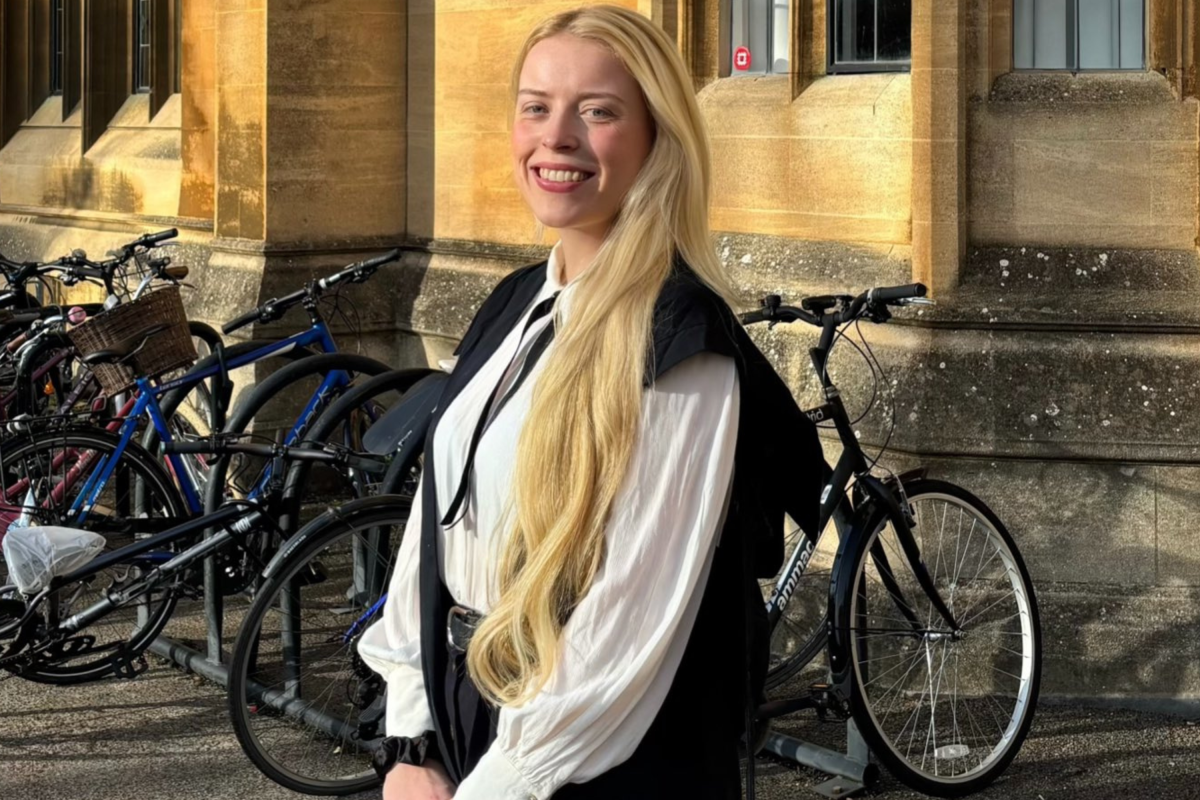
BREAKING: Dr. Juliet Turner, a 27-year-old ecologist who just earned her Ph.D. from the University of Oxford, is facing a wave of misogynistic backlash after celebrating her academic achievement on social media. On November 14, 2023, Turner shared her success with over 51,000 likes on a post that declared, “You can call me Doctor!” However, instead of the expected support, she was bombarded with degrading comments about her personal life choices.
Turner’s thesis, focused on the evolution of cooperation and division of labor in insects, marked the culmination of four years of rigorous research. She defended her work in a final examination known as a viva, which earned her the prestigious title of Doctor of Philosophy. The University of Oxford, ranked number one globally by Times Higher Education, underscores the significance of her achievement.
While many celebrated her success, a disturbing trend emerged in the responses. Several men attacked her, claiming that her academic focus meant she would never have children. One user crudely remarked, “30 years old and zero kids. Her ancestors are ashamed of her,” despite Turner being just 27. Another comment stated, “If you follow an academic career, you will be unlikely to ever have or raise children.”
Turner expressed her surprise at the hostility, stating, “I never expected this response,” adding that the influx of negative comments about her thesis topic and life choices was overwhelming. “Every time I open the app, I’m flooded by new posts of strangers weighing in on either the validity of my thesis topic, the health of my eggs, or the wisdom of my life choices!”
Despite the negativity, Turner remains focused on the positive aspects of her work. She noted that the attention has allowed her to engage with a broader audience about her research. Turner, who comes from an academic family, countered the misogynistic narratives, explaining, “The idea that doing a Ph.D. means you probably won’t have children is odd; I’m living proof that academics are capable of self-replication!”
According to a recent survey by Amnesty International, 73 percent of Gen Z users in the U.K. reported encountering misogynistic content online, with many identifying social media platforms like TikTok and Instagram as hotspots for such behavior. Turner highlighted the contrast between online sentiments and real-world interactions, stating that views on women in STEM are “nowhere near as weird or conspicuous” in her professional life.
As Turner embarks on her career as a pollinator ecologist, she emphasizes the importance of applied conservation research while remaining open to evolutionary projects and science communication. “It’s nice to be working with real organisms again,” she said, describing her current work identifying insects and wild plants for projects on organic and regenerative farming across the U.K.
The backlash against Turner’s celebration of academic success speaks to a broader societal issue regarding the treatment of women in academia. As discussions around gender equality continue, Turner serves as a reminder of the challenges female scholars face in both public and private spheres.
What happens next remains to be seen, but Turner’s resilience and commitment to her field may inspire others to speak out against misogyny and support women pursuing their dreams in academia.