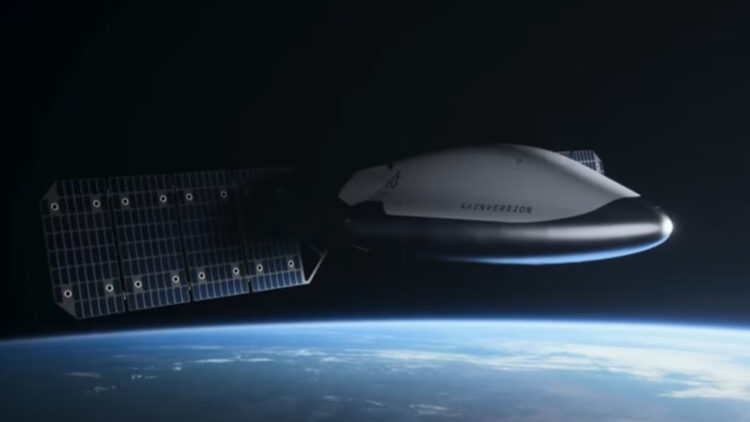
A Los Angeles-based aerospace startup named Inversion is gearing up to launch a revolutionary cargo transport system that could redefine logistics on a global scale. The company is developing a spacecraft called Arc, designed to deliver cargo anywhere on Earth in approximately one hour. This innovative concept merges advancements in space technology, robotics, and artificial intelligence to create an orbital transport network.
Inversion’s Arc spacecraft is envisioned as a compact vehicle, measuring about 8 feet tall and 4 feet wide. Unlike traditional aircraft or rockets, the spacecraft will remain in orbit as a delivery capsule until summoned for a mission. When activated, Arc will descend through the atmosphere and land safely using parachutes, capable of touching down on various surfaces, including soil, snow, rivers, or oceans without damaging its cargo.
The primary objective of Arc is speed, particularly in critical situations where timely deliveries are essential. In a world often impacted by conflict and humanitarian crises, traditional shipping routes may be too slow or obstructed. Inversion anticipates that Arc will provide a solution, delivering crucial supplies to nearly any location on Earth in less than an hour.
Innovative Technology and Development Progress
Inversion has made notable strides in its development journey. The company constructed an initial prototype called Ray, which cost around $1 million to build. This figure is relatively modest for a space-related project, suggesting that advanced orbital transport systems can be developed at a lower cost than traditional aerospace ventures. Since its formal launch in October 2025, Inversion has assembled a team of 25 employees with expertise in space engineering, working diligently to bring the Arc project to fruition.
Plans are already underway to conduct tests on Arc in 2026. These tests will be crucial in evaluating the spacecraft’s capabilities throughout the entire mission profile, including launch, orbit stability, atmospheric re-entry, and precision landing while carrying cargo.
Future Challenges and Industry Impact
Despite the promising developments, Inversion faces several challenges ahead. Flight tests, regulatory approvals, and stringent inspections are all necessary steps before the Arc can enter the market. Potential clients will weigh factors such as cost, reliability, and safety when deciding whether to adopt this new technology or continue using established transportation methods.
As the prospect of a new orbital transport network unfolds, there is palpable excitement within the industry. Inversion’s innovative approach may not only enhance existing logistics systems but also provide an alternative when traditional transport options fail to meet urgent demands. The trials planned for 2026 will be pivotal in determining if this groundbreaking venture can successfully integrate into the cargo transport landscape.
Inversion’s ambitious vision places it in direct competition with established figures in the aerospace industry, including Elon Musk, as it seeks to reshape the future of global logistics. If successful, Arc could usher in a new era of rapid delivery services that address the unique challenges of modern supply chains.