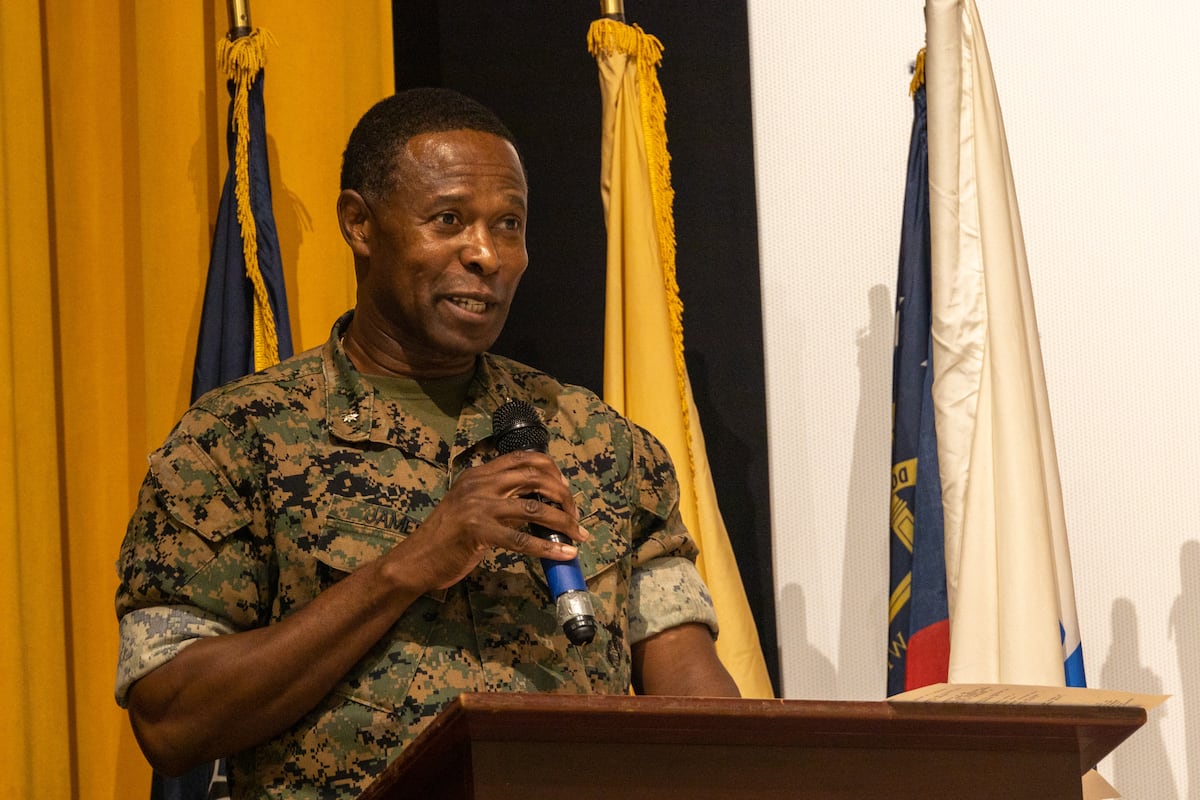
The commanding officer of the Marine Aviation Logistics Squadron 36, stationed in Okinawa, Japan, was relieved of his duties on Wednesday. Lt. Col. Calischaran G. James was dismissed by Maj. Gen. Marcus B. Annibale, the commanding general of the 1st Marine Aircraft Wing, due to a “loss of trust and confidence in his ability to command,” according to a Marine Corps announcement. This phrase is commonly employed within military services when senior leadership is removed.
The announcement did not provide further details regarding the specific circumstances that led to James’ dismissal. As of the time of reporting, a request for additional information had not been answered. In the statement, Maj. Joseph Butterfield, a spokesperson for the 1st Marine Aircraft Wing, emphasized the importance of leadership integrity, stating, “Commanders are held to the highest standards of conduct and must consistently live above reproach.” He added that the decision reflects the Marine Corps’ commitment to maintaining the trust essential for effective leadership.
Originally hailing from the Caribbean island of Dominica, James enlisted in the Marine Corps in 1998. He was commissioned as an officer in 2006 after completing the Enlisted Commissioning Program. Notably, in 2020, he received the Marine Corps Aviation Association’s Earle Hattaway Ground Officer of the Year Award, recognizing his contributions to the Corps. James took command of MALS-36 in May 2024.
In the wake of James’ dismissal, Lt. Col. Ryan T. Iden has been appointed as the interim commanding officer until a permanent replacement is selected. Iden, a veteran of the Marine Corps since 1997, began his career as an infantryman and later earned his commission in 2008.
Recent Leadership Changes in Marine Corps
James’ removal is part of a broader trend within the Marine Corps, reflecting increasing scrutiny of leadership effectiveness. Just days prior, on October 28, 2023, the commanding officer, executive officer, and senior enlisted leader of the Hawaii-based Marine Medium Tiltrotor Squadron 268 were also dismissed due to a loss of trust in their ability to uphold safety and readiness standards. This wave of leadership changes indicates a concerted effort by command to reinforce accountability and operational readiness within the Marine Corps.
As military organizations continue to prioritize effective leadership, the implications of these dismissals may resonate throughout the ranks, influencing both current operations and the future trajectory of Marine Corps leadership standards.