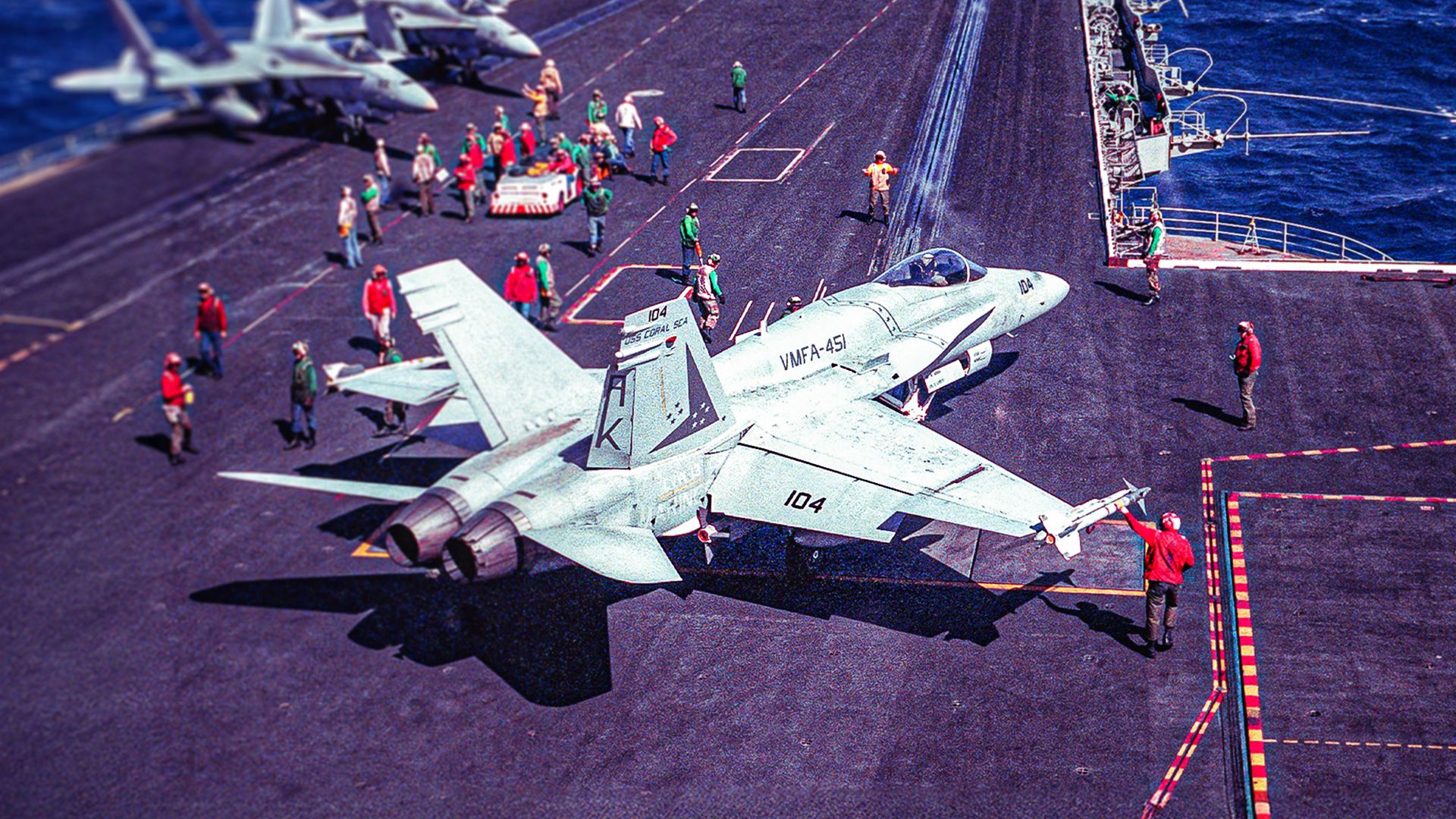
The aircraft fleets of the United States Navy and the United States Marine Corps showcase distinct capabilities tailored for their respective missions. While both branches operate a range of common aircraft launched from the same aircraft carriers, they possess unique platforms that reflect their operational focuses. The Navy emphasizes maritime warfare with a larger inventory, while the Marines concentrate on supporting ground troops, ensuring a diverse array of aviation assets.
Overview of Fleet Capabilities
The Department of the Navy operates approximately 4,000 aircraft, with the F/A-18E/F Super Hornet serving as the backbone of its carrier aviation. Currently, there are just under 600 Super Hornets in active service. The Navy is also integrating the F-35C Lightning II, a fifth-generation carrier variant, with about 50 already operational and over 200 on order. Plans are in place for the F/A-XX, which aims to replace the aging Super Hornet fleet by the 2040s, integrating advanced technologies such as stealth and artificial intelligence to enhance operational effectiveness.
Key aircraft within the Navy’s inventory include the E-2D Advanced Hawkeye, which provides airborne early warning, and the P-8A Poseidon, utilized for anti-submarine warfare. The Navy also operates the MQ-4C Triton unmanned aerial vehicle for reconnaissance, alongside plans to incorporate the MQ-25A Stingray, the first carrier-based unmanned aerial refueler.
In contrast, the Marine Corps aviation fleet, comprising around 1,262 crewed aircraft as of its 2022 plan, focuses on supporting ground forces through tailored missions. The STOVL (Short Takeoff/Vertical Landing) F-35B Lightning II is integral to Marine operations, with 145 currently in service and plans for an additional 13 in the 2025 fiscal year. The Marine Corps is committed to expanding its fleet, aiming for a total of 420 F-35s.
Distinct Roles and Missions
While both branches share a commitment to maritime dominance, their missions diverge significantly. The Navy’s aviation primarily supports fleet defense, power projection, and maritime control, focusing on operations from **Carrier Strike Groups (CSGs)**. Marine aviation, conversely, is dedicated to close air support (CAS) for ground Marines, forming an essential part of the Marine Air-Ground Task Force (MAGTF).
This interoperability is a cornerstone of their collaboration, enabling Marine squadrons to augment Navy carrier air wings when necessary. The two services frequently share pilot training and operational squadrons, which fosters familiarity and enhances tactical integration. Communications systems like Link 16 facilitate seamless data sharing, ensuring that both branches can operate effectively in joint missions.
The Marine Corps utilizes unique aircraft such as the MV-22 Osprey, which serves as a tiltrotor medium-lift assault transport, and the CH-53K King Stallion, designed for heavy-lift operations. The incorporation of the AH-1Z Viper gunship further illustrates the Marines’ emphasis on supporting ground operations, providing armed escort and close air support.
Both services are advancing their capabilities through modernization efforts. The Navy’s plan to procure more than 270 F-35C aircraft alongside the F/A-XX highlights its focus on maintaining a technologically advanced carrier air wing. Meanwhile, the Marine Corps is increasing its fleet of Reaper drones to enhance reconnaissance and surveillance capabilities.
Each branch’s unique mission requirements demand specialized training. Marine aviators complete basic infantry training to deepen their understanding of ground combat operations, which influences their approach to aerial support. In contrast, Navy pilots are trained with an emphasis on fleet defense and maritime operations, often resulting in different tactical applications in the field.
While the Navy operates the MH-60 Seahawk helicopter, tailored for anti-submarine and anti-surface warfare, the Marine Corps employs a diverse range of helicopters optimized for their ground support roles. This includes the MV-22 Osprey for troop transport and the AH-1Z Viper for close air support missions.
In summary, while the United States Navy and Marine Corps share a commitment to protecting American interests, their aircraft fleets reflect their distinct operational needs. The Navy’s larger inventory and focus on maritime warfare complement the Marine Corps’ specialized capabilities in ground support, illustrating a complex but cohesive aviation landscape. These branches continue to enhance their interoperability while maintaining their unique missions, ensuring they remain at the forefront of modern military aviation.