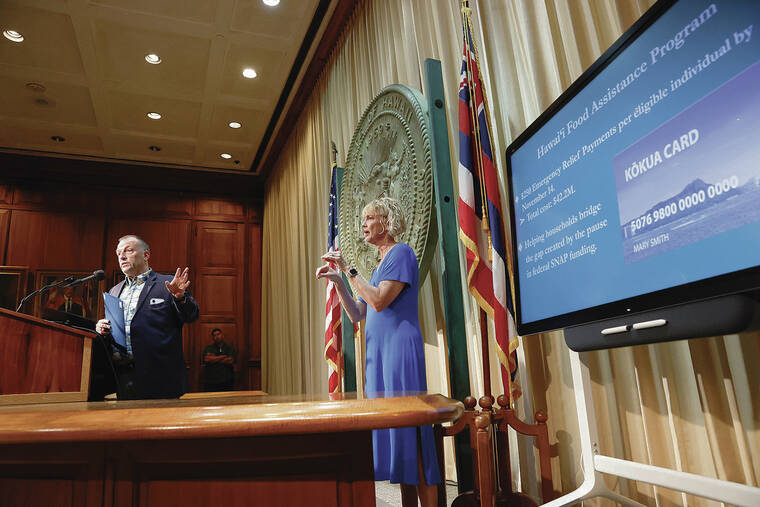
Hawaii has stepped up to provide vital financial and food assistance during the recent federal government shutdown, which lasted for 43 days and affected numerous residents. The state now anticipates spending significantly less in state funds than initially expected to support those impacted by the suspension of federal SNAP benefits, which began on November 1, 2023.
Approximately 161,132 residents, representing 81,124 families, faced the loss of an average of $346 in monthly federal food assistance. To alleviate this burden, Governor Josh Green authorized $250 in state food assistance for each SNAP beneficiary in November. Initially, the projected cost of the Hawaii Emergency Food Assistance Program, managed by the Hawaii Department of Human Services, was estimated at $40.6 million. However, the state now expects to utilize federal Temporary Assistance for Needy Families (TANF) reserves, reducing the total expenditure to approximately $15 million.
The shutdown, which commenced on October 1, 2023, created hardships for federal employees required to work without pay and forced many private contractors to seek assistance at local food banks. “The only guaranteed certain thing was what the state could do,” said Joseph Campos, Deputy Director of the Department of Human Services. “We needed to ensure that people did not experience food insecurity.”
The suspension of SNAP benefits had broader economic implications for Hawaii, as these payments account for roughly 7% of all food purchases across the islands. The University of Hawaii Economic Research Organization (UHERO) noted that a significant cut in federal assistance would further hinder the state’s economy, which was already projected to enter a “mild recession” in 2026, even before the shutdown began.
In addition to the food assistance, Green allocated $2 million in state funding to support Hawaii’s food banks, which faced increased demand as pop-up distribution centers were established. The governor also committed $100 million in federal TANF funds for a separate Hawaii Relief Program aimed at providing housing and utility relief for families with children. By early November, the program had received 5,240 applications for TANF assistance, according to Campos.
To ensure timely support, the Department of Human Services had to mobilize quickly, managing to distribute the state funds onto SNAP Electronic Benefit Transfer cards by November 6, 2023, ahead of the planned date of November 14. Following the suspension of SNAP funding, federal judges intervened, resulting in the resumption of federal SNAP assistance in November. As a result, Hawaii SNAP recipients benefited from an additional one-time infusion of funds from the state.
Despite these measures, Campos emphasized that federal SNAP funding typically does not last an entire month. “A large majority of people experience food insecurity at the end of the month,” he noted. The financial support provided by Hawaii was largely well-received, accompanied by individual and corporate donations of food and money during the shutdown, which concluded on November 12, 2023.
As the state continues to navigate the economic challenges stemming from the shutdown, it faces additional pressures from a decline in tourism, ongoing tariff conflicts, and rising grocery prices as the holiday season approaches. According to a recent Food Insecurity Survey, nearly half of all families in Hawaii—48%—are either food insecure or on the brink of making tough choices between food, housing, or healthcare, even among households earning over $90,000 annually.
Looking ahead, new work requirements for SNAP beneficiaries are expected to complicate access to federal food assistance for low-income residents. With anticipated increases in health insurance premiums under the Affordable Care Act, many families may find themselves in increasingly precarious financial situations.