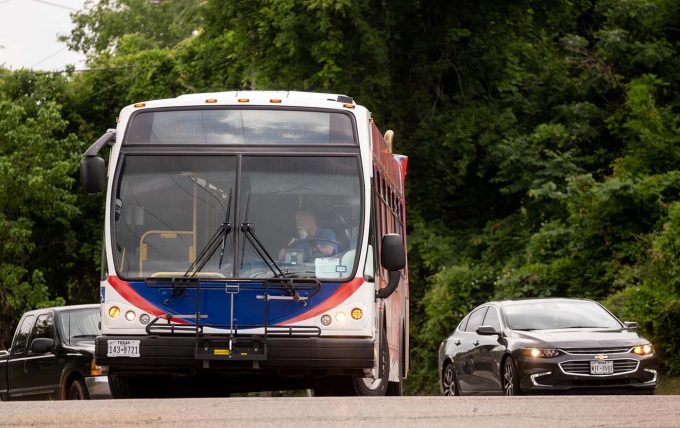
Efforts to improve public transportation in Longview have gained momentum with a recent proposal to expand bus routes and operating hours. The recommendations, submitted to the City Council, aim to enhance accessibility for residents, particularly those served by local nonprofit organizations.
In early 2023, Mayor Kristen Ishihara appointed five task forces to tackle various community needs. The Transportation Task Force, led by Evie Henson, executive director of Heartisans Marketplace, has focused on addressing transportation challenges that particularly affect women in the area. Henson emphasized the importance of reliable transportation for those utilizing Heartisans’ services, which assist homeless and underemployed women.
During a recent presentation to the council, Henson stated, “We’re excited about the planning, the talking and the future doing,” highlighting the task force’s commitment to actionable change. Currently, the Longview Transit system operates across 44 square miles, serving over 80,000 residents with six bus routes that connect more than 100 locations.
The task force’s recommendations include extending operating hours beyond the current schedule of 6 a.m. to 7 p.m. on weekdays and 7 a.m. to 7 p.m. on Saturdays. Henson noted that feedback from nonprofit organizations and transit users indicated a strong demand for service during off-peak hours. “Many would use local transit if it were available when they needed it,” she remarked.
In addition to extended hours, the task force proposed the addition of new routes, specifically targeting areas along North U.S. 259 and the northern end of Gilmer Road. Henson acknowledged that implementing such changes would require several years of data collection to assess their feasibility, as well as potential adjustments to existing routes.
Addressing the challenges faced by large employers in Longview, Henson pointed out that many businesses are located outside the city limits, making them inaccessible to the current bus service. To mitigate this issue, the task force suggested exploring on-demand microtransit solutions, which could utilize smaller vehicles like vans and shuttles. These services could be coordinated through an app that allows passengers to schedule pickups, thereby offering more flexible transportation options.
Furthermore, Henson highlighted that companies like VIA typically provide services with earlier and later hours than the existing fixed-route bus system. Funding for such expansions could potentially come from federal grants, in conjunction with partnerships with local employers.
The task force also proposed initiatives to enhance the existing bus service, such as an adopt-a-shelter program. This initiative encourages community members and businesses to volunteer in maintaining bus shelters and reporting maintenance issues. Additionally, individuals can contribute to the establishment of new shelters through donations of $10,000, which would cover the costs of a concrete pad, bench, and shelter cover.
In light of funding limitations, Henson indicated that private transportation solutions may offer a more immediate response to the community’s needs. She mentioned that some private rideshare companies collaborate with nonprofits and government agencies to provide subsidized services, enhancing accessibility for residents.
Henson concluded her presentation by stressing the importance of public engagement in the upcoming census, as population data is crucial for determining federal and state grant funding. The task force’s recommendations reflect a collaborative effort to bolster Longview’s transportation infrastructure, aimed at supporting the community’s diverse needs and improving the quality of life for its residents.