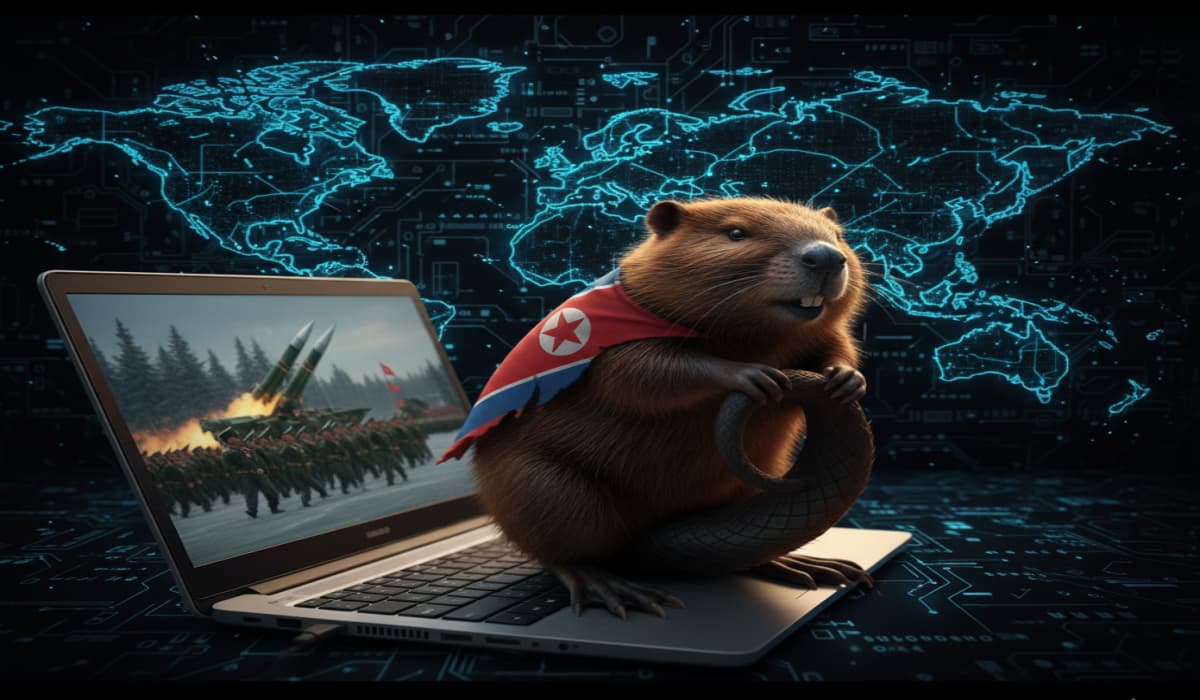
On December 18, 2025, cybersecurity firm Darktrace unveiled alarming findings regarding a new variant of the BeaverTail malware. This JavaScript-based information stealer, linked to North Korea’s notorious Lazarus Group, is part of an escalating campaign targeting the financial and cryptocurrency sectors. The report, shared with Hackread.com, highlights the malware’s sophisticated methods of infiltration, primarily through fraudulent job offers.
The evolving tactics of the hackers involve posing as recruiters to entice developers or cryptocurrency traders into “technical interviews.” These interviews often require potential victims to download tools like MiroTalk or FreeConference, which serve as traps designed to compromise their systems.
BeaverTail’s Evolution and Increasing Threat
Though BeaverTail has been operational since 2022, its capabilities have significantly transformed over time. Previous reports indicated that the malware began merging with another strain known as OtterCookie, a development noted in October 2025. Initially, the 2024 versions primarily focused on stealing browser profiles, but by early 2025, hackers began incorporating tools to capture everything copied to a user’s clipboard. The latest version, V5, escalates the threat further, recording every keystroke and taking screenshots of a victim’s desktop every four seconds.
“Once installed, BeaverTail exfiltrated browser credentials, credit card data, and cryptocurrency wallet keys,” the report states, underscoring the malware’s potential for significant financial damage.
New Strategies and Advanced Concealment Techniques
The latest variant of BeaverTail introduces even more sophisticated evasion techniques, making it increasingly difficult to detect. Researchers noted that hackers are now embedding the malware within VS Code extensions and npm packages, commonly used building blocks for application development. This modular, cross-platform threat can seamlessly operate across Windows, Mac, and Linux systems.
According to Darktrace’s findings, this new version employs “over 128 layers” of concealment to mask its code. This level of protection far exceeds anything seen in earlier iterations of the malware. The campaigns are attributed to various North Korean clusters, including Famous Chollima, Gwisin Gang, and Tenacious Pungsan, all linked to the broader Lazarus Group.
Compounding the danger, these groups have started utilizing a technique known as EtherHiding, which stores commands within blockchain smart contracts. This innovation makes it exceptionally challenging to dismantle the attacks, effectively immunizing their operations against takedown attempts.
To mitigate risks, cybersecurity experts advise that individuals verify any job offers through a company’s official HR department before proceeding with any technical assessments.
Jason Soroko, Senior Fellow at Sectigo, commented on the implications of Darktrace’s findings: “The identification of a hyper-obfuscated BeaverTail variant marks a significant escalation in tradecraft, transforming a lightweight stealer into a signature-evasive framework shielded by over 128 layers of concealment.”
He further explained, “By weaponising the software supply chain through trojanized npm packages and VS Code extensions, Lazarus Group is exploiting developer trust while ensuring infrastructure resilience via EtherHiding.” Soroko emphasized that the convergence of BeaverTail with the OtterCookie strain has created a unified, cross-platform tool designed for persistent financial theft and surveillance across multiple operating environments.
The emergence of this new variant serves as a stark reminder of the evolving landscape of cybersecurity threats and the need for individuals and organizations to remain vigilant against increasingly sophisticated attack methods.