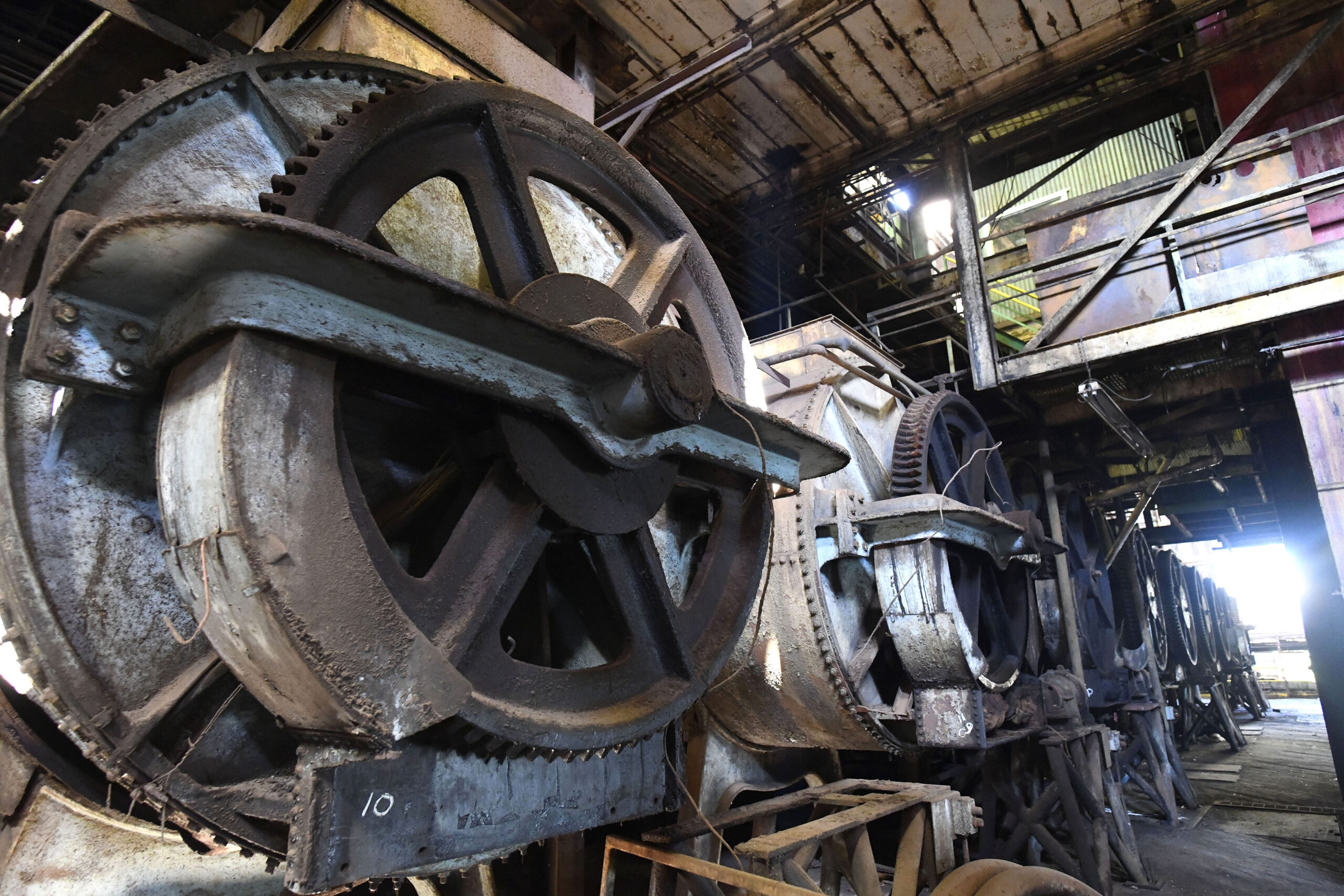
The Puʻunēnē Mill in Central Maui is poised for a significant transformation after nearly seven years of inactivity. Once a leading sugar-processing facility, the mill ceased operations in December 2016. Its new owner, Oʻahu-based Nan Inc., plans to repurpose the historic site into a light industrial park intended to support local businesses.
The mill, which was established in 1901, processed as much as 190,000 tons of sugar and 50,000 tons of molasses annually at its peak. However, the machinery that was once a symbol of industrial efficiency now sits idle, covered in dust and debris. The facility has become a target for scavengers and copper thieves, with many of its structures pillaged over the years.
In March 2024, Nan Inc. purchased the mill and surrounding 263 acres for approximately $5.25 million. The acquisition included more than 30 structures, notably a power plant built in 1903 and a sugar storage warehouse from 2007. In addition, Puʻunēnē Industrial Park LLC, affiliated with Nan Inc., acquired over 23 acres across Hansen Road that encompasses the A&B Sugar Museum.
Plans for Preservation and Repurposing
According to Wyeth Matsubara, vice president of Nan Inc., the company aims to salvage as much of the existing infrastructure as possible. This includes historically significant features such as the bagasse house, which stored the fibrous byproduct of sugar extraction, and the site of the former Puʻunēnē Post Office.
Matsubara acknowledged the challenges in repurposing the mill, stating, “We went in there trying to see what we could save in terms of the structures and facilities.” The company is committed to preserving elements deemed historically significant during assessments led by Glenn Mason, an architect, and the Hawaiʻi State Historic Preservation Division.
Though some structures will be preserved, many unsafe buildings and obsolete machinery will be dismantled. Matsubara indicated that the demolition and removal alone could cost “in the tens of millions of dollars,” with a timeline contingent upon the acquisition of necessary permits.
Current Utilization and Future Prospects
While awaiting the necessary approvals for redevelopment, parts of the mill are currently utilized by local businesses. For instance, Maui Grown Coffee is using the old bagasse house to process coffee after losing its facilities in the August 2023 Lahaina wildfire. Other tenants include Grace Pacific, the largest paving contractor in Hawaiʻi, also owned by Nan Inc.
Looking ahead, Matsubara expressed aspirations to expand light industrial usage in the area. He cited successful projects where Nan Inc. has transformed plantation-era facilities into modern business spaces, emphasizing a user-friendly approach for small enterprises.
Matsubara also noted potential for future housing developments, contingent on finding cost-effective solutions. He referenced ongoing projects on Hawaiʻi Island aimed at creating multifamily units that could serve as a model for future developments in Puʻunēnē.
The Puʻunēnē Post Office, which had provided retail service and mail delivery until its closure in September 2024, is another focus for Nan Inc. The U.S. Postal Service closed the facility due to safety concerns regarding termite damage. Matsubara stated that after renovations to meet postal standards, the company is awaiting USPS to resume services.
“We felt it was a good thing to have in a neighborhood,” he said, emphasizing the importance of the post office for local residents.
While plans for the A&B Sugar Museum include preservation, it may be relocated closer to the mill to harmonize with the other historic features slated for conservation.
Despite the potential for revitalization, former employees express sorrow over the dismantling of the mill’s iconic machinery. Robert Luʻuwai, a former engineer, noted that the equipment’s prolonged inactivity makes repurposing difficult.
Community Sentiments and Artistic Legacy
Local artist Tom Sewell, who has celebrated the mill’s history through art, lamented its decay. He had envisioned transforming the site into an arts district combined with an industrial museum, highlighting the need for preserving Maui’s rich heritage.
“It’s just a shame that the whole place is just dissolving,” Sewell remarked, reflecting on the loss of historical significance as machinery and artifacts are scrapped.
As the transformation of Puʻunēnē Mill moves forward, the community remains hopeful that the redevelopment will honor the site’s storied past while fostering local economic growth.