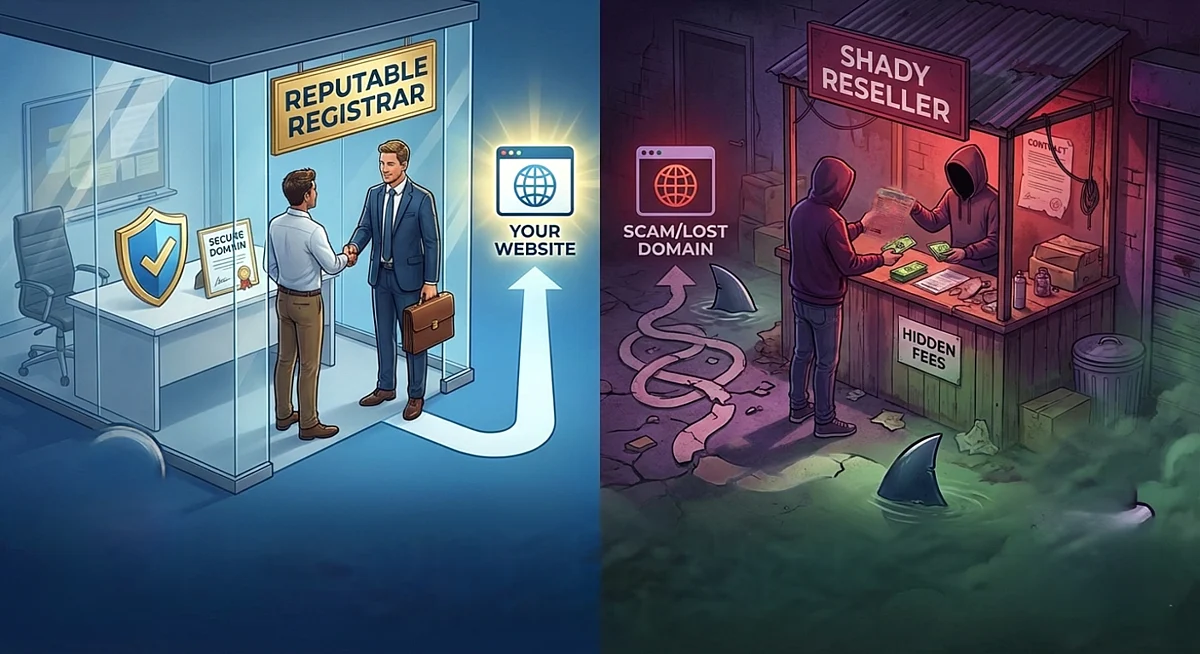
Choosing the right domain registrar is crucial for maintaining the security of your online presence. Many individuals and businesses fall victim to scams and dishonest resellers, leading to potential loss of their domains and sensitive data. Shady registrars employ tactics such as fake renewal notices, hidden fees, and unauthorized transfers, which can jeopardize your digital assets. According to data from the Internet Corporation for Assigned Names and Numbers (ICANN), thousands of complaints related to registrars are filed each month, highlighting the need for vigilance when selecting a provider.
Understanding how to identify trustworthy registrars is essential in safeguarding your domain. A domain name serves not only as your website address but also as a foundational element that establishes your digital identity. It plays a significant role in how customers find and trust your business. Unfortunately, many individuals lose control of their domains not due to hackers, but through the actions of fraudulent registrars who disguise themselves as legitimate service providers.
Evaluating Registrar Credibility
When selecting a registrar, there are several key factors to consider. First, verify that the registrar is accredited by ICANN. This organization oversees domain name management and ensures that registrars adhere to certain standards of accountability and transparency. Use the ICANN lookup tool to confirm the registrar’s accreditation status. If the registrar is a reseller, ensure they provide complete information about their upstream ICANN-accredited provider.
Next, investigate the registrar’s reputation. Platforms like Trustpilot and G2 can offer valuable insights into user experiences. Look for patterns of complaints regarding billing practices, hidden fees, or issues related to domain transfers. Additionally, searching for phrases like “registrar name + scam” can uncover negative experiences that might not be prominently displayed on the registrar’s website.
Pricing transparency is another critical element. Compare first-year, renewal, and transfer costs to identify any hidden fees. Reputable registrars disclose their renewal rates, redemption grace periods, and additional service charges. Ensure that all pricing details are accessible during the checkout process to avoid unpleasant surprises.
Security measures are vital for protecting your domain. A reliable registrar offers features such as two-factor authentication (2FA), domain locking, and support for DNSSEC. These tools help mitigate the risk of unauthorized access and domain hijacking. Additionally, the registrar’s website should utilize SSL/TLS encryption and provide clear instructions for account recovery.
Lastly, assess the quality of customer support. Contact the registrar with a pre-sales question and evaluate their response time, tone, and technical knowledge. Poor support can become a significant issue during disputes or renewal processes.
Recognizing Common Scams
Fraudulent registrars often employ deceptive practices to lure unsuspecting domain owners. Some tactics include:
1. **Lack of Accreditation**: Legitimate resellers will clearly identify their partnership with an ICANN-accredited registrar. If this information is missing, it may indicate a lack of authorization to manage domain registrations.
2. **Unclear Ownership**: Fraudulent providers often obscure their business registration details. Be wary if a registrar only provides generic contact forms or free email addresses instead of official domains.
3. **Transfer Barriers**: Shady registrars may create obstacles that complicate domain transfers or respond slowly to transfer requests. If you encounter difficulties accessing your EPP code or receive vague answers, consider this a red flag.
4. **Misleading Pricing**: Unrealistically low prices or aggressive promotional tactics can signal fraud. Scammers may collect payments without registering the domain or impose steep renewal fees hidden in the fine print.
5. **Weak Security Practices**: Registrars lacking 2FA, domain locking, or secure DNS access expose domain owners to increased risks. Avoid platforms that do not prioritize robust security measures.
6. **Negative Online Reputation**: Research the registrar’s reputation on review platforms. Frequent complaints about billing, transfers, or unresponsive support can indicate deeper operational problems.
7. **Lack of Support Transparency**: Trustworthy registrars will provide clear procedures for retrieving ownership credentials and resolving disputes. Avoid those that do not offer a transparent recovery process.
When faced with potential scams or issues with a registrar, it is essential to take swift action. Panic responses can lead to significant mistakes, such as clicking on malicious links or paying fraudulent invoices. Instead, remain calm and follow these steps:
1. **Pause and Assess**: Do not react impulsively to urgent messages. Take time to verify the legitimacy of any claims before responding.
2. **Confirm Legitimacy**: Use WHOIS or RDAP records to check the registered provider of your domain. This step helps distinguish between genuine communications and those from imposters.
3. **Contact Official Support**: Reach out directly to your registrar through official channels, not through links in emails. Legitimate providers will clarify any discrepancies.
4. **Gather Evidence**: Keep records of suspicious communications, as they may be necessary for proving fraud or filing complaints.
5. **Report and Secure**: If fraud is confirmed, report it to ICANN or your local consumer protection agency. Initiate a transfer dispute if your domain has been moved without authorization.
Maintaining registrar hygiene is critical for long-term domain security. Here are some best practices to keep your domains protected:
1. **Choose Reputable Providers**: Always register domains with ICANN-accredited registrars. They follow established standards to safeguard ownership.
2. **Enable Automatic Renewal**: To prevent accidental domain expiration, activate automatic renewal and confirm the accuracy of renewal notices.
3. **Implement Layered Security**: Use domain locks and 2FA to protect your accounts from unauthorized access.
4. **Maintain Accurate Details**: Ensure your contact information is up-to-date to receive timely renewal reminders.
5. **Centralize Domain Management**: Consider using a single platform to manage multiple domains, which can minimize the risk of missed renewals.
6. **Backup DNS Records**: Regularly back up your DNS and zone files to ensure swift recovery in case of issues.
7. **Use Verified Channels**: Access your registrar only through secure websites and official communication channels.
8. **Conduct Routine Audits**: Periodically review your domain portfolio and check for any issues that may require attention.
In conclusion, the reputation of your registrar plays a vital role in the security and management of your domains. A proactive approach to selecting and managing your registrar can help you navigate the complexities of domain ownership. By prioritizing trust, transparency, and long-term control, you can safeguard your online presence effectively. For those searching for a reliable option, Verpex Reseller Hosting offers ICANN-accredited registration, comprehensive support, and a commitment to transparency, ensuring that your domains remain secure and under your control.