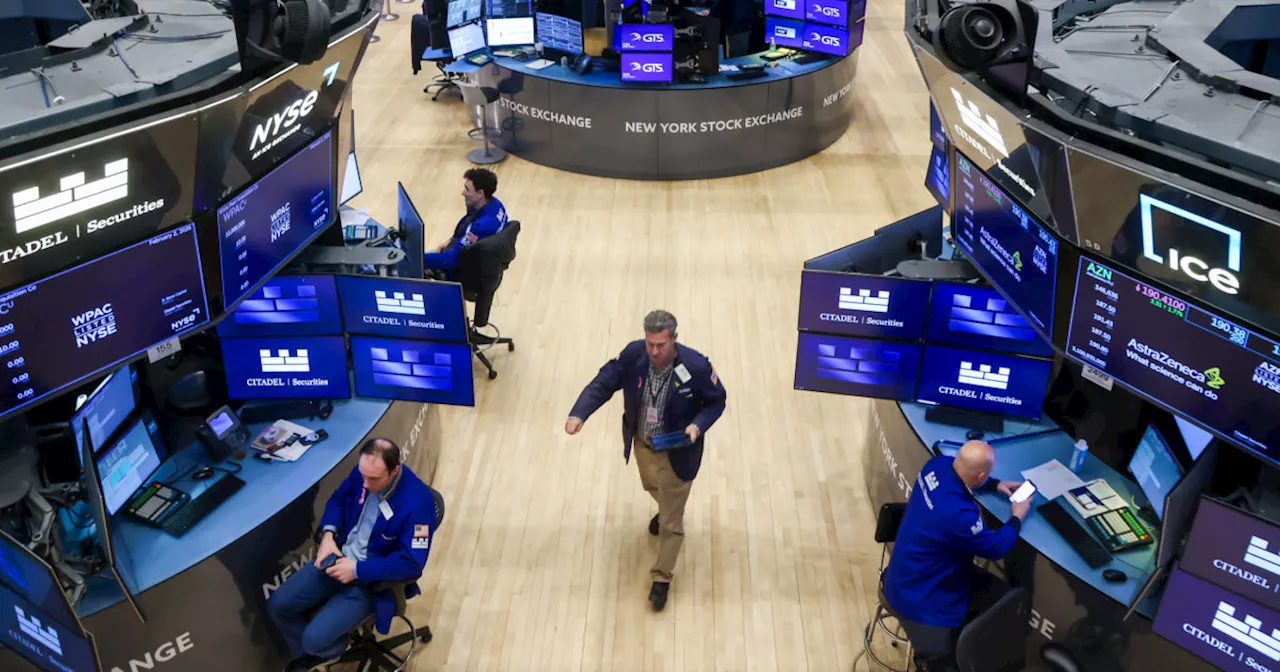
The stock market experienced a significant rebound on Friday, with the S&P 500 rising by 1.97% and the Nasdaq Composite surging 2.18%. This recovery followed a tumultuous week marked by substantial selling, primarily driven by concerns surrounding the implications of advancements in artificial intelligence (AI) for the economy and various sectors.
Despite the overall market uplift, the rebound obscured a considerable decline in several technology stocks. This included a noteworthy drop in shares of Amazon, which fell 5.58% after the company announced plans to invest $200 billion over the next year, largely directed towards its Amazon Web Services division. Amazon, the world’s fifth-largest public company, has faced a steep decline of 12% since the start of the week, resulting in a loss of more than $310 billion in market value.
Microsoft and Meta also reported similar setbacks, with both companies unveiling plans for massive investments—totaling around $650 billion—to enhance their AI and data center capabilities this year. Collectively, these four tech giants have lost nearly $1 trillion in market value over the past five days, reflecting a broader trend of investor anxiety regarding the potential disruption caused by AI technologies.
Market Dynamics and Sector Performance
While the tech sector faced challenges, other industries showed resilience. Industrial stocks, such as Caterpillar, and select energy firms benefitted from optimism surrounding increased demand for data center services. The industrial and energy sectors emerged as strong performers on Friday, complemented by a boost in chipmakers’ stocks, including Nvidia, which saw its shares rise nearly 8%. Nvidia’s CEO, Jensen Huang, reiterated confidence in the sector during a CNBC interview, emphasizing the extraordinary demand for AI applications.
Apple also displayed remarkable performance, jumping 7% this week. The iPhone maker has been less affected by the AI-induced volatility, primarily because it relies on external cloud computing services rather than building its own data centers.
The volatility in the market began earlier in the week when AI developer Anthropic announced the creation of AI agents capable of performing advanced tasks like data analytics. This announcement sparked panic among investors, particularly those in software and data analysis sectors, leading to heavy selling as fears mounted over AI’s potential to disrupt established business models. Private credit firms, which have significant investments in software and data companies, also experienced sharp declines.
The Dow Jones Industrial Average reached a historic milestone, surpassing 50,000 for the first time. While this achievement garnered significant attention, it is important to note that the Dow consists of only 30 stocks, making it a less comprehensive gauge of market health compared to broader indices like the S&P 500.
President Donald Trump celebrated the Dow’s milestone on social media, stating, “CONGRATULATIONS AMERICA!” Despite the recent rally, the S&P 500 remains up less than 1% for the year, highlighting the ongoing volatility in the markets.
Cryptocurrency and Small-Cap Stocks Gain Traction
In the cryptocurrency realm, Bitcoin experienced dramatic fluctuations, swinging nearly $10,000 within a 24-hour period. After dipping close to $60,000 late Thursday, it rebounded to over $70,000 by Friday. Analysts, however, caution that cryptocurrencies often behave independently of traditional assets, with Paul Donovan, chief economist at UBS Global Wealth Management, stating that crypto is not a mainstream asset and held by a limited demographic.
Additionally, small and medium-sized stocks performed exceptionally well, with the Russell 2000 index rising almost 4% on Friday. Analysts at Bank of America expressed a positive outlook for smaller stocks, suggesting that they could continue to thrive as long as public sentiment towards President Trump remains low.
This week’s market fluctuations underscore the complex interplay between technological advancements, investor sentiment, and sector performance, leaving many to navigate an uncertain economic landscape.