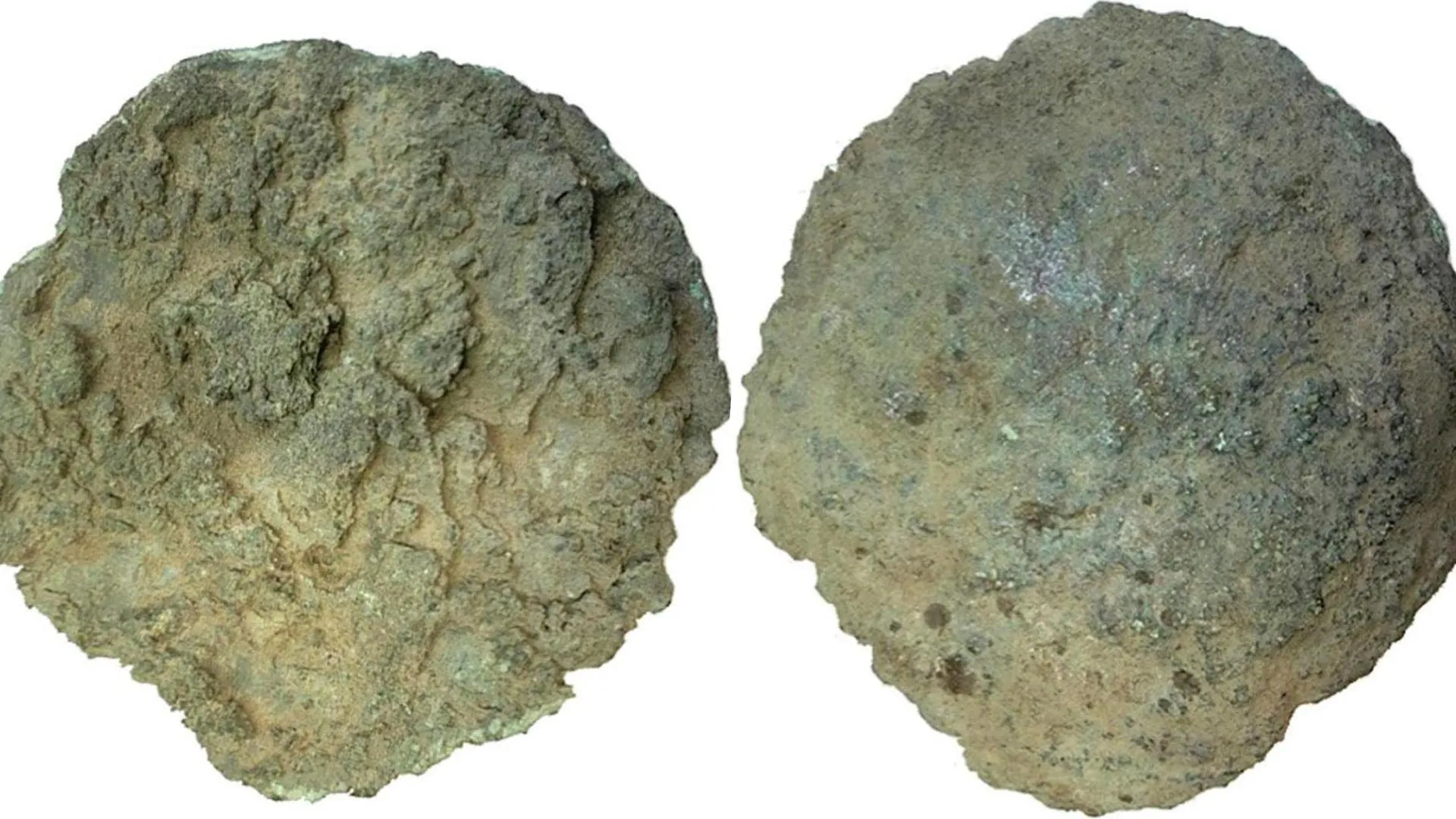
A recent discovery in Sweden is transforming our understanding of Iron Age history. Researchers from the University of Gothenburg uncovered a plano-convex ingot that was initially believed to originate from the Bronze Age. However, advanced chemical and isotopic testing revealed that it actually belongs to the Iron Age, suggesting significant long-distance connections across the Baltic region.
The ingot was analyzed using a combination of isotopic and chemical methods, leading to surprising findings. “Due, in particular, to its shape and size, it seemed to us a Bronze Age artifact, but the ingot turned out to be made of a copper-zinc-tin-lead alloy, typical of the Iron Age and later periods,” stated Serena Sabatini, a key researcher in the study. These plano-convex ingots, often composed of copper, are typically found across the Mediterranean and continental Europe, serving as practical means for transporting metal throughout both the Bronze and Iron Ages.
Reassessing the Särdal Find
Initially, the archaeologists assumed that the Särdal ingot belonged to the Bronze Age. Its isolated recovery, without accompanying materials for dating, prompted the team to employ scientific testing to determine its composition and age. The results overturned their initial assumptions, revealing a match with the copper-zinc-tin-lead alloy characteristic of the Iron Age.
The collaborative nature of this research was instrumental in uncovering wider historical connections. “Thanks to the collaborative climate of the archaeometallurgy research world, we teamed up with a group of Polish scholars who were working with some Iron Age finds that have the almost exact composition of our ingot,” Sabatini explained. This partnership illustrates how even isolated artifacts can gain significant historical context through rigorous scientific study.
Significance of International Collaboration
Sabatini emphasized the importance of international collaboration in archaeology. “Networking and international collaboration are also important to unveil patterns and data that would remain unknown when one looks exclusively at the local context. This work clearly shows the importance of teamwork and data sharing. Without the successful collaboration with our Polish colleagues, we would have never achieved such remarkable results!”
The research team utilized established archaeometallurgical techniques, including lead isotope and trace element analyses, to study the ingot. These methods have been applied since the 1980s to explore the composition and potential geological sources of ancient metals. “What is new in this study is that we went a step further, and by combining the obtained data with known historical and archaeological information, we managed to propose a historical context for both the unique Särdal plano-convex ingot and the rod ingots from the Iława Lakeland area in northeastern Poland,” Sabatini added.
The similarities in metal composition across these artifacts strengthen previous hypotheses about trade and networking in the Baltic region during the Nordic pre-Roman Iron Age.
This groundbreaking study has been published in the Journal of Archaeological Science, marking a significant contribution to our understanding of ancient trade networks and interactions. The findings not only challenge existing historical narratives but also highlight the potential of interdisciplinary collaboration in archaeology.