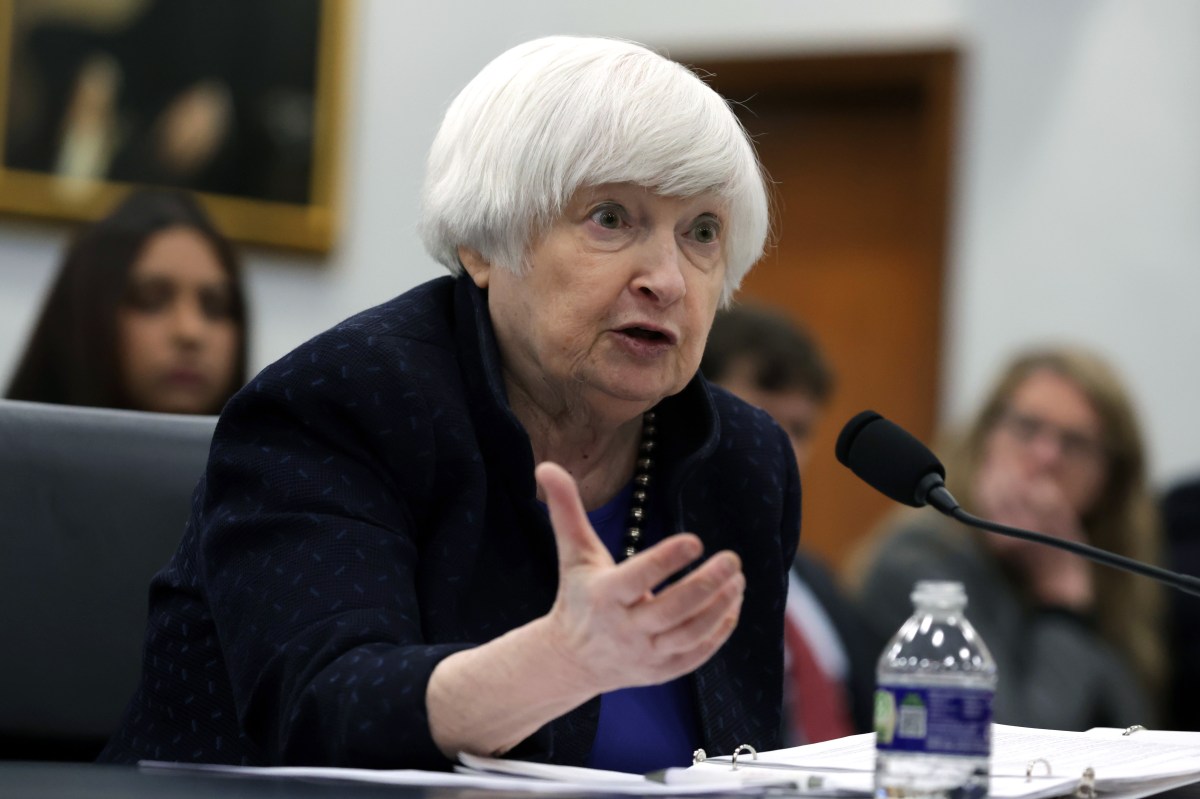
Former Treasury Secretary Janet Yellen has raised concerns about the implications of a recent decision made during the Trump administration regarding U.S. corporate taxation. This decision, which exempts American multinational corporations from new global tax rules, could hinder efforts to reduce the nation’s fiscal deficit. The warning comes in light of the Organisation for Economic Cooperation and Development (OECD) finalizing a plan for “global minimum tax arrangements” with 147 nations on March 15, 2024.
The OECD’s announcement revealed that the new agreement includes a proposed 15 percent global minimum tax. However, it notably exempts U.S. corporations, a move that Scott Bessent, current Treasury Secretary, characterized as a “historic victory” for American sovereignty against what he described as “extraterritorial overreach.” Yellen, who championed earlier versions of this plan during the Biden administration, criticized the exemption for sacrificing “significant tax revenue” that could have helped address the United States’ substantial fiscal deficit.
The OECD’s two-pillar agreement aims to discourage tax avoidance by large corporations and to prevent a “race to the bottom” in global corporate taxation. OECD officials have celebrated the arrangement as a foundation for stability and certainty in the international tax system. Yet, the U.S. exemption has drawn sharp criticism from tax transparency advocates and from some of the plan’s original proponents.
Yellen highlighted that the exemption undermines the overall effectiveness of the agreement and could lead other nations to reconsider their commitments to global minimum taxation. She stated, “U.S. headquartered multinational enterprises represent almost half of all global multinational profit. So exempting these firms from the global regime undermines its consistency.”
Implications of U.S. Exemption on Global Tax Cooperation
This issue stems from an earlier agreement in 2021, which Yellen and President Joe Biden negotiated, garnering support from over 130 nations. This original agreement sought to impose a minimum tax rate of 15 percent on large multinational corporations, ensuring they pay taxes in the countries where they operate. Yellen hailed this earlier development as “a once-in-a-generation accomplishment for economic diplomacy.”
Criticism of the agreement intensified following the Trump administration’s decision to withdraw from the previous commitments, with Trump arguing that it infringed on American tax sovereignty. The exemption from the minimum global corporate tax reflects a broader trend of U.S. resistance to binding multilateral tax rules, according to Attiya Waris, a United Nations independent expert on foreign debt. Waris emphasized that the U.S. holds disproportionate leverage in the OECD, given its status as the largest source of economic activity.
Tax transparency advocates have pointed out that the OECD’s arrangement allows U.S. firms to continue operating under favorable tax conditions abroad, potentially costing other nations billions in lost revenue. For instance, according to the Tax Justice Network, countries like France, Germany, and the UK are already losing substantial amounts annually due to tax avoidance strategies employed by U.S. companies.
Future of Global Tax Agreements
Looking ahead, the OECD has indicated that it will provide further details on the implementation of the agreement in the coming weeks. Bessent assured that the Treasury Department would continue engaging with international partners to promote stability in global taxation and foster constructive dialogue on issues like the taxation of the digital economy.
As this situation unfolds, it remains crucial for policymakers to address the balance between national interests and international cooperation in taxation. The ongoing debate highlights the complexities of navigating global tax systems while striving to ensure fairness and accountability in corporate taxation practices. As Yellen aptly noted, the effectiveness of any global tax regime relies heavily on the participation of major economies acting in good faith.