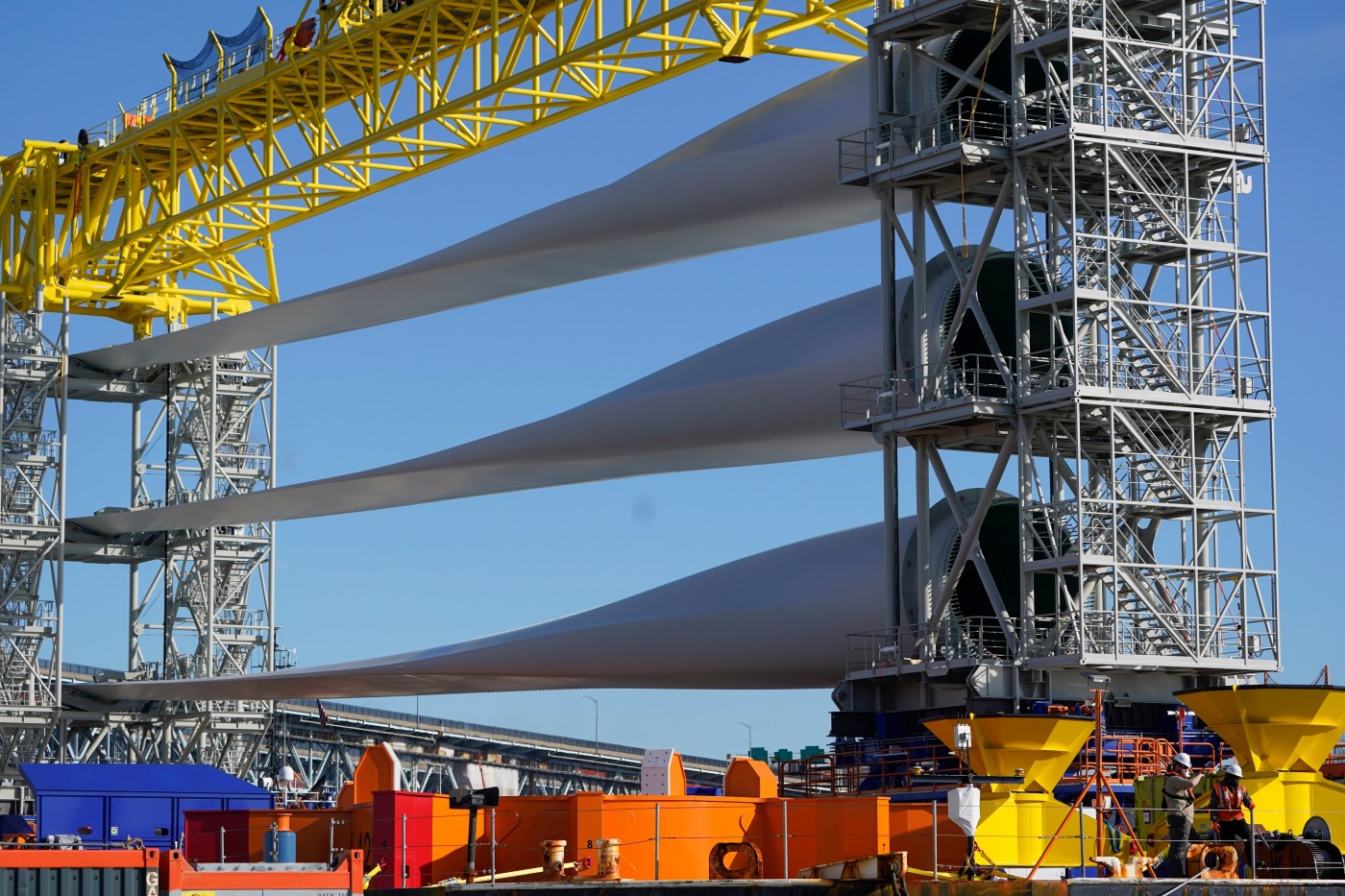
The debate surrounding wind power in the United States is intensifying as politicians from blue states face scrutiny over rising electricity costs. Critics argue that these states impose high energy rates on residents while touting renewable energy as an affordable and reliable solution. This criticism gained momentum following a recent decision by the Trump administration to pause offshore wind farm construction along the East Coast, citing national security concerns.
The administration’s directive affects states such as Virginia, New York, Connecticut, and Rhode Island, where significant offshore wind projects are planned. The rationale given was that large installations could hinder the detection of potential foreign threats to east coast population centers. In response, Connecticut Governor Ned Lamont and New York Governor Kathy Hochul condemned the move, with Lamont claiming it was a fabrication and Hochul calling it “B.S.”
While the justification for the pause may lack concrete evidence, the response from blue state leaders has also drawn criticism. Hochul asserted that wind power would “keep energy costs down” and “strengthen reliability.” Similarly, Connecticut’s Attorney General William Tong claimed that wind energy would save ratepayers “hundreds of millions of dollars.” However, many experts challenge these assertions, suggesting that the shift to renewable sources has led to increased costs for consumers.
According to the Institute for Energy Research, blue states have mandated a growing reliance on wind and solar energy instead of more affordable fossil fuels. For instance, residents of New York currently pay, on average, 58% more for electricity than the national average due to these green mandates. In Connecticut, the situation is even more dire, with residents facing nearly double the national average rate for electricity.
Critics argue that politicians in these states should acknowledge the ideological motivations behind their energy policies rather than perpetuating claims of affordability. Offshore wind power, they contend, is at least twice as expensive per kilowatt-hour as electricity generated from natural gas. Research by Bjorn Lomborg highlights that global evidence indicates that adding more solar and wind to the energy supply typically drives up electricity prices.
The reliability of renewable energy sources has also come under scrutiny. Germany’s experience serves as a cautionary tale; the country invested heavily in solar and wind energy to meet 70% of its grid’s needs. Yet, during periods of low sunlight and calm weather, these sources provided a mere 4% of the required energy, leading to significant costs associated with maintaining dual energy systems. As a result, German consumers pay approximately 43 cents per kilowatt-hour, more than double the rates in Canada, which has a more balanced energy mix.
The situation in the United Kingdom reflects similar challenges. While liberal politicians previously championed green energy, former Prime Minister Rishi Sunak recently paused the UK’s transition to net-zero carbon emissions. Scotland’s government has even abandoned its goal of a 75% reduction in CO2 emissions by 2030. These shifts may suggest that policymakers are reassessing the economic impact of aggressive renewable energy targets.
In the United States, states like California are grappling with the consequences of increased reliance on renewable energy. With renewables now constituting 39% of California’s grid, residents and businesses pay the second-highest electricity rates in the nation, trailing only Hawaii. This situation has led to “energy poverty” among low-income individuals who struggle to cover their utility bills.
The rising electric bills were a focal point in the recent gubernatorial election in New Jersey. Bills had surged by double digits in the year leading up to the election, partly due to outgoing Governor Phil Murphy‘s decision to retire fossil fuel sources amid soaring power demand. Democratic candidate Mikie Sherrill promised that investing in offshore wind would “lower energy costs for families,” a claim criticized for its lack of truth. Republican candidate Jack Ciattarelli took a different approach, pledging to ban offshore wind farms and promote a more diverse, affordable energy mix.
As the debate continues, many voters in blue states are calling for political leaders who prioritize affordability in energy policies. However, achieving this requires an honest dialogue about the realities of wind power and its implications for consumers. Currently, many residents are inundated with misleading statements from politicians regarding the benefits of renewable energy sources.
The recent pause on offshore wind turbine construction by the Trump administration may provide an opportunity for a more transparent discussion about the costs and benefits of wind power. Without a clear understanding of the facts, the challenges posed by wind energy remain obscured, leaving consumers to bear the consequences of political decisions that prioritize ideology over economic viability.