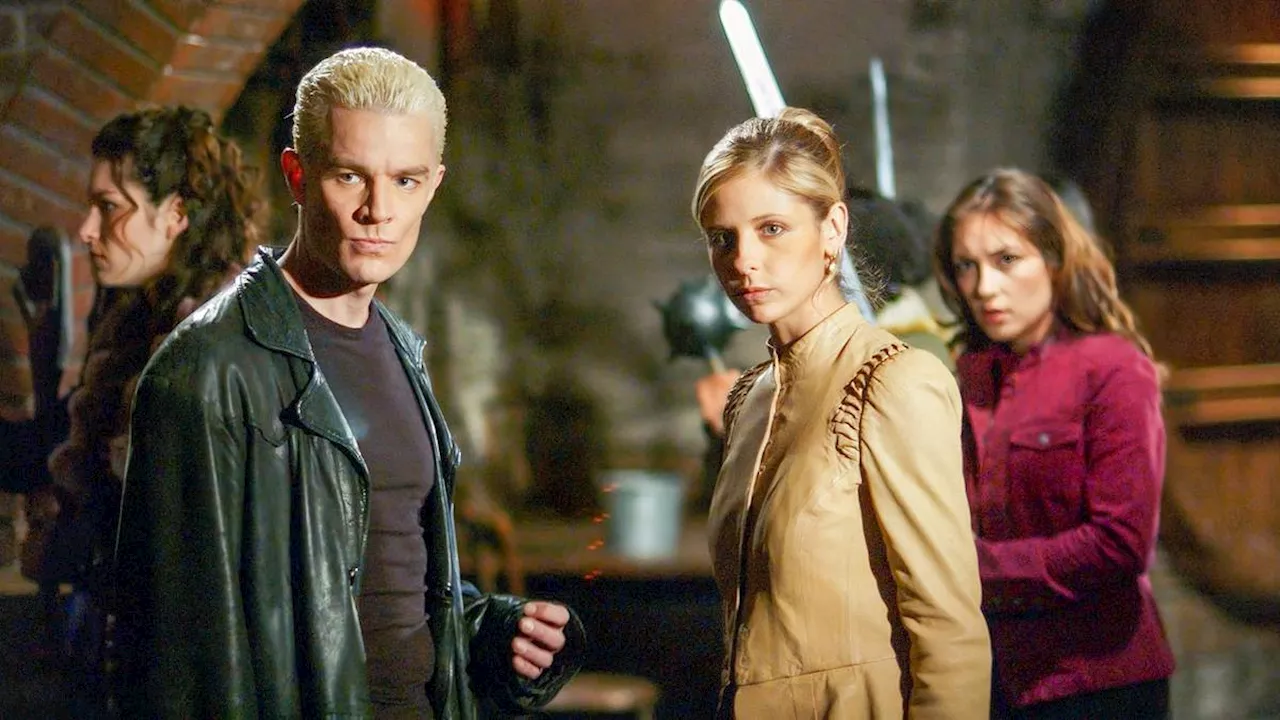
The highly anticipated revival of Buffy the Vampire Slayer, helmed by director Chloé Zhao, is generating excitement among fans of the original 1990s series. This new project marks the first time that original cast members Sarah Michelle Gellar and Alyson Hannigan are officially attached to a Buffy-related production since the show concluded. While the Buffyverse has remained active through various media, including comics and podcasts, the return of these key actors brings a sense of prestige and the potential for other beloved characters to reappear.
However, a significant challenge looms over the revival: the age of the original vampire characters, including Angel, Spike, Drusilla, and Darla. These characters were immortal in the series, existing in the same form they had at the time of their deaths. With actors like David Boreanaz now 56 and James Marsters at 62, the question arises: how can the series effectively reintroduce these vampires without undermining its narrative integrity?
Creative Solutions for Age-Old Challenges
The age issue began to surface as the original series progressed. David Boreanaz was 29 when he debuted as Angel and 35 when the spin-off concluded in 2004. Similarly, James Marsters joined the cast at 37 and finished his run on Angel at 42. Today, fans must consider if they can accept a 62-year-old Spike or a 56-year-old Angel for the sake of reconnecting with these beloved characters.
One potential solution lies in practical filmmaking techniques. Through the use of costume and makeup, the production can help preserve the illusion of youth. The duality of these characters—human versus vampire—provides opportunities for creative storytelling. For instance, action sequences could feature their vampire forms, allowing for a suspension of disbelief.
Additionally, the recent audio drama Slayers: A Buffyverse Story successfully navigated aging concerns by utilizing voice acting. This approach granted fans a chance to engage with their favorite characters while imagining them in their original forms. The revival could adopt similar techniques, incorporating phone calls, voice notes, or off-screen consultations that would allow legacy characters to remain integral to the plot without requiring their physical presence.
Narrative Considerations and Audience Engagement
The revival must also consider how to integrate these characters into a contemporary storyline. The vampires’ previous arcs were deeply intertwined with Buffy’s own journey, particularly through complex relationships and love triangles. As the series resumes 30 years later, it raises the question of whether these characters would still be involved in her life or have moved on.
Including iconic vampires like Angel and Spike also presents challenges regarding audience familiarity with their expanded storylines. In Angel, significant plot points—such as the birth of Angel and Darla’s child or Spike’s unexpected return—created a narrative that diverged from the original series. For the revival to be effective, the show must navigate how much of this backstory will be assumed knowledge for new viewers.
Ultimately, the revival of Buffy the Vampire Slayer must prioritize storytelling above all else. This new show is designed for a fresh audience, featuring new characters and narratives. While the presence of original favorites like Spike and Angel is undoubtedly appealing, it is crucial that their return serves to enhance the story rather than distract from it.
As fans eagerly await the revival, the creative team faces the task of striking a balance between nostalgia and innovation, ensuring that the legacy of Buffy the Vampire Slayer continues to resonate with both long-time followers and new viewers.