Marvel Comics has recently faced criticism for its handling of a storyline involving Mister Fantastic, also known as Reed Richards, as he attempted to merge science and magic. This narrative arc, which aimed to position him as the “Scientist Supreme,” has been viewed as a missed opportunity to explore deeper themes within the Marvel Universe.
The comic book industry often relies on familiar tropes and plot points. Major publishers like Marvel and DC frequently revisit established narratives to maintain continuity and cater to long-standing fanbases. While this approach is understandable, it can sometimes hinder the potential for innovation, especially when fresh concepts arise. The recent storyline involving Mister Fantastic presented an intriguing premise, yet it ultimately fell short in execution.
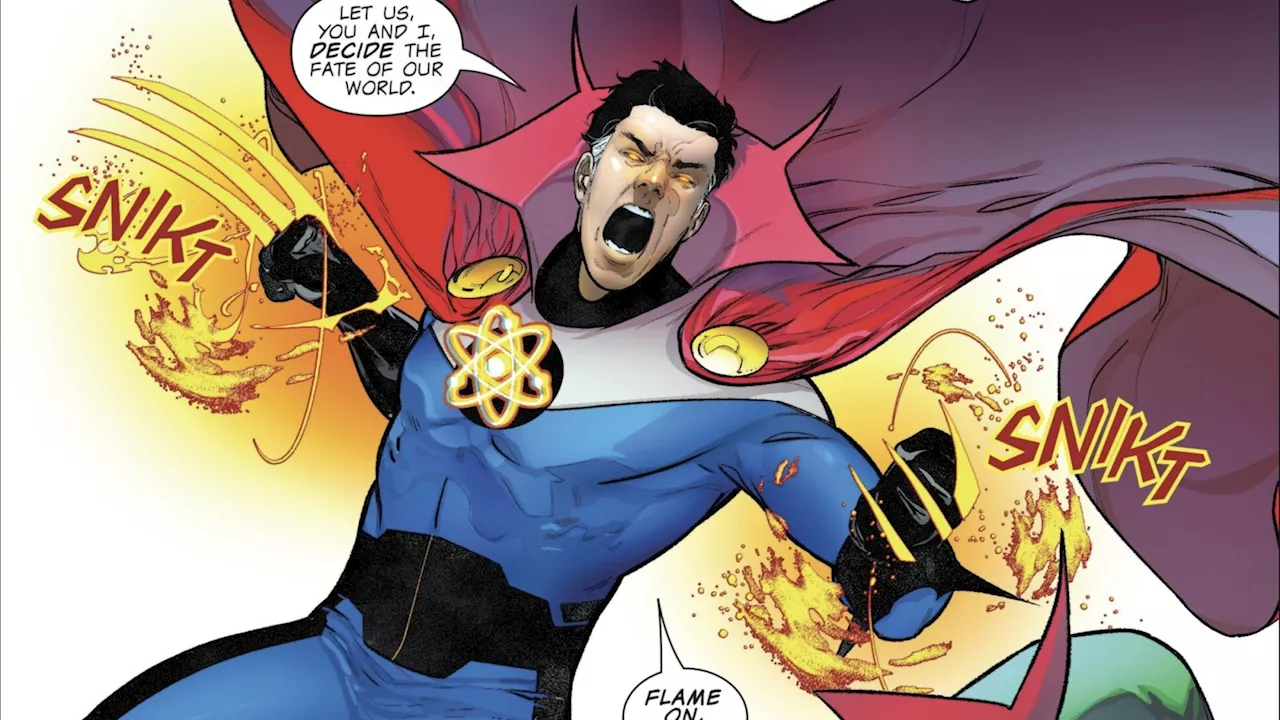
In a notable issue, Reed Richards endeavored to harness magical abilities, a significant departure from his longstanding skepticism of the supernatural. Throughout the Marvel Universe, Richards has consistently expressed disbelief in magic, viewing it as a science that remains unquantified. By attempting to master magic scientifically, the narrative challenges the established dichotomy between science and magic that has been a hallmark of many Marvel stories.
The storyline reached a pivotal moment when Doctor Doom, a classic adversary, declared himself Sorcerer Supreme after deceiving Doctor Strange. Although this development is not particularly novel, Mister Fantastic’s brief foray into magic in issue #7 introduced a compelling conflict. Unfortunately, the lack of buildup to this moment made it feel abrupt and poorly integrated into the overall narrative.
Mister Fantastic’s sudden acquisition of magical prowess felt disjointed, as readers were left questioning how he achieved such mastery. The story did not provide sufficient context, such as him observing or studying other magic users for guidance. Instead, he merely imitated Doom’s actions, undermining the complexity and depth that such a conflict could have offered. The narrative suggested that mastering magic could be as simple as following a series of steps, which diminishes its intrinsic value.
Moreover, the storyline did not adequately explore the implications of Reed mastering both science and magic. Traditionally, characters like Doctor Strange and Scarlet Witch have operated within their own sets of rules, rendering magic inherently incompatible with scientific reasoning. This relationship is fundamental to the Marvel Universe, where the boundaries between the two disciplines have been clearly delineated.
The arc’s resolution further neglected the potential impact of Reed’s newfound abilities. Following a climactic battle, the storyline concluded with Doom crippling Reed’s connection to the Astral Plane, effectively nullifying any lasting influence of the magic mastery. Although Reed’s spells served as a momentary distraction, they ultimately did not contribute to the larger narrative, leaving readers disappointed.
While the concept of a scientifically adept Mister Fantastic exploring magic holds promise, it was not adequately developed. The narrative’s execution left many questioning whether this intriguing idea would be revisited in future storylines. As it stands, the title of magical Scientist Supreme remains underutilized, and the potential for character development has sadly been squandered.
In a landscape where comic book narratives often reflect ongoing societal themes, the missed opportunity to explore the intersection of science and magic in this storyline represents a broader concern about creativity within the industry. Fans hope for more robust explorations of character development that transcend established clichés, allowing for genuine innovation and storytelling.
As Marvel Comics continues to evolve, it will be crucial for writers to seize opportunities for exploration and growth, particularly in narratives that challenge the status quo. The blend of science and magic, if properly executed, could offer profound insights and inspire new generations of readers.