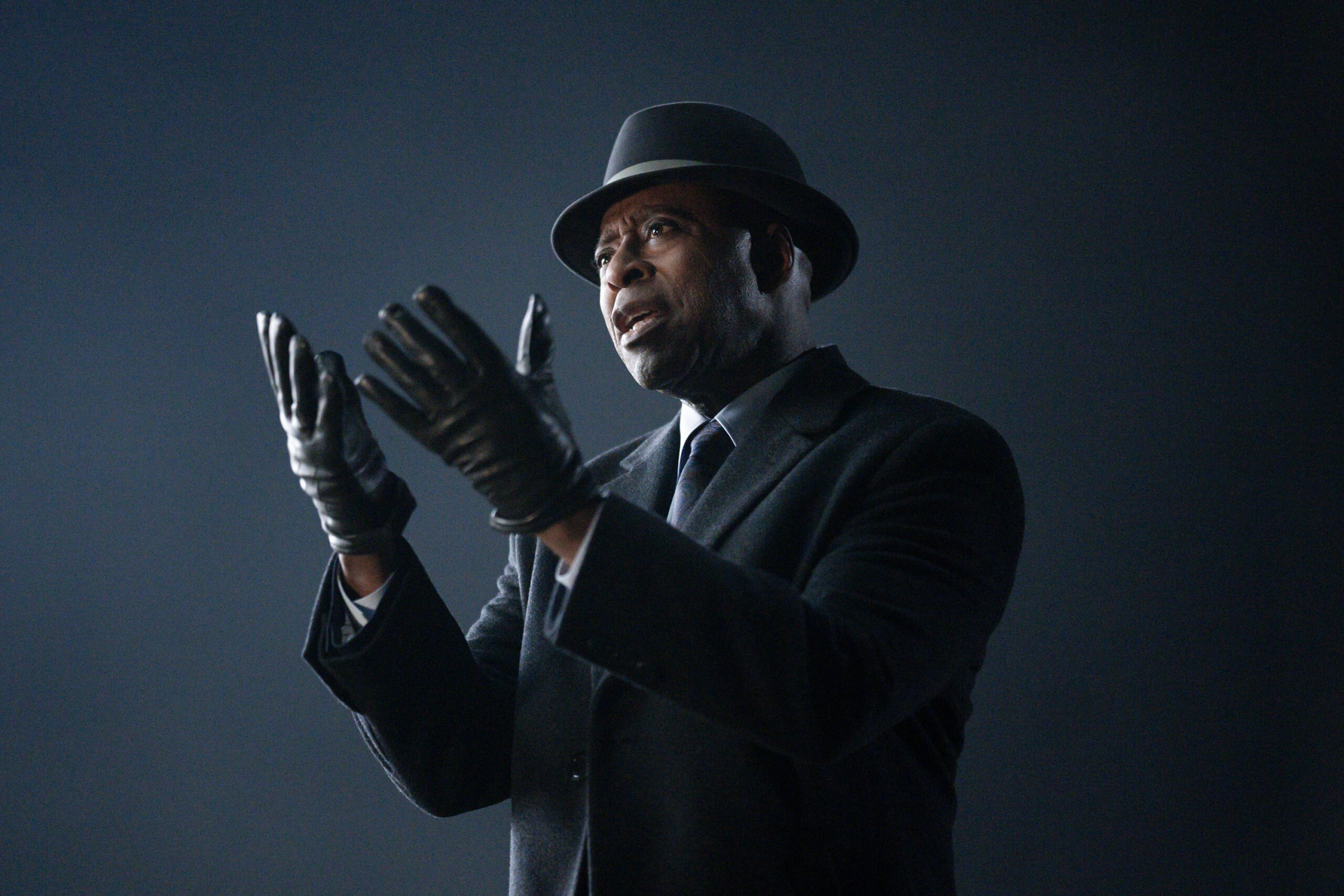
The Season 2 finale of “Percy Jackson and the Olympians” on Disney+ has introduced a significant twist that diverges from Rick Riordan’s original narrative. Executive producer Craig Silverstein clarified that this development serves to deepen the show’s exploration of themes surrounding parental neglect, particularly in relation to the powerful Olympian gods.
Throughout the season, which is based on Riordan’s book The Sea of Monsters, viewers witness the character Thalia Grace, portrayed by Tamara Smart, through a series of flashbacks. As a daughter of Zeus, played by Courtney B. Vance, Thalia initially emerges as a protector of her friends, Annabeth (Leah Sava Jeffries) and Luke (Charlie Bushnell), guiding them to safety at Camp Half-Blood. In the books, Thalia sacrificed herself to save her friends from the Furies, resulting in her transformation into a protective pine tree.
Contrary to the original narrative, the show reveals that Thalia’s backstory is manipulated by the Furies, who serve Hades (Jay Duplass). They inform her of a prophecy predicting that a child of the “big three” — Zeus, Hades, and Poseidon — will either save or doom the gods. This revelation fuels Thalia’s resentment toward her father, who has consistently failed to be a present figure in her life. In a pivotal moment, when Zeus attempts to sway her, Thalia confronts him, culminating in his decision to transform her into a tree in a bid to suppress her potential threat to Olympus.
Silverstein mentioned that the writers conceived this twist about halfway through the season’s development, initially hesitating to incorporate it. Yet, as they crafted the finale, it became evident that Thalia’s earlier experiences naturally led to a more complex and darker interaction with Zeus. “Even before she got turned into a tree, she had a grudge against Zeus,” Silverstein explained, highlighting the depth of Thalia’s character and her motivations.
Vance, who succeeded Lance Reddick in the role of Zeus, emphasized the familial aspects of the storyline. He approached the character not merely as a mythological figure but as a father grappling with a difficult relationship with his daughter. Drawing from his own experiences as a father, Vance depicted a nuanced conflict between Thalia and Zeus, illustrating the adult’s unfair reactions to a child’s emotional expression.
The finale also sets the stage for future developments in the series. Thalia’s anger towards Zeus is no longer theoretical; it has tangible implications for the unfolding narrative, particularly concerning the Great Prophecy. Silverstein noted that this shift emphasizes the potential downfall of the gods, who can no longer rely solely on their immortality.
As Season 3 approaches, it has been confirmed that it will premiere later this year. Percy will navigate his strained relationship with Thalia while grappling with the implications of the Great Prophecy. Silverstein expressed hope that fans of the original series would recognize that what appears to be a significant departure is, in fact, a carefully crafted evolution of the story.
The character of Chiron, the camp director, played by Glynn Turman, also faces new challenges as he grapples with the consequences of revealing the truth about Thalia’s past, a move that could jeopardize his standing with the gods. The show aims to portray the gods in a more human light, acknowledging their flaws and the complexities of their relationships with their children.
As fans anticipate the next season, Vance humorously acknowledged the vibrant community surrounding “Percy Jackson.” “I’m just trying to be mindful and gentle with respect to the fandom,” he remarked, recognizing the dedication of the audience. The journey ahead promises to be rife with emotional stakes, as the characters confront their legacies and the weight of their choices.