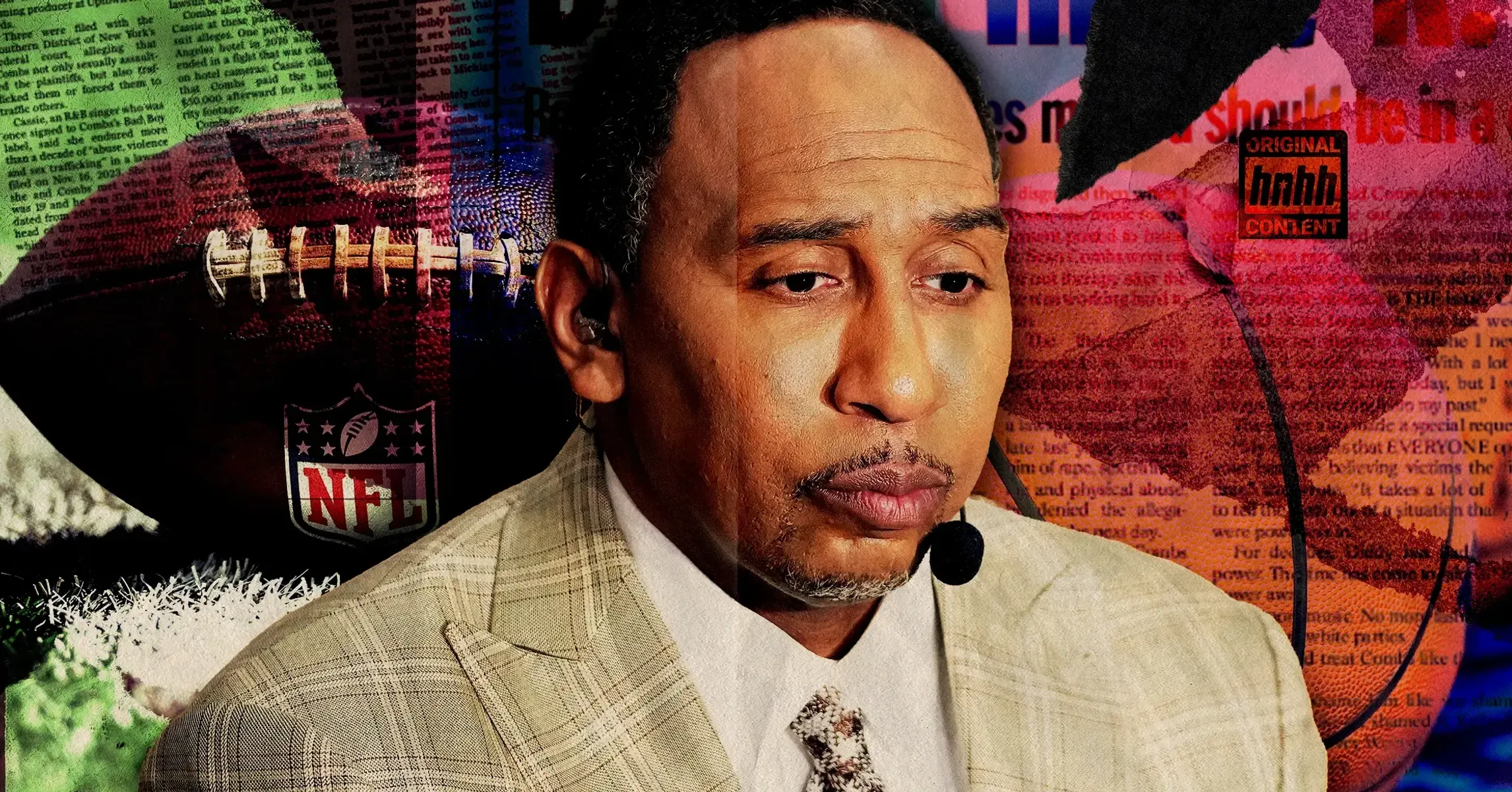
The recent shooting of American citizen and poet Renee Good by an ICE agent in Minnesota has sparked significant outrage and protests. Good was shot in the head while sitting in her vehicle, with her last words captured on video stating, “I’m not mad at you.” Eyewitnesses claim that the incident escalated without warning, raising critical questions about police conduct. In the aftermath, Stephen A. Smith characterized the shooting as “completely justified” from a legal standpoint, a statement that has drawn sharp criticism.
Smith, a prominent sports commentator with a national platform, has a history of controversial remarks that align him with institutional power during moments when accountability is demanded from authorities. His framing of the Good shooting as justified, despite acknowledging alternatives such as de-escalation and restraint, has been interpreted as a dismissal of community concerns and an endorsement of aggressive law enforcement tactics. Many view this comment as part of a larger pattern where Smith prioritizes institutional perspectives over marginalized voices.
The backlash against Smith’s comments echoes past incidents where he has downplayed significant social issues. For example, when Colin Kaepernick knelt during the national anthem in 2016 to protest police violence and systemic racism, Smith focused on Kaepernick’s methods rather than the underlying issues at hand. He criticized Kaepernick for not voting in the 2016 presidential election and redirected the conversation away from the protest’s purpose toward its presentation.
This trend continued when Congresswoman Jasmine Crockett faced scrutiny for her blunt responses during a televised committee hearing. Smith dismissed her comments as “for the streets,” a phrase many interpreted as condescending and dismissive of her professional qualifications. Although he later apologized, the impact of his initial remarks had already taken hold.
Similarly, when Vice President Kamala Harris released a memoir discussing her first 107 days in office, Smith’s response was notably dismissive. He posed the rhetorical question, “Who cares what she has to say?” This response overlooked the historical significance of Harris as the first Black, South Asian, and female vice president in U.S. history, reducing her contributions to mere irrelevance.
In a notable instance involving domestic violence in sports, after security footage showed NFL player Ray Rice assaulting his then-fiancée, Smith suggested that women should “make sure we don’t do anything to provoke wrong actions.” His comments prompted widespread outrage and resulted in a suspension from ESPN. Smith ultimately labeled this incident as the “most egregious error” of his career, yet his focus remained on how to avoid similar situations rather than addressing the violence itself.
Smith’s commentary has also extended to a range of other topics, including the representation of Black individuals in sports. His critique of Serena Williams during a Super Bowl halftime show and his comments regarding NBA player J.R. Smith wearing a hoodie on the bench reflected a concern for how Blackness is perceived rather than addressing systemic issues affecting the community.
In addressing Shohei Ohtani and his use of an interpreter, Smith’s remarks were viewed as xenophobic, sparking accusations of outdated views on cultural representation. His insistence that language differences could hinder acceptance in a sport like baseball highlighted a narrow view of who deserves recognition based on their contributions.
As Smith’s platform has expanded beyond ESPN, so too has his influence. He hosts a popular podcast and engages with high-profile guests, reportedly earning an eight-figure salary. His understanding of what generates attention has shifted his commentary towards increasingly controversial statements, particularly in political discussions. On programs like Real Time with Bill Maher, he criticized Democrats for being too “woke” and praised Donald Trump’s communication style as closer to normal, further entrenching himself in a narrative that aligns with conservative media.
In this climate, where words can have profound consequences, the implications of Smith’s comments are significant. They resonate beyond the screen, shaping public perception and potentially validating harmful narratives against marginalized communities. While there is value in diversity of thought within Black communities, Smith’s approach raises concerns about the distinction between being controversial and being irresponsible.
In moments that require moral clarity, Smith has often chosen to amplify institutional voices rather than challenge them. This tendency risks reinforcing systems of control rather than advocating for change. The historical record will reflect those who stood with the people during times of struggle, as well as those who chose to align with authority.
Moving forward, Smith’s responsibility as a prominent cultural commentator is clear. While he need not be an activist or lead movements, he should be mindful of the weight his words carry and the historical context in which they exist. As history continues to unfold, it will remember those who used their voices for the betterment of their communities and those who merely made noise in the face of significant issues.