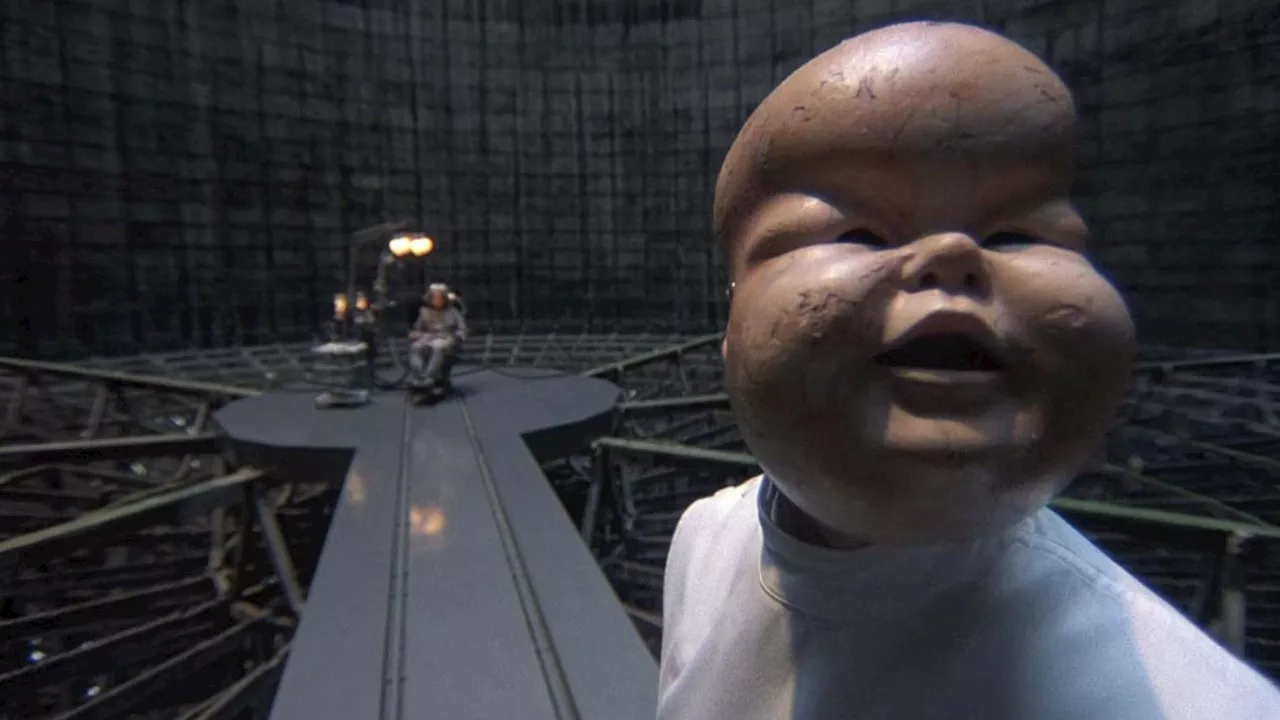
In a recent commentary, renowned author Stephen King described House of Leaves as the “Moby-Dick of horror,” highlighting the novel’s profound impact on the genre. This statement underscores the unique narrative structure and psychological depth of the book, written by Mark Z. Danielewski, which has garnered a cult following since its release in 2000.
The comparison to Moby-Dick, a classic of American literature penned by Herman Melville, reflects King’s belief in the profound thematic richness of Danielewski’s work. In his commentary, King pointed out that just as Melville’s novel explores obsession and the human condition, House of Leaves delves into fear and the complexities of reality.
Significance of ‘House of Leaves’ in Modern Horror
First published in 2000, House of Leaves challenges traditional storytelling methods through its experimental format. The novel features multiple narrators and employs an unconventional layout that includes footnotes, typographical variations, and even color changes, creating a sense of disorientation that mirrors its themes. This complexity has made it a point of discussion among literary critics and horror enthusiasts alike.
King’s endorsement adds significant weight to the book’s reputation. He stated that the novel’s ability to evoke raw emotional responses is what sets it apart from other works in the genre. The intricate narrative structure compels readers to engage deeply, transforming a simple horror story into a multifaceted exploration of fear and perception.
Evan Mullicane, the senior editor at Screen Rant, noted that King’s recognition is a testament to the book’s enduring relevance. Mullicane emphasized that the fusion of horror with literary ambition is what makes House of Leaves a unique reading experience. The novel’s cult status continues to grow, attracting new readers who are eager to decipher its layered meanings.
Enduring Legacy and Influence
The influence of House of Leaves can be seen in contemporary horror literature and media, inspiring a new generation of writers to experiment with form and narrative. Its impact is not only felt in literature but also in film and digital storytelling, where the blending of visual and textual elements has become more common.
King’s comparison to Moby-Dick suggests that House of Leaves will be studied and revered for years to come. The novel has sparked discussions about the nature of horror and the ways in which it can be represented in literature. As readers continue to explore its depths, its status as a significant work in the horror genre is cemented.
The dialogue surrounding House of Leaves also reflects broader trends in the literary world, where genre boundaries are increasingly blurred. As King and others champion works that challenge conventional narratives, the landscape of horror literature continues to evolve, inviting readers to reconsider what horror can be.
In conclusion, Stephen King‘s declaration of House of Leaves as the “Moby-Dick of horror” highlights the novel’s intricate storytelling and thematic depth. As it continues to resonate with readers, its legacy is likely to grow, solidifying its place as a cornerstone of modern horror literature.