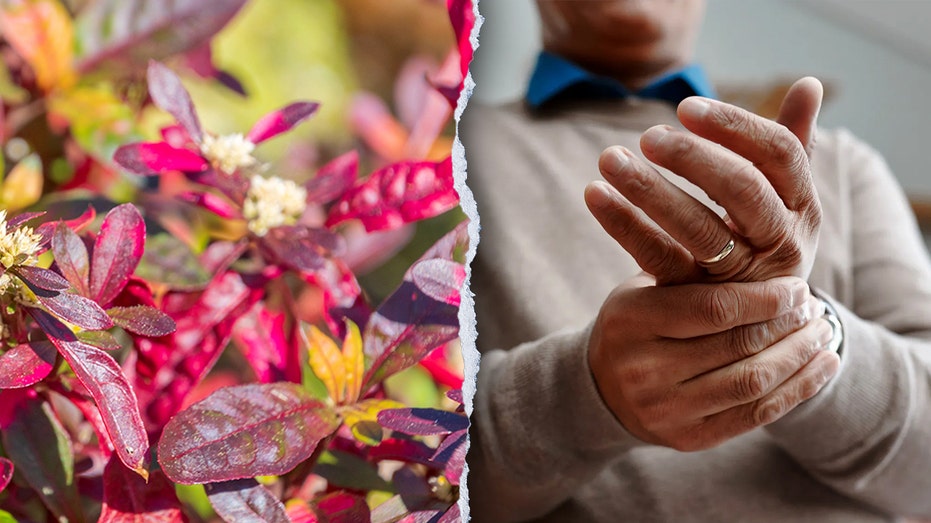
Researchers have discovered that a traditional Brazilian plant, known as Joseph’s Coat (Alternanthera littoralis), exhibits significant potential in reducing arthritis-related inflammation and protecting joint tissue. This finding, published in the Journal of Ethnopharmacology, arises from studies conducted by teams from several Brazilian universities, including the Federal University of Grande Dourados and the State University of Campinas.
The plant, which grows naturally along Brazil’s coastline, has a history of use in local medicine for alleviating inflammation, infections, and parasites. Previous to this research, the scientific community lacked solid evidence to confirm its efficacy and safety in treating conditions like arthritis.
Researchers focused on extracting compounds from the plant’s leaves and stems using an ethanolic method, which involves alcohol to isolate active ingredients. In laboratory models of arthritis, the extract demonstrated a reduction in swelling and joint degeneration. According to Arielle Cristina Arena, an associate professor at the Institute of Biosciences at UNESP’s Botucatu Campus, “In the experimental models, we observed reduced edema, improved joint parameters, and modulation of inflammatory mediators, suggesting antioxidant and tissue-protective actions.”
The results indicated that animals treated with the extract experienced significantly less swelling and healthier joint tissue compared to untreated controls. The study also included toxicology tests, revealing that the plant extract did not cause harmful effects at the doses tested, implying a favorable safety profile for potential human applications.
Implications for Future Treatments
Should further research validate these findings, Joseph’s Coat could pave the way for new plant-based anti-inflammatory treatments. Current arthritis medications can be effective but often carry side effects that limit their long-term use. The research team suggests that natural compounds with fewer adverse effects could provide viable alternatives or complements to existing therapies.
It is important to note that this initial study was conducted on animal models. Therefore, the results cannot be directly translated to human patients with arthritis. Treatments that prove effective in laboratory settings do not always yield the same results in human bodies due to differences in metabolism and response.
The study concentrated on a specific extract prepared under controlled laboratory conditions, meaning that variations in strength and safety could occur in store-bought or homemade versions of the plant. More comprehensive studies are needed to isolate the active compounds responsible for the anti-inflammatory effects and to investigate their long-term safety and efficacy in human trials.
Next Steps for Research
The research team also highlighted the need for further studies to identify which compounds in Joseph’s Coat contribute to its therapeutic effects. Without this knowledge, it remains challenging to standardize dosages or predict long-term outcomes in patients.
In summary, while the findings on Joseph’s Coat offer promising insights into alternative treatments for arthritis, researchers emphasize the necessity for ongoing investigation. Future research will be essential to confirm these initial results and potentially introduce a new class of natural anti-inflammatory therapies.