A coalition of medical schools and research institutions in New York is urging Governor Kathy Hochul to allocate billions in state funding for a new biomedical research initiative. The proposed Empire Biomedical Research Institute aims to counteract the uncertainty surrounding federal science funding and bolster the state’s life sciences sector. The appeal comes as many existing research jobs face jeopardy due to recent federal funding cuts.
Jonathan Teyan, president and CEO of the Associated Medical Schools of New York, emphasized the significance of this initiative, stating, “We can’t separate this [proposal] from all of the changes in policy and funding that have come out of Washington. But our view is that this is actually really good for economic development and for health care in New York.”
According to an analysis by United for Medical Research, federally funded research supported over 30,000 jobs in New York last year, generating more than $8 billion in economic activity. Despite this, more than a thousand research grants in the state have been affected by federal funding cuts or freezes this year. Although some grants have seen reversals, hundreds still remain impacted, as reported by the funding tracker Grant Witness.
In their proposal, the Associated Medical Schools of New York outlined a gradual funding plan starting with $500 million, expanding to $6 billion over the next decade. However, the coalition faces stiff competition for state budget allocations as the fiscal year 2027 budget session approaches in January.
Ana Champeny, vice president for research at the Citizens Budget Commission, highlighted the challenges ahead, noting, “There are big [federal] cuts coming and big policy changes with regards to both the Medicaid program and the SNAP program.” She also mentioned that the agenda of Mayor-elect Zohran Mamdani requires substantial state support, urging legislators and the governor to prioritize their funding decisions.
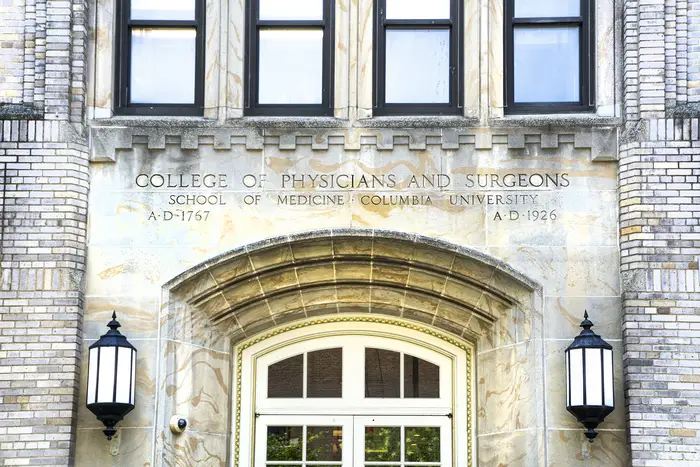
Several prominent institutions, including Mount Sinai Health System, Columbia University, and the CUNY School of Medicine, communicated their support for this funding initiative in a recent letter to Hochul. They warned that without a dedicated state fund, New York risks falling behind other states and countries that are enhancing their investments in biomedical research.
The letter emphasized the critical role of biomedical research in not only advancing science but also in supporting economic growth and health outcomes for communities. “New York state is a national leader in life sciences, innovation, and advanced manufacturing thanks to Gov. Hochul’s record investments and public-private partnerships,” stated Kassie White, a spokesperson for the governor. She referenced ongoing projects, including a cell and gene therapy innovation hub on Long Island, which is receiving a $150 million state investment, and Regeneron Pharmaceuticals’ commitment to invest over $2 billion into a new facility in Saratoga Springs.
Teyan highlighted the necessity for sustained state support for research at academic institutions to ensure a robust pipeline to the commercial sector. While White did not provide specific insight into the governor’s stance on the new funding proposal, she indicated that Hochul would reveal her plans for the fiscal year 2027 budget in January.
The landscape of federal science funding remains unpredictable. Researchers in New York and nationwide are still grappling with the consequences of significant cuts initiated during the Trump administration. Early this year, funding for thousands of research grants faced freezes or cuts, with hundreds of New York City projects particularly impacted. In some instances, the administration cited misalignment with federal priorities as a reason for funding withdrawal.
Despite some federal funding cuts being reversed, the National Institutes of Health (NIH) has curtailed its spending significantly, with competitive grant disbursements dropping by 41% below average by July, according to an analysis by the New York Times. Many institutions have been forced to implement hiring freezes in response to these challenges.
Bruce Stillman, president and CEO of Cold Spring Harbor Laboratory, a Long Island nonprofit focused on cancer and neuroscience research, reported that the organization has undergone layoffs and is downsizing some laboratories. His own research team, which studies DNA in cancer cells, will reduce from seven staff members to four next year. Stillman has been advocating for federal funding stability while also stressing the importance of state investment in the life sciences sector to maintain competitiveness against other states and countries.
Earlier this year, President Trump proposed an $18 billion cut to NIH funding, nearly 40% of its budget, although Congress has thus far rejected this proposal. As calls for increased state-level investment in biomedical research intensify, New York’s future as a leader in life sciences hangs in the balance.