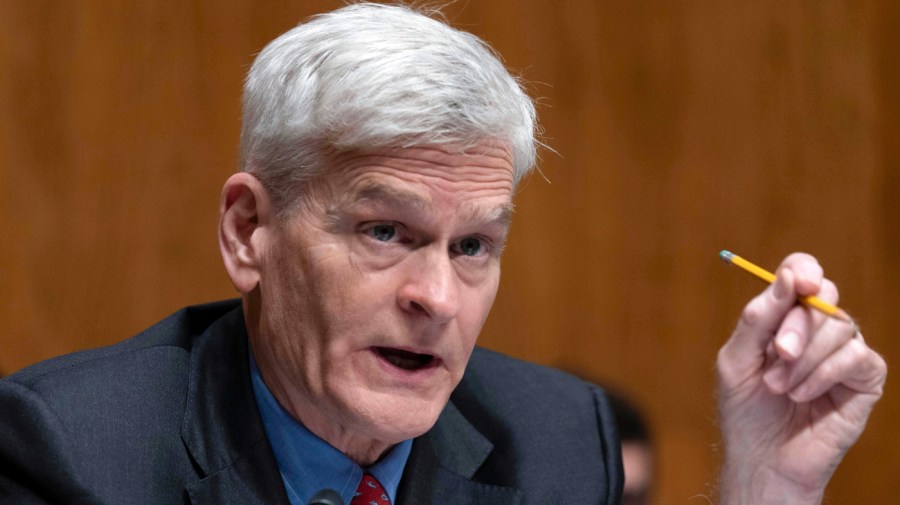
Senators Bill Cassidy (R-La.) and Lisa Blunt Rochester (D-Del.) posed pointed questions to Jay Bhattacharya, Director of the National Institutes of Health (NIH), regarding the U.S. administration’s approach to public health policy influenced by Denmark. The inquiry took place during a session of the Senate Committee on Health, Education, Labor, and Pensions (HELP) on March 12, 2024.
The focus of the discussion centered on the administration’s modeling of health policies based on Denmark, a country known for its relatively uniform population of just over 6 million people. Cassidy expressed skepticism about the applicability of a health model from a nation with such distinct demographic characteristics to the diverse population of the United States. He remarked, “That’s a crazy idea,” highlighting the challenges of applying a one-size-fits-all approach to public health in a country with significant ethnic and economic diversity.
During the hearing, Bhattacharya defended the administration’s strategy, indicating that Denmark’s health policies demonstrate effective management of public health issues. He noted the country’s robust healthcare system and vaccination strategies as potential frameworks that could inspire U.S. policy. Nonetheless, both Cassidy and Rochester pressed for clarity on how such a model could be adapted to meet the needs of the American populace.
Rochester highlighted the necessity of considering the unique challenges faced by different communities within the United States. She emphasized the importance of tailoring health initiatives to reflect local needs and conditions rather than adopting a blanket policy that may not be effective in varied contexts.
The senators’ remarks raised critical questions about the adequacy of using Denmark as a reference point for U.S. health policy. The discussion underscored the ongoing debate about the importance of regional specificity in public health strategies, particularly as the nation continues to navigate complex health issues.
As the hearing concluded, the senators reiterated their commitment to ensuring that U.S. health policies are informed by a comprehensive understanding of the nation’s diverse population. The outcome of this dialogue may influence future health policy decisions as the government seeks effective ways to address public health challenges in a complex and multifaceted landscape.