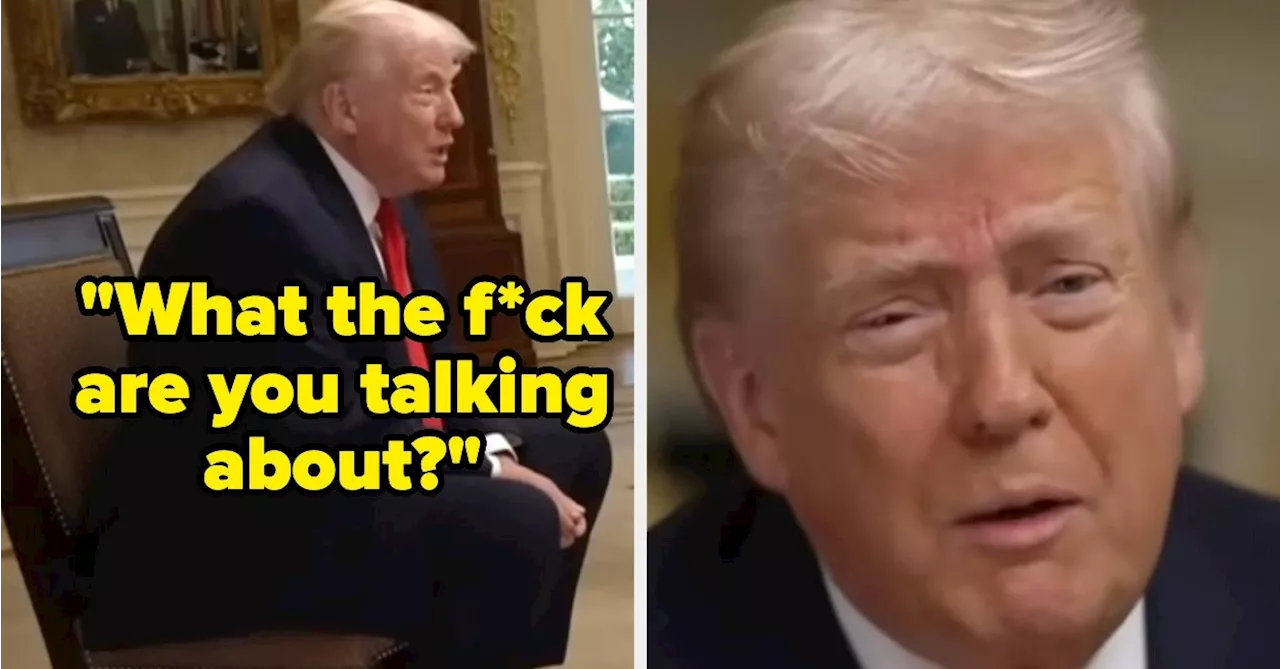
Former President Donald Trump sparked widespread reaction following an interview where he discussed the actions of U.S. Immigration and Customs Enforcement (ICE). The conversation, which aired on July 2023, delved into the controversial topic of immigration enforcement and two American citizens, Renee Good and Alex Pretti, who were killed in incidents involving ICE agents.
During the interview, Trump expressed his discontent regarding the fatalities. He stated, “Well, look, I’m not happy with the two incidents… Nobody could be happy, and ICE wasn’t happy either.” Despite acknowledging the tragic events, he emphasized his support for law enforcement, asserting, “If we don’t back them, we don’t have a country.” This comment drew criticism as many interpreted it as a dismissal of the severity of the incidents.
The interview took a more controversial turn when Trump was pressed further on the issue. He stated, “I hate even talking about it. Two people out of tens of thousands, and you get bad publicity.” This remark, which seemingly downplayed the significance of the deaths, led to a public outcry. Critics argued that it reflected a lack of empathy and awareness regarding the impact of ICE’s actions on individuals and families.
Trump also made a perplexing comment about law enforcement operations, claiming, “We have the smallest trucks, as an example. We’ve been very tough on the waters.” The context of this statement was unclear, and it raised questions about its relevance to the discussion.
Public reaction to Trump’s remarks has been swift and varied. Many have taken to social media platforms to express their disapproval, with some users highlighting the need for accountability within immigration enforcement agencies. Others defended Trump’s stance, arguing that he was merely emphasizing the larger context of immigration enforcement and the challenges faced by law enforcement.
The interview underscores ongoing debates surrounding immigration policy in the United States, particularly regarding the role of ICE. As discussions continue, the implications of Trump’s comments may influence public perception and policy decisions related to immigration enforcement.
In the broader context, this incident is part of a series of contentious interactions Trump has had with the media, particularly when addressing sensitive topics. His approach often elicits strong reactions, reflecting the polarized nature of American political discourse today.
As public responses unfold, it remains to be seen how this interview will impact Trump’s standing within the political landscape and the ongoing debate over immigration policy in the United States.