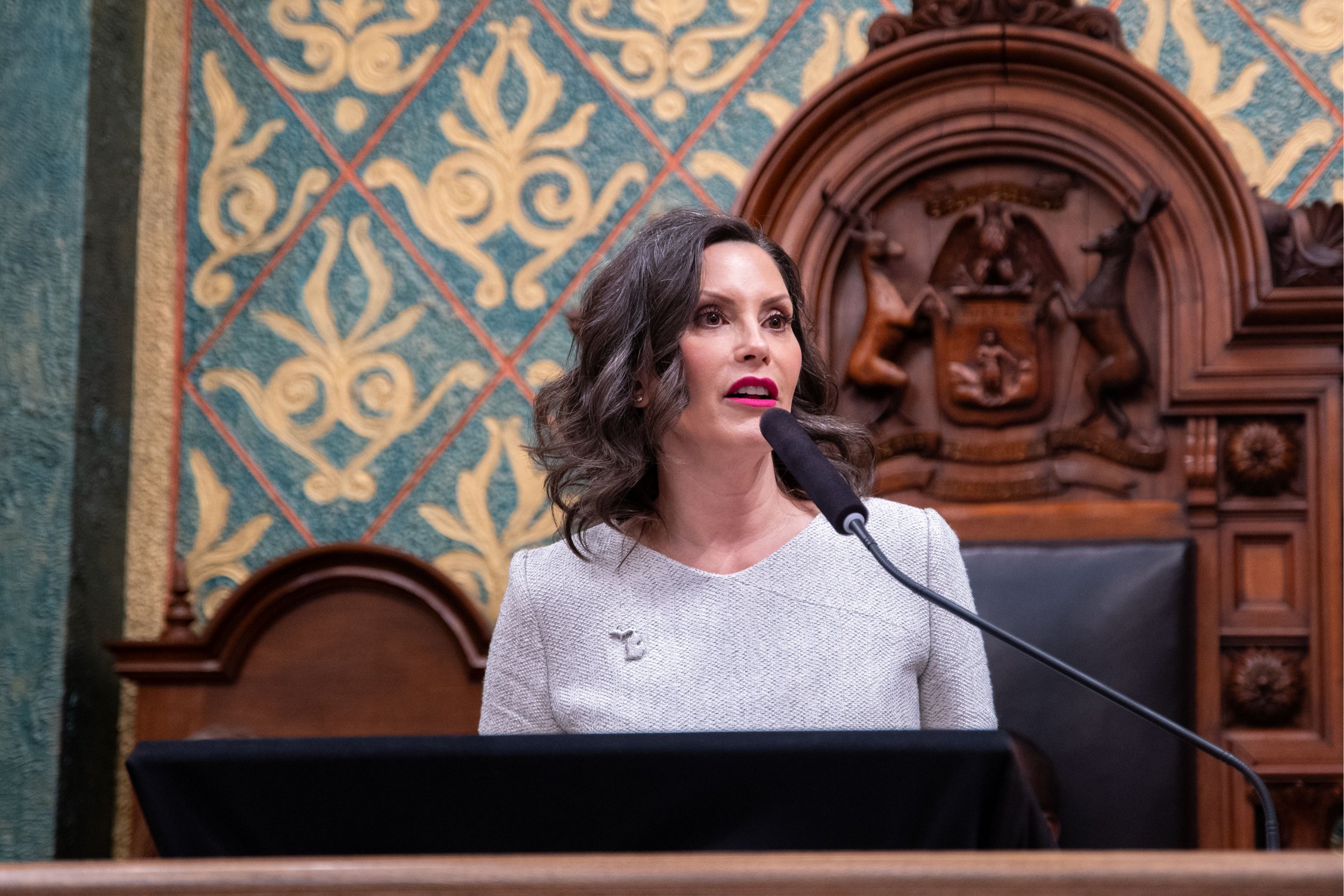
Governor Gretchen Whitmer delivered her final State of the State address on March 15, 2026, from the Michigan State Capitol. In this significant address, she reflected on her achievements over the past two terms and outlined her key priorities for the remainder of her tenure. Whitmer emphasized progress in several areas, including economic growth and public safety, while also identifying critical challenges that require immediate attention.
Whitmer opened her remarks by celebrating the advancements Michigan has made during her administration. “Over the last seven years, we’ve delivered on the kitchen table issues,” she stated. “Wages and GDP are up, crime and overdose deaths are down. Pre-K, school meals, and community colleges are all free. We fixed more roads, built more homes, and replaced more lead pipes than ever.” She noted that for the first time since the early 1990s, more people are moving to Michigan from other states.
Despite these accomplishments, Whitmer pointed out three areas needing improvement: literacy rates, affordable housing, and medical debt relief. She called for bipartisan cooperation to tackle these pressing issues, urging Michiganders to set a positive example amid increasing political division. “We’re all exhausted by the endless division,” she remarked. “But despite these national challenges, Michiganders can show the way forward.”
Addressing Literacy Challenges
One of the most alarming statistics Whitmer highlighted was that fourth graders in Michigan currently rank 44th in the nation for reading scores, with boys lagging behind girls across all age groups. She expressed a commitment to addressing this issue in her final year as governor. “Literacy is a national challenge,” she said, emphasizing the necessity for every child to develop strong reading, writing, and critical thinking skills to meet the demands of the economy.
To combat low literacy rates, Whitmer proposed a historic investment of $625 million for literacy support in her budget for the fiscal year 2027. Her Every Child Reads plan aims to introduce effective reading instruction at an earlier age, implement proven teaching methods in classrooms, and provide additional support for struggling students. “Those early years are crucial,” she noted. “First, we start teaching reading earlier. Second, let’s get proven literacy teaching practices into all Michigan classrooms. … Finally, extra help.”
Tackling Housing Affordability
Whitmer also addressed the significant issue of housing affordability in Michigan. She noted that the median age of first-time homebuyers has risen to an unprecedented 40 years, prompting concerns among young adults. Relating her own experience as a homeowner in the 1990s, she acknowledged the frustrations many Michiganders face in today’s real estate market.
The governor pointed to national factors, such as tariffs imposed during the previous administration, which have contributed to rising housing prices. “Tariffs have raised the cost of a house by upwards of $17,000,” she explained. “Now, we can’t change national tariffs. Believe me, I’ve tried. But we can build more quality affordable housing in Michigan.”
In response to the housing crisis, Whitmer announced a proposal for a new affordable housing tax credit designed to incentivize developers to construct more affordable homes. “With a state credit, we can build thousands more homes every year,” she stated. She highlighted that Michigan is currently the only state in the region without such a tool, which she believes would unlock additional federal funding for housing initiatives.
State Representative Ann Bollin, a Republican from Brighton, expressed support for Whitmer’s housing tax credit but also suggested exploring alternative solutions to enhance home ownership opportunities. “Home ownership has always been the crown jewel in the United States of America, and I want to see that happen for generations to come,” she remarked.
Enhancing Healthcare Accessibility
The governor also addressed health care access, particularly in light of the One Big Beautiful Bill Act passed in July 2025, which significantly cut funding from Medicaid and the Supplemental Nutrition Assistance Program. Whitmer urged Congress to renew subsidies under the Affordable Care Act to ensure that Michiganders receive the support they need.
“I’m calling on members of Congress: renew the ACA subsidies, provide real relief to Michiganders,” she stated. “We will all, every one of us, be impacted by these cuts. The domino effect of higher premiums, hospital closures, reduced services, workforce reduction will impact us all.”
Whitmer emphasized the need to alleviate the burden of medical debt on residents, proposing measures such as capping interest rates on medical debt and preventing it from affecting credit reports. “In Michigan, we believe that being sick or getting hurt shouldn’t also mean going broke,” she asserted.
Whitmer concluded her address by reiterating her commitment to bipartisan collaboration, drawing from her experiences as a legislative staffer during a time of equal representation in the Michigan House. “We’re fixing the damn roads, everywhere, thanks to the biggest bipartisan roads deal in state history,” she said. “It’s Republicans, Democrats, and independents who put politics aside to solve problems. That’s what Michigan’s about.”
As she prepares to leave office, Whitmer’s focus remains on ensuring that her administration’s efforts lead to lasting positive change for Michigan residents.