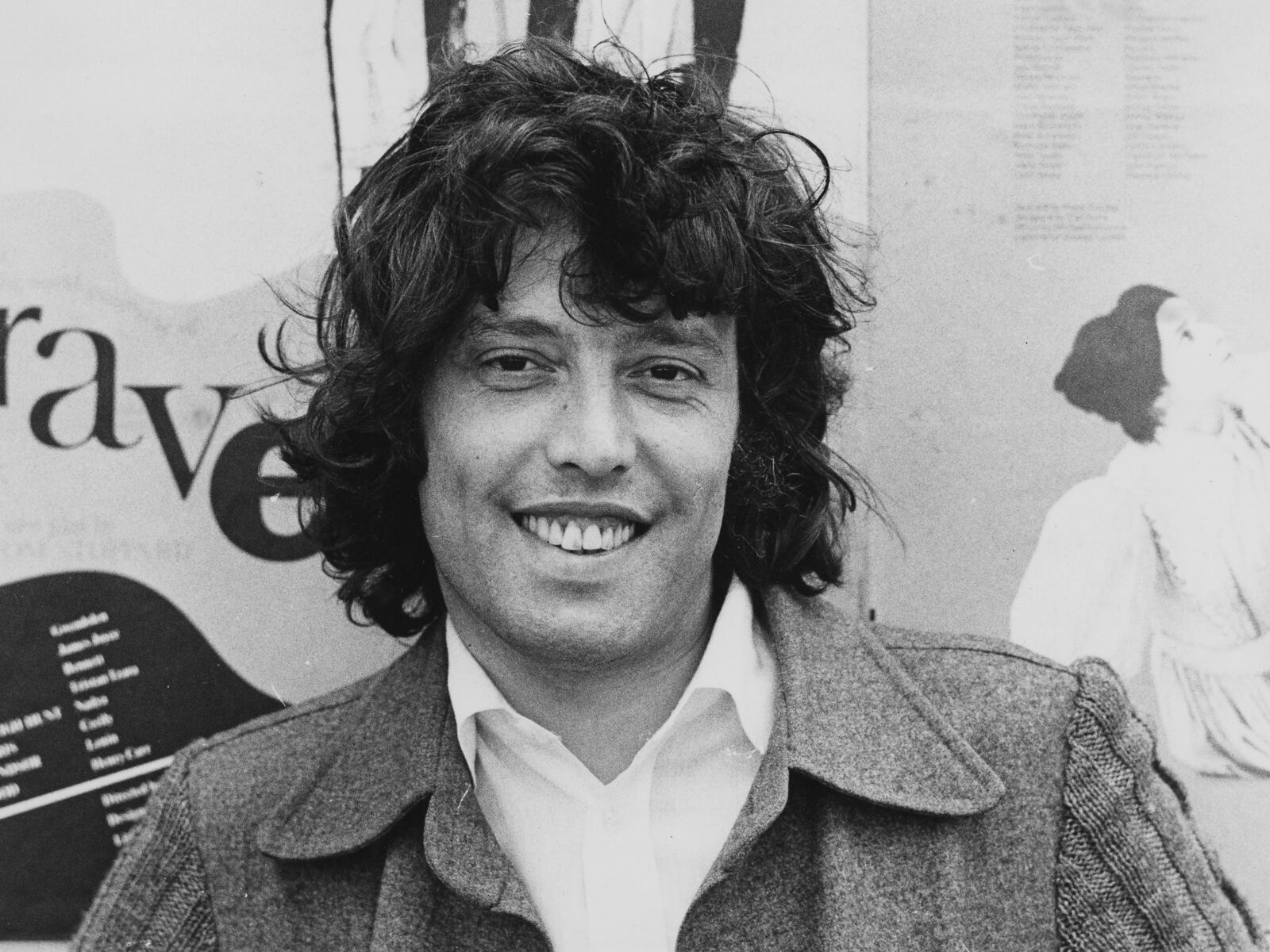
British playwright Tom Stoppard, revered for his contributions to theatre and acclaimed for his screenplay for the 1998 film Shakespeare in Love, has passed away at the age of 88. In a statement released on Saturday, United Agents announced that Stoppard died peacefully at his home in Dorset, surrounded by family. The agency celebrated his legacy, stating, “He will be remembered for his works, for their brilliance and humanity, and for his wit, his irreverence, his generosity of spirit and his profound love of the English language.”
Stoppard, born Tomás Sträussler in 1937 in Zlín, Czechoslovakia, was often regarded as one of the greatest British playwrights of his generation. His extensive body of work, which spanned decades, earned him numerous accolades, including five Tony Awards for Best Play. These awards recognized his groundbreaking works, such as “Rosencrantz and Guildenstern Are Dead” (1968), “Travesties” (1976), “The Real Thing” (1984), “The Coast of Utopia” (2007), and “Leopoldstadt” (2023).
A Journey Through Life and Literature
Stoppard’s early life was marked by upheaval. Fleeing from the Nazis in 1939, his family relocated to Singapore, only to escape again to India in 1941 as Japanese forces advanced. After the war, Stoppard moved to the UK with his mother and stepfather, where he embraced English culture and literature. He described putting on “Englishness like a coat,” which shaped his identity as he developed a passion for cricket and the works of William Shakespeare.
Though he did not attend university, Stoppard began his career as a journalist at the age of 17. He worked for newspapers in Bristol and later became a theatre critic in London. His foray into playwriting began with radio and television, culminating in his landmark play “Rosencrantz and Guildenstern Are Dead,” which reinterpreted Shakespeare’s classic from the perspective of two minor characters. The play premiered at the Edinburgh Fringe Festival in 1966 and subsequently gained acclaim at the National Theatre before crossing over to Broadway.
Stoppard’s catalogue is noted for its intellectual depth, blending themes of philosophy, science, and historical events. His works, like “The Real Inspector Hound” (1968) and “Jumpers” (1972), showcased his unique ability to intertwine complex ideas with humor and drama. His musical drama “Every Good Boy Deserves Favor” (1977) highlighted his commitment to human rights, reflecting his long-standing advocacy for dissidents in the Soviet Union and Eastern Europe.
Legacy of Innovation and Insight
Throughout his career, Stoppard continued to innovate within the theatre. “The Real Thing” (1982) examined love and authenticity through layered narratives, while “Arcadia” (1993) ventured between different time periods, inviting characters to engage in discussions about poetry and chaos theory. His work often juxtaposed personal and philosophical inquiries, as seen in “The Invention of Love” (1997), which explored the life of the English poet A.E. Housman.
As the new millennium unfolded, Stoppard’s plays maintained their relevance. “The Coast of Utopia” (2002) offered a sweeping narrative of Russian intellectuals on the brink of revolution, while “Rock’n’roll” (2006) contrasted the experiences of counterculture movements in 1960s Britain and Communist Czechoslovakia. His last major work, “The Hard Problem” (2015), delved into the complexities of consciousness from both scientific and spiritual perspectives.
Stoppard’s influence on the world of theatre is indelible. His ability to weave language, intellect, and emotion into compelling narratives has left an enduring mark. According to biographer Hermione Lee, the essence of Stoppard’s brilliance lay in the “mixture of language, knowledge, and feeling.” His passing marks the end of an era, yet his works will continue to inspire and provoke thought for generations to come.