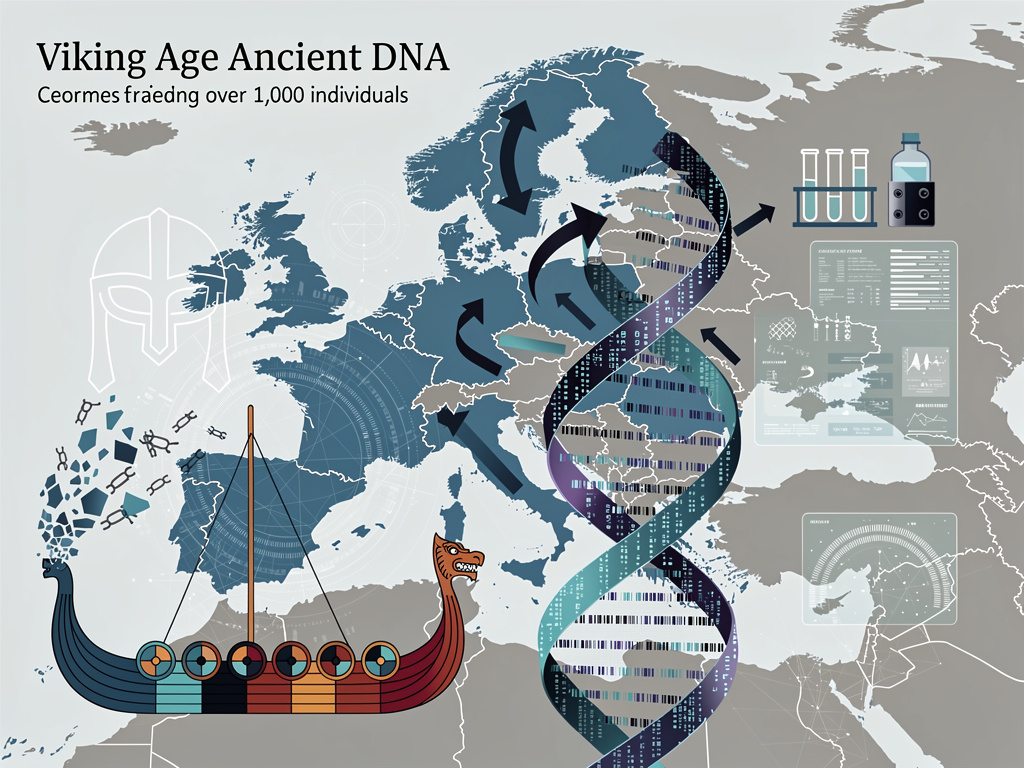
The largest ancient DNA study of the Viking Age has fundamentally altered the understanding of what it meant to be a Viking. Traditionally associated with a specific ethnic group, this research indicates that the term “Viking” describes an occupation rather than a hereditary identity. Led by Eske Willerslev from the University of Copenhagen, the study analyzed the genomes of over 1,000 individuals, revealing a much more genetically diverse raiding culture than previously believed.
Published in the journal Nature, this landmark study draws on DNA extracted from skeletal remains found at more than 80 archaeological sites across Europe and Greenland. It highlights that the Viking raiding parties were composed of individuals from various ancestral backgrounds, linked by ambition and opportunity rather than familial ties.
Genetic Diversity Challenges Established Narratives
One of the most striking findings was the genetic heterogeneity present among individuals buried with traditional Viking grave goods, such as swords and shields. For example, at sites in Orkney, Scotland, some individuals who appeared to fit the Viking warrior archetype had no Scandinavian ancestry. Instead, their genetic heritage traced back to areas such as Southern Europe or the British Isles.
Willerslev noted, “The results change the perception of who a Viking actually was.” His team discovered significant gene flow into Scandinavia from Southern Europe and Asia, suggesting that the concept of a “pure” Viking stock was a myth even before the Viking Age began around 793 A.D. This mixing of populations indicates that Scandinavian communities had been diverse long before the Viking expeditions gained notoriety.
The study further revealed that Viking expeditions were organized through expansive social networks rather than strict kinship lines. For instance, at the ship burial site of Salme in Estonia, genetic analysis showed that while some warriors were related, others were not connected by blood, supporting the idea that Viking crews were assembled much like mercenary companies.
Wider Implications for Historical Understanding
These findings challenge previous assumptions about cultural identity and ethnicity in archaeological contexts. Traditionally, remains classified as “Viking” were based on burial artifacts. The new genetic evidence suggests that such material culture reflects social affiliation and profession rather than biological descent. This disconnect highlights the need for a more integrated approach in archaeology that combines material evidence, textual sources, and genetic data.
Furthermore, the study has significant implications beyond academic circles. The imagery and identity of Vikings have been appropriated by various contemporary movements, including white supremacist groups, to promote ideas of racial purity. Willerslev emphasized the importance of this research in countering those narratives, stating, “This study shows that the Viking identity was not limited to people with Scandinavian genetic ancestry.”
The findings demonstrate that the Viking Age was a period characterized by extraordinary mobility and cultural exchange. Individuals from diverse backgrounds, including those from the British Isles and Southern Europe, could adopt Norse culture, join raids, and be interred with Viking honors.
As ancient DNA research continues to evolve, further studies may reveal even greater genetic diversity within Viking-associated populations. The Viking Age DNA project is part of a broader trend in ancient genomic research, which has accelerated in the last decade, allowing for more detailed understanding of historical populations.
In conclusion, this groundbreaking research not only reshapes the narrative of the Viking Age but also serves as a reminder of the complexities of identity throughout history. The word “Viking” now reflects a choice of lifestyle and profession rather than a marker of ethnic origin, emphasizing that history is often more intricate than modern interpretations suggest.