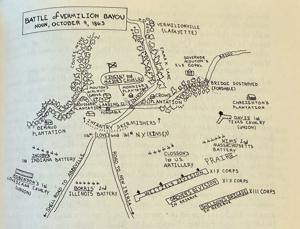
The Battle of Bayou Vermilion, a significant confrontation during the American Civil War, is vividly represented in a map featured in David C. Edmonds‘ 1979 book, ‘Yankee Autumn in Acadiana.’ This battle, which took place in Louisiana, highlights the strategic maneuvers of both Union and Confederate forces during a tumultuous period in American history.
Maps like the one created by Edmonds provide invaluable insights into the logistics and geography of the battlefield. They illustrate not only troop movements but also the environmental challenges that soldiers faced. The Battle of Bayou Vermilion occurred on October 26, 1863, and was part of the broader military campaign in the region, marking a pivotal moment in the conflict.
Context of the Battle
The American Civil War was characterized by numerous battles for control of strategic locations. The Bayou Vermilion area was crucial due to its waterways, which served as vital transportation routes. The Union aimed to control these waterways to disrupt Confederate supply lines and maintain their military advantage.
On the day of the battle, Union forces, led by Colonel Thomas W. Sherman, engaged with Confederate troops under the command of General Alfred Mouton. The engagement was marked by fierce fighting, and despite the challenges posed by the terrain, both sides demonstrated tactical prowess. Ultimately, the outcome of the battle contributed to the shifting dynamics of the war in the region.
Significance and Legacy
The Battle of Bayou Vermilion is often overshadowed by larger conflicts; however, it serves as a testament to the complexities of warfare and the tenacity of soldiers on both sides. The detailed map from Edmonds’ work encapsulates the historical importance of this battle and its role in the larger narrative of the American Civil War.
Moreover, understanding such battles enriches our comprehension of military history and its impact on present-day society. The lessons learned from the engagements at Bayou Vermilion resonate with contemporary discussions around conflict, strategy, and the human cost of war.
Preserving these historical accounts through maps and literature ensures that future generations can appreciate the depth of the sacrifices made during this critical period. The ongoing interest in the Battle of Bayou Vermilion and similar events underscores the importance of historical scholarship in informing our understanding of the past.
As history enthusiasts and scholars continue to explore these narratives, the contributions of authors like David C. Edmonds remain vital in keeping the memory of such battles alive, highlighting their relevance in the tapestry of American history.