On January 3, 2024, Earth reached its perihelion, the point in its orbit when it is closest to the sun, at a distance of approximately 91.5 million miles. This astronomical event typically occurs just once a year, but it serves as a reminder of the complexities of our planet’s orbit and its effects on seasonal changes.
Understanding Earth’s Orbit
The concept of perihelion comes from the Greek word “Helios,” meaning sun, and is part of a broader understanding of Earth’s path around our star. While 93 million miles is the average distance from the Earth to the sun, this distance varies throughout the year, with the planet moving further away at aphelion, its farthest point, which occurs in July at about 94.5 million miles.
Interestingly, Earth travels faster in its orbit during the winter months when it is closer to the sun. This phenomenon results in the winter season lasting a shorter duration compared to summer. Observers can easily verify this by counting the number of days between the spring equinox and the fall equinox, in contrast to the duration between the fall equinox and the spring equinox. The difference in speed is a fascinating aspect of our planetary dynamics.
Despite being closest to the sun in January, this does not equate to warmer temperatures. Rather, it contributes to a milder winter in the northern hemisphere compared to what it might otherwise experience.
The Night Sky: Jupiter and Venus
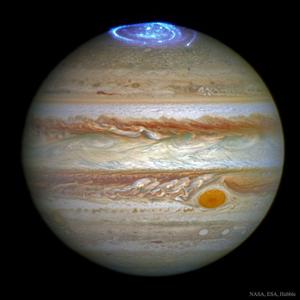
As the moon has faded from the evening sky, Jupiter has emerged as a prominent feature in the night sky. This gas giant, which is over 300 times the mass of Earth and eleven times its diameter, is particularly bright due to its size and its current position in relation to Earth and the sun. Jupiter will be at opposition on January 10, 2024, making it even more visible as Earth sits directly between Jupiter and the sun. This alignment allows stargazers to see Jupiter in all its glory, with its brightness enhanced by the closeness of this alignment.
Meanwhile, Venus, once the “morning star,” is temporarily obscured by the sun’s glare, as it is positioned on the opposite side of the sun from Earth. In a few weeks, Venus will reappear in the evening sky, regaining its title as the “evening star.” This cyclical visibility of Venus and Jupiter adds to the intrigue of our solar system.
The winter solstice, marking the shortest day of the year, occurred in December, and since that time, daylight hours have gradually increased. Although the sun has not risen earlier until now, the lengthening days have been primarily due to later sunsets. As of this week, the sun will begin to rise earlier, signifying the gradual shift toward longer days ahead.
In summary, the journey of our planet through space not only influences our seasons and climate but also offers opportunities for observation and appreciation of celestial events. As we embrace the new year, these astronomical phenomena remind us of the beauty and complexity of our universe.
Wishing everyone a prosperous and joyful year ahead.