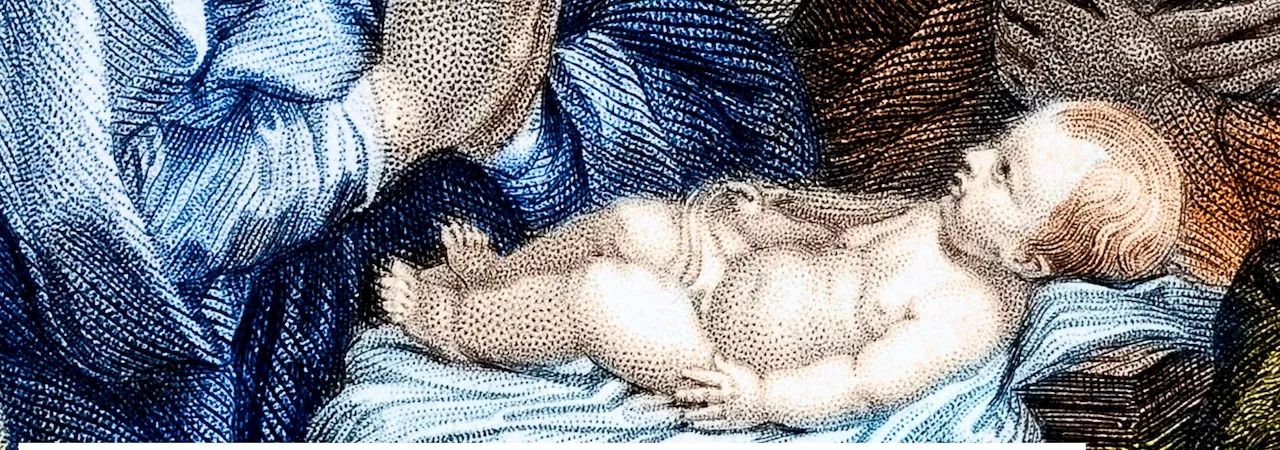
As millions prepare to celebrate Christmas, a historian sheds light on the turbulent reality of the world into which Jesus was born. The traditional narrative, filled with notions of peace and joy, contrasts starkly with the historical context of his family’s circumstances during that time. According to the historian, the familiar carol “Silent Night,” with its soothing refrain “all is calm, all is bright,” does not accurately reflect the chaotic environment surrounding the nativity.
The Gospel accounts indicate a narrative laden with dislocation and danger. For instance, the term “manger” refers to a feeding trough, often foul-smelling and intended for donkeys. The image of a newborn laid in such a place serves as a profound sign for the shepherds who were tasked with guarding their flocks against wild animals. When examined through a broader historical lens, the perilous circumstances become even more pronounced.
King Herod, a pivotal figure in the nativity stories, appears without introduction, leaving readers to infer his malevolent reputation. Appointed as the client ruler of Judaea by the Romans, Herod maintained his position due to his effectiveness in governance. His reign was marked by significant events that shaped the social fabric of the region, including the looting of David’s tomb just prior to Jesus’ birth. This act not only affected the royal lineage that Jesus’ family claimed but also created a lasting impression on their views of Herod and the Roman authorities.
The historian highlights the complex relationship between Herod and Bethlehem, the birthplace of Jesus. After his initial appointment, Herod faced opposition from a rival ruler backed by the Parthians, who was favored by local communities. Following a violent confrontation near Bethlehem, Herod retaliated by massacring the attackers. Upon reclaiming his position, he constructed a memorial known as Herodium, which overlooked Bethlehem, further intensifying local animosities.
Jesus’ family, fearing Herod’s wrath, fled from Bethlehem. This fear was not unfounded, as the historical account of Josephus reveals a nation in open revolt against Roman rule shortly after Jesus’ birth. Following Herod’s death, violent uprisings erupted, leading to further bloodshed under the leadership of Herod’s son, Archelaus.
The social turmoil continued in the years following Jesus’ return from Egypt. Roman forces, commanded by General Varus, devastated villages and executed numerous rebels, quelling the unrest in Judaea. The historian advocates for a retelling of Jesus’ early life that situates him firmly within this chaotic and oppressive landscape, suggesting a narrative akin to the television series “Smallville,” albeit with a far more challenging backdrop.
While popular depictions may focus on miraculous acts, the historian emphasizes the importance of understanding the real nativity story as one of struggle intertwined with hope. The portrayal of young Jesus in some apocryphal texts often deviates into tales of vengeance that do not align with the core messages of compassion and peace associated with his teachings.
In these reflections, a distinct contrast emerges. The traditional nativity scene, often depicted as serene with the Holy Family nestled in a quaint stable, is overshadowed by a reality filled with conflict and hardship. Through this lens, the historian invites readers to reconsider the implications of Jesus’ birth and the socio-political climate of his time, which resonates with contemporary themes of power dynamics and societal strife.
By unpacking these elements, the historian not only seeks to enrich the understanding of the nativity story but also to connect it with the challenges faced in today’s world, where many continue to feel oppressed by dominant forces. In this light, the true essence of the nativity can be seen as a narrative of resilience and enduring hope amidst adversity.