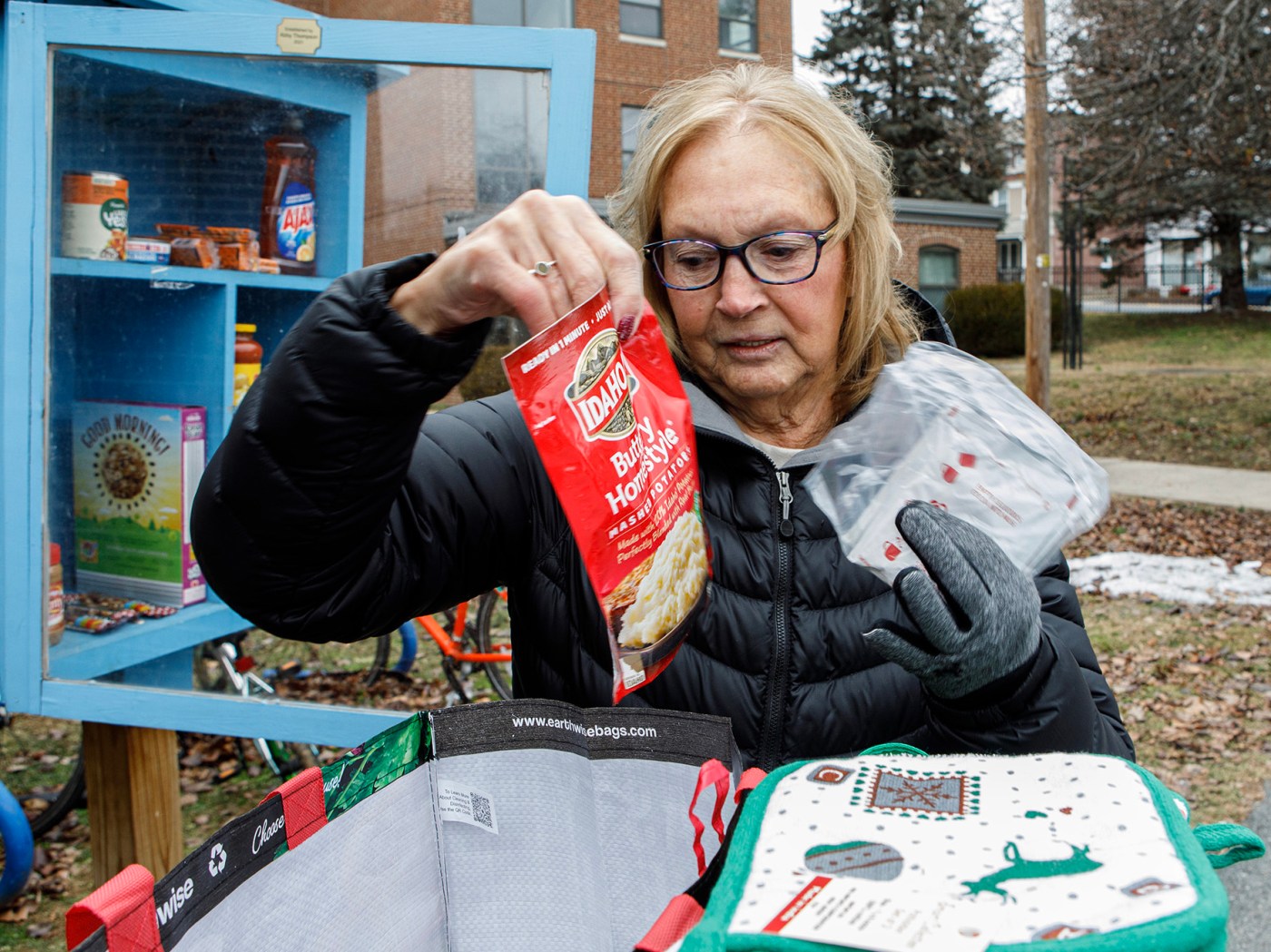
In the wake of economic challenges, a community initiative in the Lehigh Valley is gaining attention as residents explore the potential of a timebanking system. Kathy Perlow, a 73-year-old resident from Bethlehem, advocates for the revival of this service, which allows individuals to trade time instead of money. The concept, which gained traction in the area in 1999, has faced significant challenges, particularly during the COVID-19 pandemic.
Perlow recalls a time when the local timebank facilitated an entire wedding by utilizing the skills of its members. “We did an entire wedding for a timebanking member,” she shared. “She was a trained medical interpreter, and she had logged all her timebanking hours as a medical interpreter.” In this model, every hour contributed is valued equally, promoting community support and engagement.
The modern timebanking concept was established by Edgar S. Cahn, who advocated for a system where one hour of service equates to another, irrespective of the nature of the work. Cahn’s vision aimed to foster community connections and provide mutual assistance, a vision that Perlow hopes to reignite in the Lehigh Valley.
Revitalizing a Community Resource
The Lehigh Valley timebank, initially launched as Community Exchange, was designed to assist individuals transitioning from hospital care by providing crucial support services. Sponsored by the Lehigh Valley Health Network and funded by the Dorothy Rider Pool Health Care Trust, the initiative expanded to encompass a broader range of community needs. However, participation dwindled during the pandemic, and the Neighbor2Neighbor program, previously managed by the Neighborhood Health Centers of the Lehigh Valley, is no longer active.
“Before COVID, it was good,” said Melissa Miranda, CEO of Neighborhood Health Centers. “Since COVID, it has been challenging.” While the timebank has not disappeared entirely, Perlow emphasizes the need for dedicated leadership to revive and manage the initiative effectively.
Perlow envisions a coordinator who can maintain records and promote the timebanking system across the community. “We just need someone to do it,” she noted, highlighting her own commitment to other community initiatives. Her aspirations include finding coordinators for each of the five clinics operated by the Neighborhood Health Center.
The Broader Impact of Timebanking
Perlow’s personal experiences with timebanking reflect its potential to foster social connections. Through her involvement, she connected with Cahn and learned tai chi without financial cost by providing logistical support for lessons. This reciprocal relationship exemplifies the spirit of timebanking, where individuals can exchange skills and services.
Rick Daugherty, executive director of Lehigh Valley Active Life, suggests that timebanking can complement existing community resources. His organization runs a Shared Housing Resource and Exchange Program, where older homeowners offer space to individuals in exchange for assistance with household chores. “This is a way not only to maximize talents but also to connect with other people,” Daugherty explained.
Critics of timebanking, such as retired economics professor Michael A. MacDowell, argue that such a system may not be efficient in larger economies. “It would have to be a pretty closed society,” he stated, noting that traditional monetary systems developed for broader economic interactions.
Despite these criticisms, timebanks have flourished in various regions, including successful implementations in Pennsylvania and internationally. Krista Wyatt, Executive Director and CEO of Timebanks.org, emphasizes the transformative nature of timebanking. She noted, “TimeBanks are proving that when we value every person and their time, we create a world that works for all of us.”
Real-world examples highlight the effectiveness of timebanking. Parents exchange hours for childcare, seniors combat isolation through community connections, and neighborhoods come together to share skills and resources.
“If we would all embrace timebanking as a way to strengthen our community,” Perlow concluded, “I think more people would get involved. Times have changed, and I get it, but maybe that’s where we need to get back to, like start neighborhood by neighborhood.”
For those interested in learning more about the timebanking initiative in the Lehigh Valley, Kathy Perlow can be contacted at [email protected]. For additional information on timebanking, visit Timebanks.org.