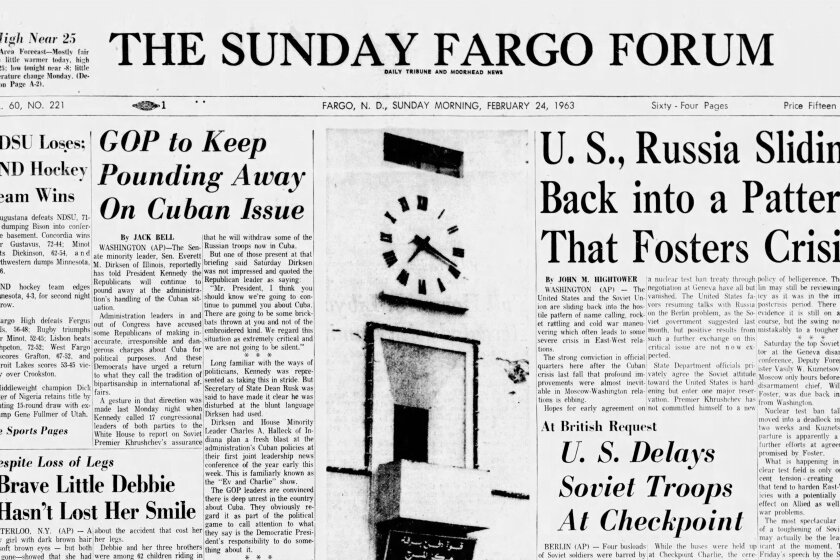
On March 15, 1963, Fargo’s local newspaper, The Forum, paid tribute to Dr. Edward M. Darrow, a revered figure in the community and one of the first physicians in the area. His 41-year career not only shaped the medical landscape of Fargo but also epitomized the compassionate nature of the family doctor. Dr. Darrow established local hospitals and devoted himself to his patients, leaving an indelible mark on the community.
Dr. Darrow arrived in Fargo in 1878 after graduating from Rush Medical College in Illinois. Drawn to the Dakota Territory by stories from friends, he quickly became a fixture in the community. He opened his first clinic over a drug store at the intersection of Main and Fourth streets. As Fargo grew, so did Dr. Darrow’s practice, moving to various locations, including the deLendrecie Building, where he eventually worked alongside his sons, Drs. Kent and Frank Darrow.
The early years of Dr. Darrow’s practice coincided with significant advancements in medicine. He recognized the need for hospital facilities and established the first Cass County Hospital, where he performed many of his initial surgeries. By the late 1880s, he was performing complex surgeries—often in challenging conditions—demonstrating both skill and dedication to his patients.
Dr. Darrow maintained a reputation for being approachable. His son, Dr. Kent Darrow, noted that his father was not only respected by patients but also by fellow physicians. He had a unique ability to provide support to younger doctors while maintaining a compassionate demeanor with his patients. “He had the ability to ‘save face’ for other doctors,” Dr. Kent recalled.
Despite the challenges of practicing in a frontier town, Dr. Darrow built a home life that reflected his character and values. He married Clara Louise Dillon, and together they raised a family that included several physicians. The Darrow household was known for its warmth and culture, serving as a gathering place for friends and family. The home, located at 714 8th Street South, was characterized by its library and lively atmosphere filled with music and conversation.
In addition to his medical practice, Dr. Darrow was deeply involved in community affairs and considered the psychological aspects of medicine. He believed in the power of encouraging patients. “He knew how to get his patients in the right mood,” Dr. Kent said, emphasizing the importance of mental well-being in healing.
The loss of his first child, Edward, at just 20 months, profoundly affected Dr. Darrow, shaping his compassionate approach to medicine. He experienced personal grief when his wife passed away in 1915, a loss that left a lasting impact on his life and work. This personal history contributed to his deep empathy for patients and their families.
Tragically, Dr. Darrow’s own life was cut short when he succumbed to liver cancer in 1919. His death elicited heartfelt tributes from the community, highlighting his significant contributions to healthcare in Fargo. The late H. C. Plumley remarked, “Probably no man had ever been more beloved here, or had done more to relieve distress and make life more pleasant for those with whom he had come in contact.”
Dr. Darrow’s legacy continues through his family, with several descendants pursuing careers in medicine. His story serves as a reminder of the values of compassion and dedication that define the medical profession. As society evolves and the image of the family doctor changes, his contributions remain a vital part of Fargo’s history.
Reflecting on Dr. Darrow’s life prompts the question of whether the essence of the “family doctor” endures today. Despite advancements in medical technology and the proliferation of specialists, the core qualities of empathy, dedication, and personal connection still resonate within the practice of medicine. It is essential to remember and honor the pioneers who shaped this vital profession, ensuring that their compassionate spirit continues to influence future generations of healthcare providers.