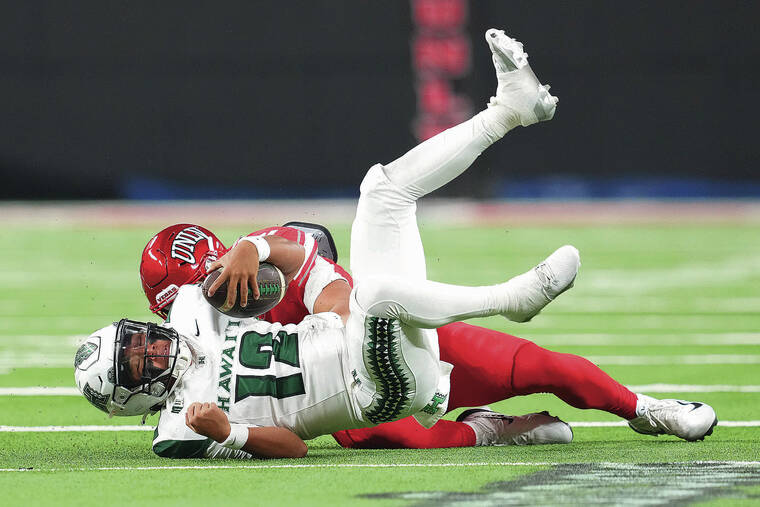
The University of Hawaii football team suffered a significant defeat against the University of Nevada, Las Vegas (UNLV), losing 38-10 on November 17, 2023. This loss has implications for the future of both programs, particularly in the context of their ongoing rivalry and conference dynamics.
The game took place at Allegiant Stadium in Las Vegas, where attendance reached 37,106, marking the largest home crowd for UNLV this season. In stark contrast, Hawaii’s home venue, the Clarence T.C. Ching Complex, has a capacity of just 15,194 and is more suited for high school events. This disparity in facilities poses a challenge for Hawaii in attracting and retaining talent, as players often prefer the amenities found in state-of-the-art stadiums.
Despite the setback, the Warriors have shown potential throughout the season, particularly with standout performances from players like Kansei Matsuzawa, who remains perfect on field goals, converting 23 attempts this year. However, the team’s inconsistency raises concerns. They previously defeated an unbeaten San Diego State team 38-6 but followed up that performance with a disappointing loss to San Jose State.
The rivalry between Hawaii and UNLV has historically been competitive, with both teams splitting their last eight meetings. As future matchups loom, Hawaii needs the Rebels as a regional rival to maintain interest and foster a competitive atmosphere. Although UNLV is not joining other programs in a potential shift to the Pac-12, their decision to remain in the Mountain West is advantageous for Hawaii in the long run.
The latest game highlighted several key moments. The Warriors recovered a UNLV fumble early but failed to capitalize on the opportunity, a misstep that proved costly. Hawaii’s performance was marred by errors, including dropped passes and excessive penalties, which further hindered their ability to gain momentum.
As the season progresses, Hawaii has the opportunity to finish strong. If they can secure a victory against Wyoming and win the Hawaii Bowl, they could conclude the season with a commendable record of 9-4. Such outcomes would not only boost team morale but also enhance recruitment efforts, potentially attracting more student-athletes looking for competitive programs.
The contrasting atmospheres of the two teams’ home games may influence future recruitment. While UNLV benefits from a modern NFL stadium, the Warriors’ home environment remains intimate and easier to fill. As Hawaii looks ahead, maintaining a healthy rivalry with UNLV could provide the necessary impetus to elevate their program and keep fans engaged.
In summary, while the recent loss to UNLV stings, it presents an opportunity for reflection and growth for the Hawaii football program. The need for a strong rivalry remains crucial, and with strategic improvements, Hawaii can look to regain its competitive edge in the Mountain West Conference.