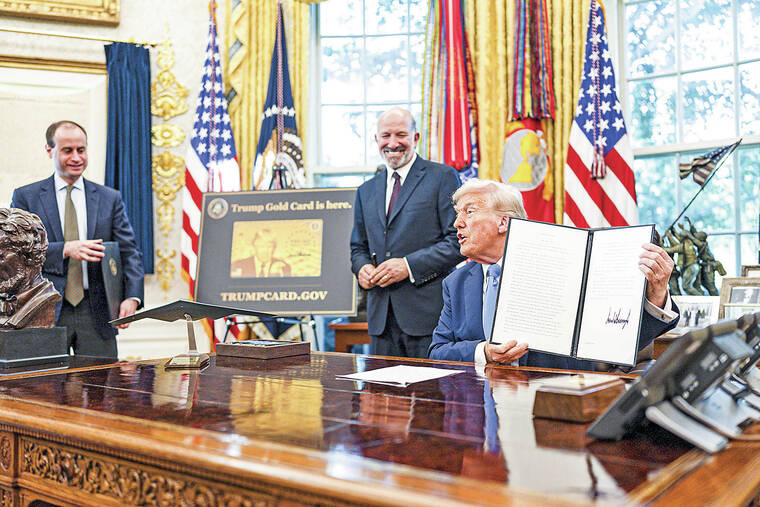
The attorneys general of 20 states, including California and New York, have initiated legal action against the Trump administration’s recent decision to impose a $100,000 fee on H-1B visas. This lawsuit, filed on Friday in the U.S. District Court for the District of Massachusetts, challenges the legality of the fee, which was established through a proclamation signed by President Donald Trump in September 2025.
The H-1B visa program is designed to allow U.S. employers to hire foreign workers with specialized skills when qualified American candidates are unavailable. This initiative primarily supports sectors like science and technology, which rely on talent from around the world. According to U.S. Citizenship and Immigration Services, tech giants such as Meta, Google, and Apple are among the largest employers of H-1B visa holders in the current fiscal year.
California Attorney General Rob Bonta expressed concern about the implications of the new fee, stating, “The $100,000 visa fee is devastating for all states, including California, and threatens the quality of education, health care and other core services available to our residents.” His remarks highlight the potential adverse effects on various sectors that depend on skilled professionals.
The lawsuit is not the first challenge to the fee. An earlier complaint was lodged in October by a coalition of unions, higher education professionals, and religious organizations. They argued that the fee would negatively impact hospitals, schools, churches, and small businesses, which often rely on H-1B visa holders for critical roles.
The introduction of this fee has sparked division among supporters of the Trump administration. While some immigration hard-liners endorse the fee as a means to encourage the hiring of American workers, many in the tech industry fear it may hinder their ability to remain competitive. Critics argue that the fee could exacerbate existing shortages in healthcare, as numerous healthcare associations have indicated that it would deter qualified physicians from working in the United States.
Employers must navigate a highly competitive application process for H-1B visas, which are capped at 85,000 annually by Congress. The $100,000 fee adds a significant financial burden to companies considering the program, compounding existing legal and administrative costs.
In addition to California and New York, the states participating in the lawsuit include Massachusetts, Arizona, Colorado, Connecticut, Delaware, Hawaii, Illinois, Maryland, Michigan, Minnesota, Nevada, North Carolina, New Jersey, Oregon, Rhode Island, Vermont, Washington, and Wisconsin.
As the legal proceedings unfold, the Homeland Security, State, Labor, and Justice departments have not yet responded to requests for comment. The outcome of this lawsuit could have significant implications for the future of the H-1B visa program and its role in supporting the U.S. economy.