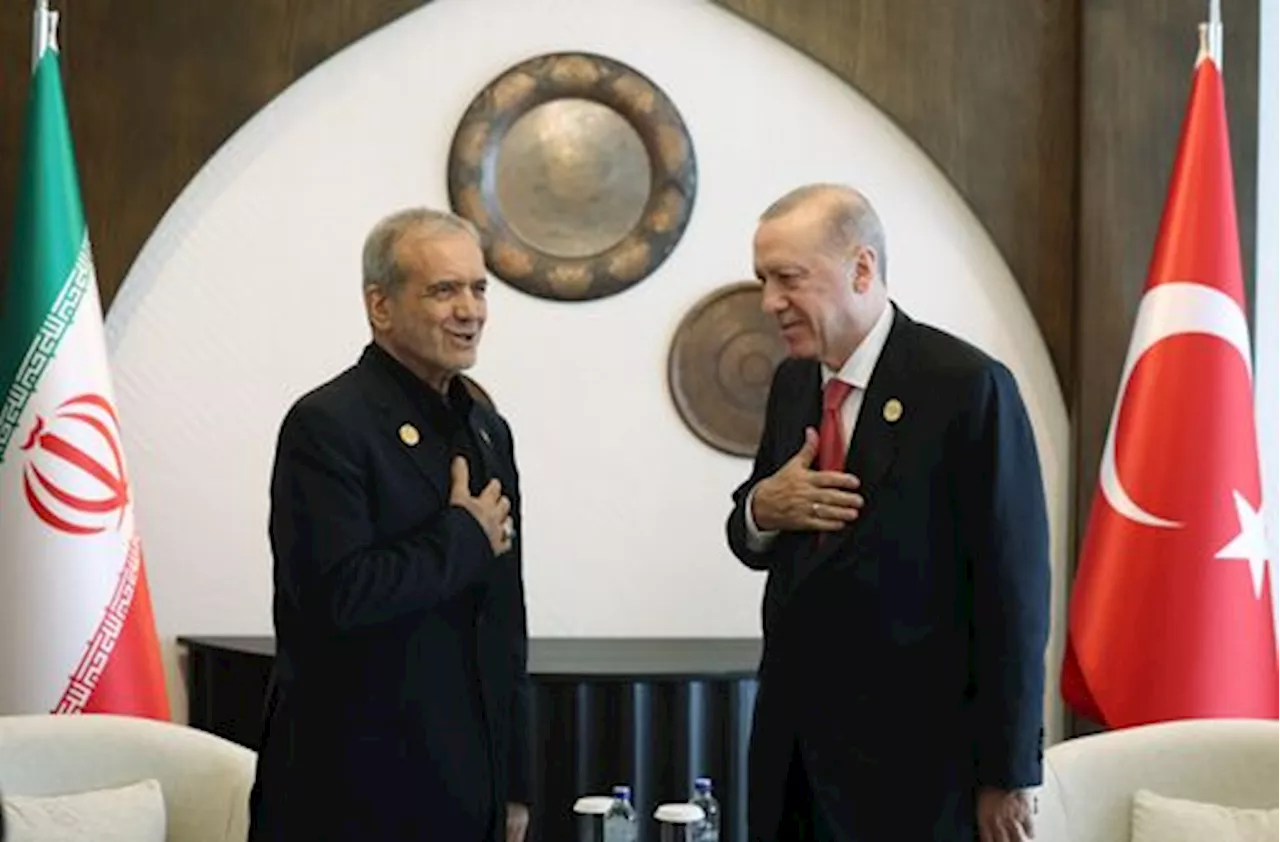
Turkish President Recep Tayyip Erdogan has expressed strong disapproval of a recent violation of Türkiye’s airspace during a phone call with Iranian President Masoud Pezeshkian. The discussion, held on Monday, focused on escalating regional tensions, particularly following the interception of a ballistic missile that originated from Iran. Erdogan emphasized that such violations “cannot be excused for any reason whatsoever,” reaffirming Türkiye’s commitment to take necessary measures to protect its airspace.
This conversation followed a statement from Türkiye’s National Defence Ministry, which reported that NATO air and missile defense assets successfully neutralized the incoming missile in the Eastern Mediterranean. Erdogan highlighted that conflicts in the region negatively impact Türkiye, even when it is not a direct participant. He urged an end to “unlawful interventions” against Iran and called for a halt to actions that target neighboring countries, asserting that “these actions must end.”
Advocating for Diplomatic Solutions
Erdogan underscored the necessity of reopening diplomatic channels, stating that Türkiye is actively working to facilitate constructive dialogue in the region. He also expressed “deep sorrow” regarding a recent strike on a girls’ school in Minab, Iran, which occurred on February 28. This incident, which resulted in casualties, has prompted an investigation by US Defense Secretary Pete Hegseth, while Israel has denied any involvement.
During the call, Erdogan extended his condolences for the death of Iranian Supreme Leader Ali Khamenei, who was killed during the US-Israeli strikes. He expressed hope that the ascension of Mojtaba Khamenei as the new supreme leader would foster peace and stability in the region.
In response to Erdogan’s concerns regarding the missile incident, Pezeshkian stated that the missiles that entered Turkish airspace were not of Iranian origin. He assured that Iranian authorities would conduct a thorough investigation into the matter.
Regional Implications and Security Measures
The recent events underscore the complex security landscape in the Middle East, where Türkiye finds itself navigating between various geopolitical tensions. Erdogan’s statements reflect a broader strategy aimed at promoting regional stability while defending national interests.
As Türkiye continues to bolster its defense capabilities, the government remains vigilant in monitoring potential threats to its airspace. The focus on diplomacy, as articulated by Erdogan, suggests a desire to mitigate conflict and foster cooperative relations among neighboring countries.
The situation remains fluid, with ongoing developments likely to influence regional dynamics in the coming weeks. As Türkiye asserts its position, the call for dialogue and diplomatic engagement remains a central theme in its foreign policy approach.